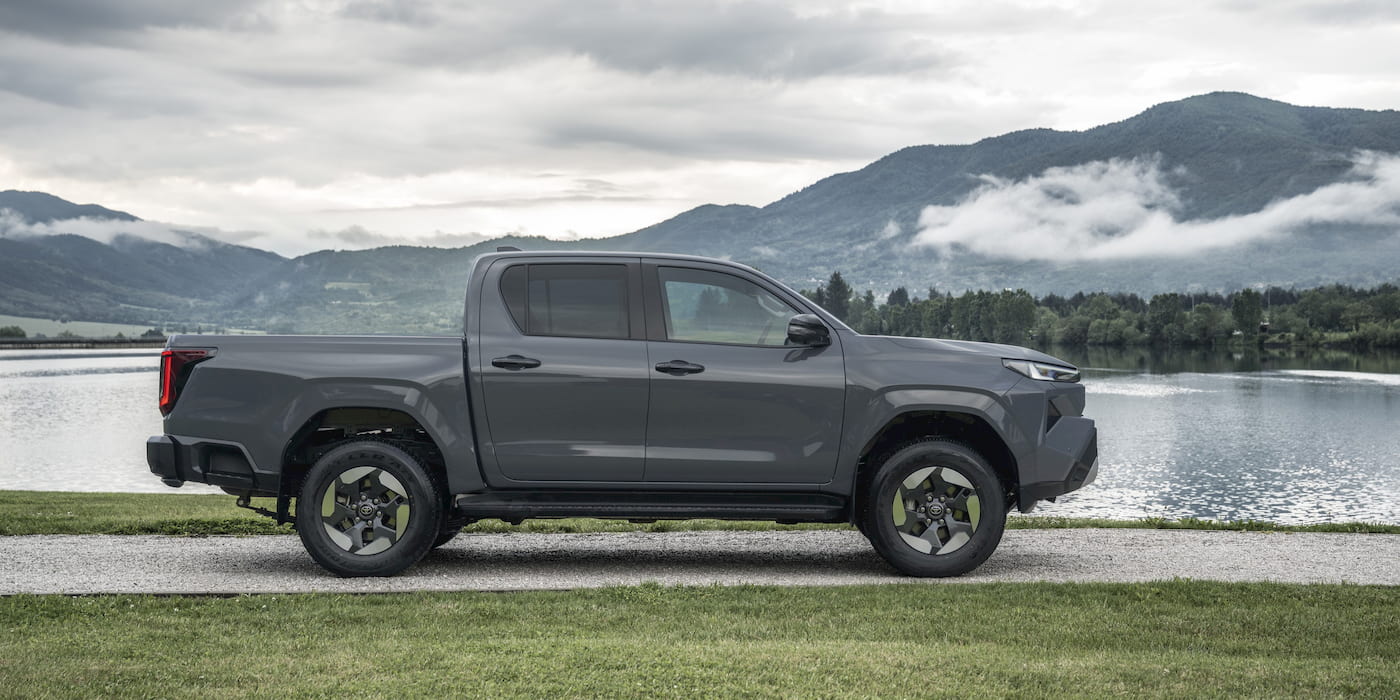
The automotive industry has just been rocked to its core. For decades, the legendary Toyota Hilux has stood as the undisputed global champion of indestructible utility. It has conquered the polar ice caps, crossed brutal deserts, and survived the most demanding work zones on Earth. But a seismic shift is happening, and traditional truck purists are absolutely stunned. Toyota has officially unveiled its very first fully electric pickup and body-on-frame electric vehicle: the highly anticipated Toyota Hilux BEV.
For years, automotive giants have debated whether heavy-duty work trucks could successfully make the transition to pure electric power. Battery weight, towing limitations, and range anxiety have kept many off-road enthusiasts skeptical. Yet, with the launch of this groundbreaking model, Toyota is making a daring statement. They are ready to prove that the future of tough, rugged transport is quiet, clean, and incredibly powerful.
The Electric Revolution of an Unkillable Legend
The transition of the Hilux nameplate to a battery-electric vehicle (BEV) is a historic milestone for Toyota. Historically, the brand has been notoriously slow to embrace full battery-electric technology, famously championing hybrids and hydrogen fuel cells instead. However, the global demand for zero-emission commercial vehicles has forced the Japanese giant to pivot. The Toyota Hilux BEV represents a bold leap forward, combining the legendary toughness of its predecessor with cutting-edge electric drivetrain engineering.
Built as a true body-on-frame EV, this truck maintains the heavy-duty chassis design that made the original Hilux famous. This is not a fragile crossover disguised as a truck; it is a heavy-duty workhorse engineered to handle brutal payloads and unforgiving terrain. By placing the battery pack low within the ladder frame, Toyota engineers have lowered the center of gravity, drastically improving stability and handling compared to traditional internal combustion models.
Can an Electric Hilux Keep Its Brutal Off-Road Reputation?
This is the burning question on every truck enthusiast’s mind. Can a battery-powered truck truly survive the harsh environments that the combustion Hilux conquered with ease? Skeptics point out that cold weather drastically reduces electric vehicle range, and deep water crossings could pose catastrophic risks to electrical systems. However, Toyota insists that the Hilux BEV has undergone grueling testing to meet the same rigorous durability standards as its diesel-chugging siblings.
One massive advantage of the electric powertrain is instant torque. When navigating steep, rocky inclines or muddy trails, the electric motors deliver maximum pulling power immediately, without the need to rev an engine or wait for a turbocharger to spool up. This could make the Toyota Hilux BEV an even more capable off-road machine than the classic models. For more insights into how the brand is transforming its fleet, you can explore the latest updates on Toyota electric vehicles and their upcoming zero-emissions lineup.
The Shocking Price Tag: Is It Actually Worth It?
With cutting-edge technology comes a premium cost, and the Hilux BEV is expected to carry a hefty price tag. For fleet owners and commercial buyers, the initial investment will be significantly higher than a standard diesel truck. However, proponents argue that the total cost of ownership over the vehicle’s lifespan will ultimately be much lower. Electric vehicles require far less maintenance—there are no spark plugs, oil filters, or complex exhaust systems to replace, and electricity is generally much cheaper than fossil fuels in major markets.
Ultimately, the success of the Toyota Hilux BEV will depend on whether buyers are willing to embrace the electric transition. For eco-conscious fleets looking to slash their carbon footprints, this vehicle is an absolute game-changer. But for remote workers operating in areas with zero charging infrastructure, the classic diesel Hilux will likely remain king. One thing is certain: Toyota has officially entered the electric truck wars, and the industry will never be the same again.