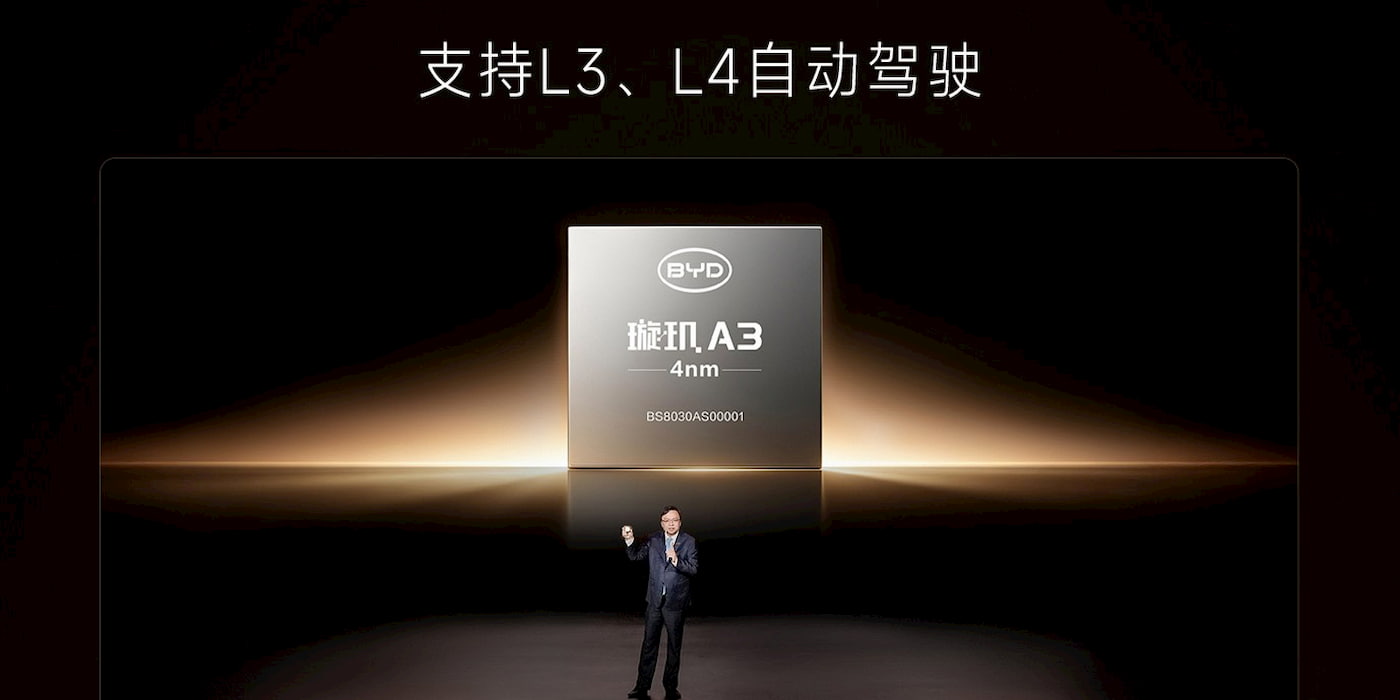
The global electric vehicle race just hit warp speed, and competitors are likely losing sleep tonight. In a move that has sent shockwaves through Silicon Valley, Chinese EV giant BYD has officially unveiled a revolutionary, in-house developed 4nm smart driving chip. This is not just another minor upgrade; it is China’s very first homegrown 4nm automotive silicon, designed to completely redefine how vehicles navigate our world. By unlocking what experts call ‘the highest level of vehicle intelligence,’ this powerhouse chip is ready to bring Level 3 (L3) and Level 4 (L4) autonomous driving capabilities to mass-market vehicles sooner than anyone thought possible.
The Dawn of a New Autonomous Era: BYD’s Secret Weapon
For years, Western automakers and chip designers held a seemingly unbreakable monopoly on high-end automotive processors. But BYD has shattered that ceiling. The development of the BYD smart driving chip marks a monumental shift toward total technological self-reliance for the Chinese automaker. By controlling both the hardware and software stack, BYD can optimize energy efficiency and processing speeds to levels previously deemed impossible. Imagine a car that does not just assist you in driving, but completely takes over under almost any condition, analyzing millions of data points per millisecond. This is not science fiction anymore; it is the reality BYD is building right now.
Breaking the Monopoly: Why 4nm Matters
To understand the scale of this achievement, we must look at the nanometer scale. A 4nm process node represents the absolute cutting edge of semiconductor fabrication. Smaller nanometers mean more transistors packed onto a single piece of silicon, leading to exponentially higher computational power and drastically lower energy consumption. For electric vehicles, where every watt of battery power counts, the efficiency of BYD’s new EV technology is a game-changer. This chip acts as the central brain of the vehicle, instantly processing feeds from cameras, LiDAR, and radar sensors to make split-second decisions. With L3 autonomy, drivers can legally take their hands off the wheel and eyes off the road in specific conditions. L4 autonomy takes this a step further, enabling complete driverless operation within designated zones.
Is This the End for Tesla’s Full Self-Driving?
The timing of this release could not be more critical. As competitors struggle to roll out their full self-driving beta globally amidst regulatory hurdles and hardware limitations, BYD is rapidly closing the gap and potentially leaping ahead. By engineering their own silicon, BYD avoids the supply chain bottlenecks that have plagued other legacy car manufacturers. Furthermore, because BYD produces vehicles at an unprecedented scale, they can deploy this 4nm marvel across millions of affordable cars, democratizing high-level autonomous driving. No longer will advanced self-driving tech be locked behind expensive software packages or reserved only for premium luxury models. The viral implications of this shift are massive: we are looking at a future where everyday commuter cars are smarter than today’s most expensive luxury SUVs.