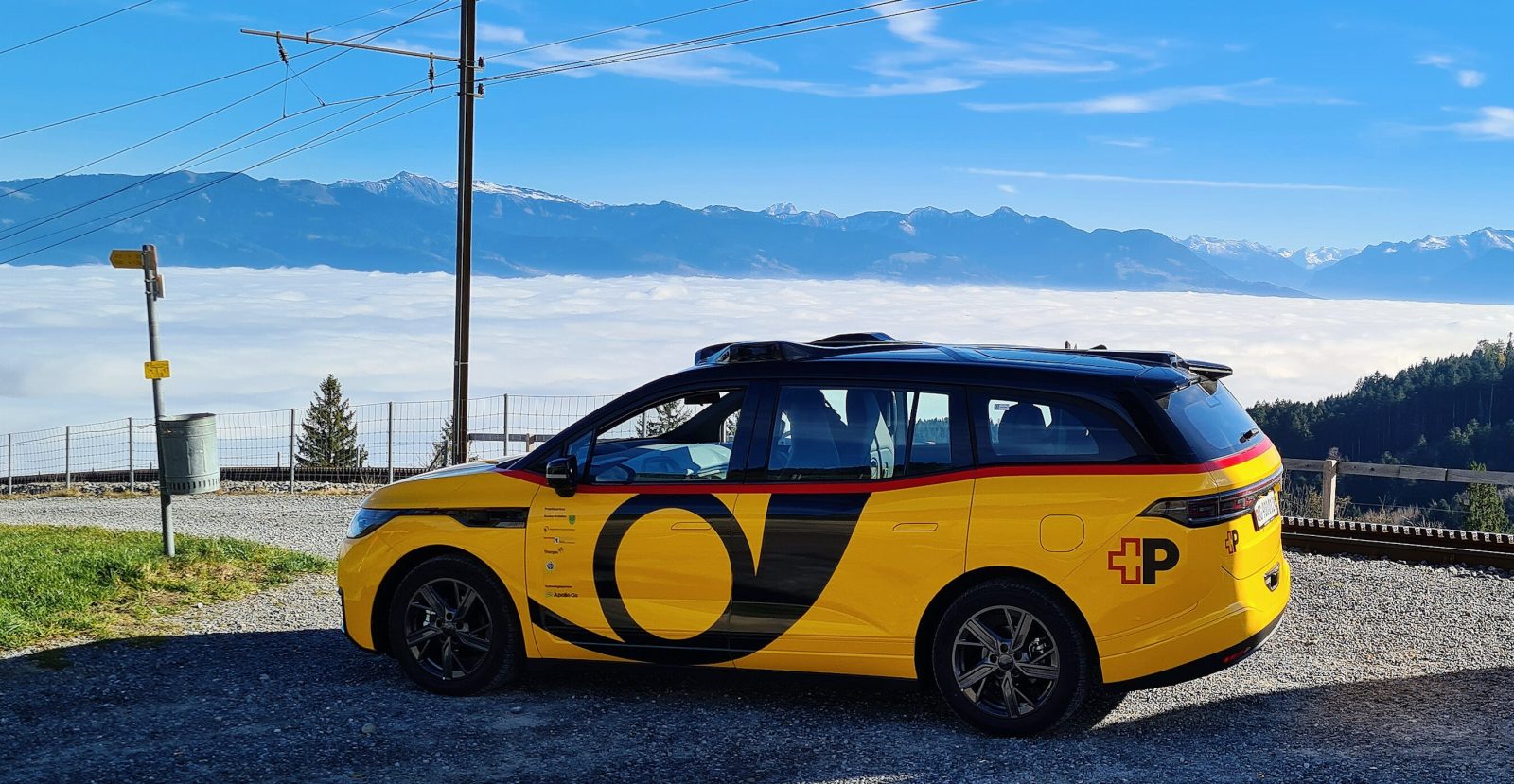
In a shocking twist that has sent shockwaves through Silicon Valley, Chinese tech titan Baidu has officially beaten Elon Musk’s Tesla and Alphabet’s Waymo to the punch in Europe. While Tesla continues to promise full self-driving capabilities and Waymo cautiously expands its US presence, Baidu’s Apollo Go has quietly secured a historic Level 4 autonomous driving permit in Switzerland. This massive milestone marks the first time a driverless robotaxi service has been authorized to integrate into European public transport on such a massive scale.
The Secret Swiss Invasion: How Baidu Pulled It Off
For years, the race for autonomous vehicle supremacy was thought to be a two-horse race between American giants. However, Baidu’s newly minted partnership with Swiss Post’s PostBus, dubbed ‘AmiGo’, has completely flipped the script. The Federal Roads Office (FEDRO) of Switzerland has officially granted a special permit that allows Baidu to operate across a mind-blowing 80 square kilometer service area spanning three eastern cantons. This isn’t just a small pilot test; it is on track to become the largest planned automated public transport operation of its kind in Europe’s history.
The implications of this move are staggering. While Western regulators have historically been cautious about deploying fully driverless systems on public roads, Switzerland’s approval of Baidu’s Level 4 technology shows a massive shift in global trust. Level 4 autonomy means these vehicles can operate entirely without a human driver under specific conditions, a feat that Tesla has yet to safely demonstrate in public European spaces.
Why Elon Musk Should Be Terrified
Elon Musk has long staked the future valuation of Tesla on its ability to deliver a functioning robotaxi network. Yet, despite flashy presentations and bold promises, Tesla remains bogged down by regulatory scrutiny, hardware limitations, and legal challenges regarding its Autopilot and Full Self-Driving (FSD) suites. Meanwhile, Baidu is already putting rubber to the road in Europe. By targeting public transport partnerships rather than individual consumer sales, Baidu has bypassed the traditional roadblocks that have stalled Tesla for years.
Industry insiders suggest that Baidu’s aggressive expansion strategy could permanently lock American competitors out of the highly lucrative European market. If the AmiGo service proves successful in Switzerland, other European nations are highly likely to fast-track similar approvals, leaving Waymo and Tesla scrambling to catch up. You can read more about the latest electric vehicle trends on Electrek to see just how fast this landscape is shifting.
The Technical Powerhouse Behind Apollo Go
What makes Baidu’s Apollo Go system so potent? Unlike basic driver-assist features, the Apollo platform utilizes an advanced suite of LiDAR, radar, and HD mapping technologies that allow the vehicle to make split-second decisions in complex weather and traffic scenarios. Switzerland’s rugged terrain and unpredictable alpine weather will serve as the ultimate proving ground for this technology.
The AmiGo robotaxis are specifically designed to handle the following challenges:
- Navigating narrow, winding European streets with high precision.
- Interfacing seamlessly with existing municipal transit systems.
- Operating safely in heavy rain, snow, and low-visibility conditions.
- Providing a seamless, app-based hailing experience for thousands of daily commuters.
By successfully tackling these hurdles, Baidu is not just testing a product—they are establishing a blueprint for the future of global urban transit. The era of the driverless commute has arrived, and it is wearing a Chinese tech badge in the heart of Europe. Tesla and Waymo have been officially put on notice, and the race for autonomous dominance has entered a dangerous new phase.