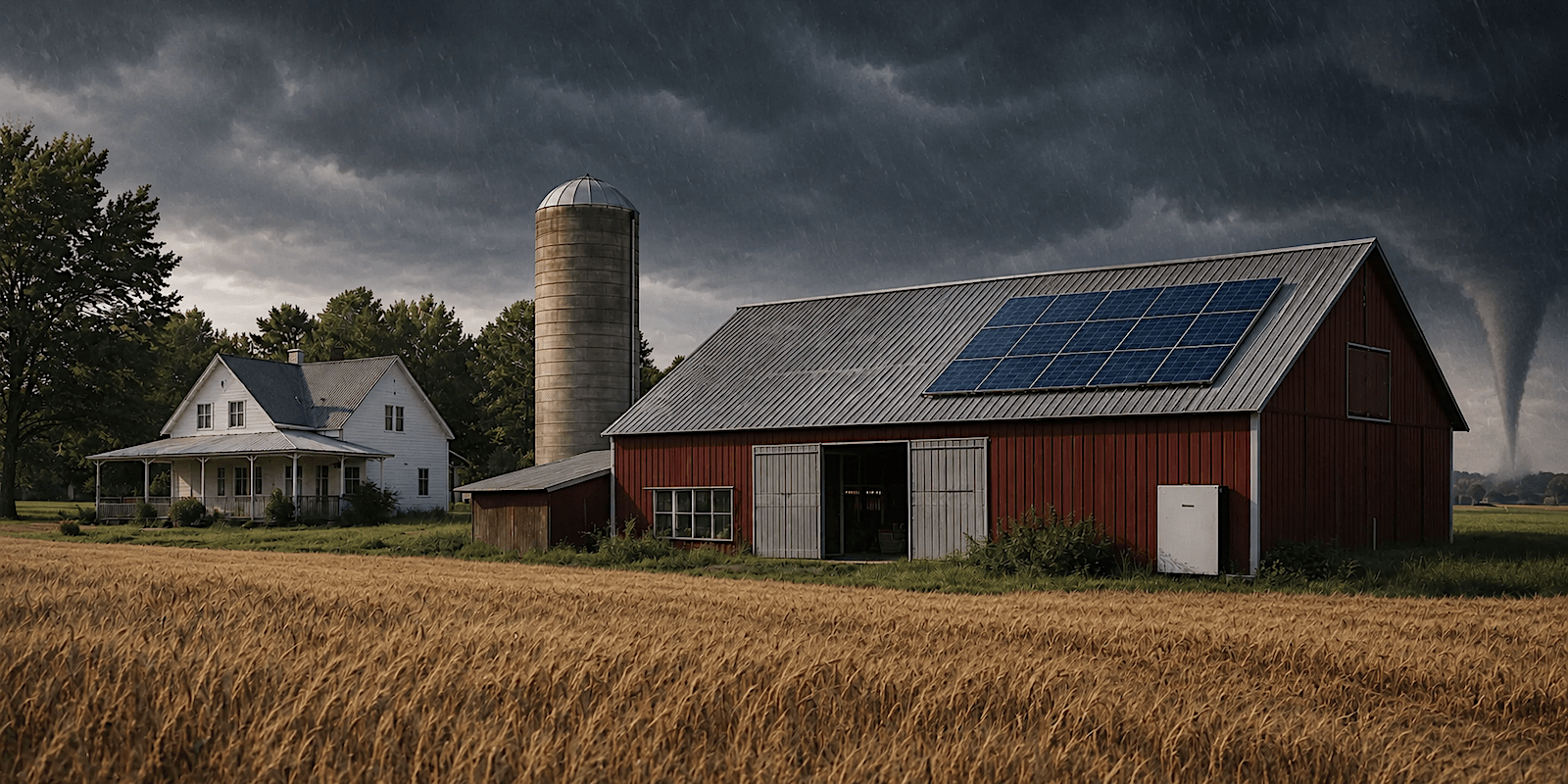
Imagine a massive summer storm tearing through your county, ripping down power lines and throwing entire communities into pitch-black darkness. For suburban homeowners, this is an inconvenience of a few hours—a minor disruption managed with a couple of flashlights and some melted ice cream. But for rural families, this scenario is a ticking time bomb. When the grid goes dark in remote areas, help is not on the way. Utilities prioritize densely populated cities first, leaving rural residents stranded at the bottom of the restoration list for days, or even weeks.
As survivalists and off-grid enthusiasts scramble to secure their energy independence, a devastating myth persists: that standard, suburban-sized solar systems are enough to save them. The brutal truth is that most advice on sizing a home solar and battery system is dangerously outdated, designed for city dwellers who never have to worry about where their next glass of water is coming from.
The Terrifying Reality of Rural Power Outages
When you live off the beaten path, a blackout is not just about keeping the television on or charging your smartphone. It is a matter of basic human survival. Rural homes play by completely different rules than their suburban counterparts. If you rely on a well pump for water, a septic system, and electric heating or cooling, a prolonged power outage can quickly escalate into a full-blown sanitary and health crisis.
During high-wind events, tornadoes, and severe summer storms, physical damage to infrastructure in remote areas can take days to repair. Because transmission lines stretch across vast, forested terrains, finding and fixing a break is a logistical nightmare for utility companies. If you do not have a robust, resilient, and correctly sized rural solar battery backup, you are entirely on your own in the dark.
The Well Pump Trap That Leaves Families Dry
Why do standard solar setups fail so spectacularly in rural environments? The answer lies in a hidden electrical monster: the well pump. Unlike a refrigerator or a laptop charger, a deep-well water pump requires a massive, instantaneous surge of electricity—known as starting wattage or inrush current—just to turn on. This surge can be up to three to four times higher than the pump’s running wattage.
Most standard residential batteries, while great for keeping lights on, simply cannot handle this sudden spike in electrical demand. When the well pump tries to kick on, the battery’s safety systems detect the massive load and shut down completely to prevent internal damage. In an instant, you are left with no electricity, no running water, no flushing toilets, and no way to put out a fire. It is a terrifying trap that thousands of rural homeowners only discover when it is already too late.
How to Actually Protect Your Off-Grid Sanctuary
To ensure your family survives the next major climate event, you must abandon standard solar sizing calculators and design a system capable of handling heavy-duty machinery. Sizing a system for a rural property requires meticulous planning and a deep understanding of your peak surge demands.
Here are the non-negotiable steps you must take to secure your home:
- Identify the peak starting wattage of your well pump and choose an inverter that can comfortably handle that instantaneous load.
- Opt for Lithium Iron Phosphate (LFP) batteries, which offer superior thermal stability, longer lifespans, and better high-discharge capabilities than older lead-acid alternatives.
- Implement a critical load sub-panel to isolate essential appliances like your well pump, medical equipment, and refrigerator from non-essential luxury items.
- Integrate a dual-fuel backup generator into your solar system to provide emergency charging capability during extended periods of heavy cloud cover.
Do not wait for the next catastrophic storm to find out if your solar system can stand up to the challenge. Assess your energy needs, upgrade your battery capacity, and ensure your household is truly prepared to weather the storm alone.