
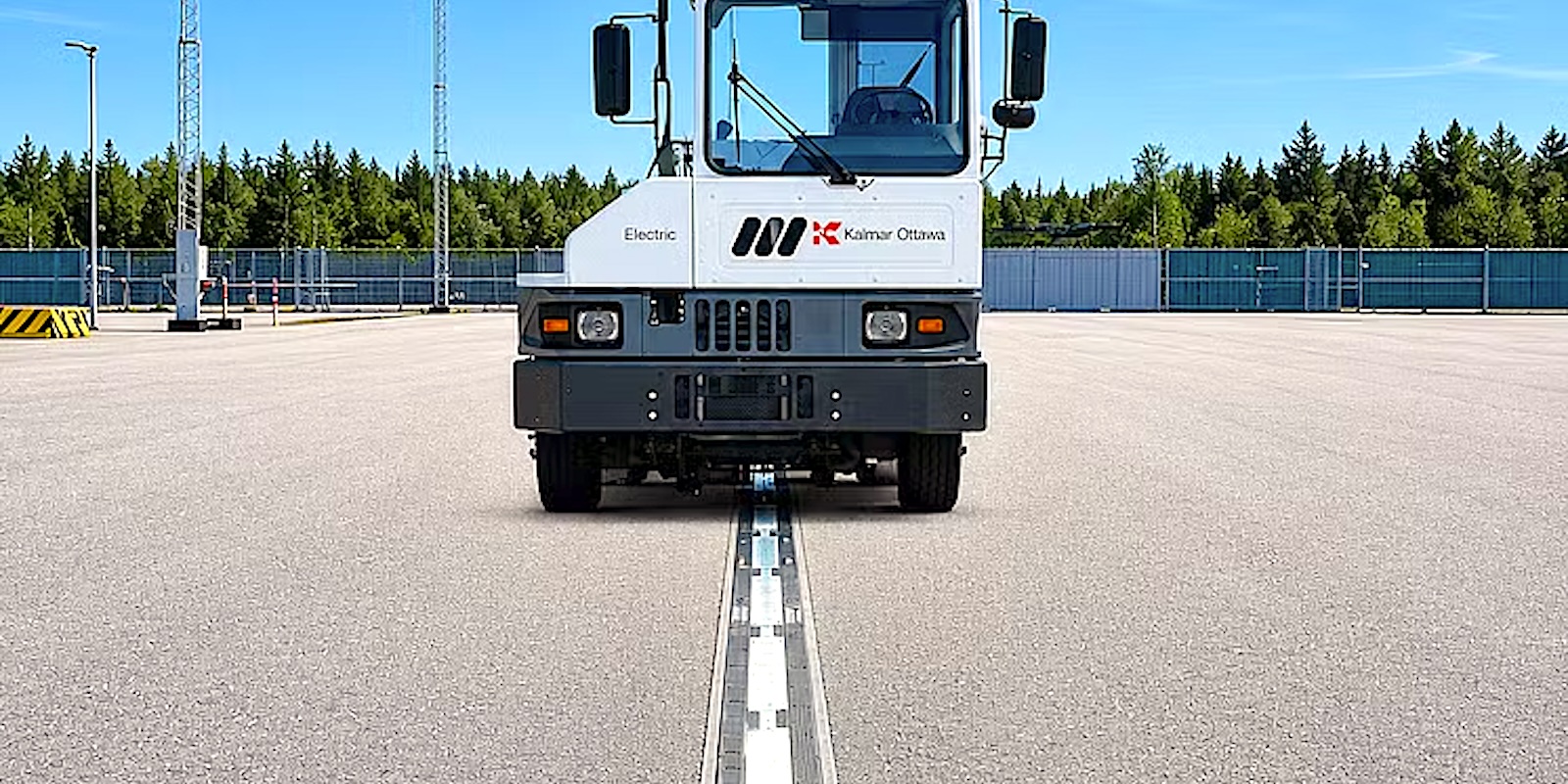
The electric vehicle revolution just took a massive, mind-bending leap forward that could render every single charging station on Earth completely obsolete. For years, skeptics have pointed to range anxiety and endless plug-in times as the ultimate downfall of the heavy-duty electric transition. But what if you never had to plug in your vehicle ever again? In a quiet Swedish town called Ljungby, a revolutionary experiment has just succeeded, proving that the future of transportation isn’t about bigger batteries—it is about roads that power vehicles as they move.
The Death of the Charging Cable is Finally Here
It sounds like pure science fiction, but the Kalmar Ottawa T2 EV electric terminal tractor has officially pulled off the impossible. Stationed in Sweden, this heavy-duty beast has been successfully deployed on a cutting-edge in-road charging system. The implications of this trial are absolutely staggering. Instead of sitting idle for hours connected to a high-voltage cable, this electric truck draws juice directly from the ground beneath it. By utilizing a high-tech track embedded into the road surface, the vehicle charges dynamically while carrying out its grueling daily operations.
This means the tractor can run indefinitely. No breaks, no downtime, and absolutely no plugs. The experiment, powered by Elonroad’s innovative technology, has successfully demonstrated that fleet operators can completely bypass the traditional charging bottlenecks that have plagued the EV market since its inception.
How In-Road Charging Will Destroy Range Anxiety
Developed in partnership with pioneering technology firms, this system utilizes a specialized conductive charging track. As the Kalmar tractor rolls over the segment, a retractable collector under the vehicle automatically connects to the power strip. This creates a safe, highly efficient electrical connection that transfers energy directly to the onboard battery packs. But here is the kicker: the system is only active when a vehicle is physically over it, making it completely safe for pedestrians and other traffic. This eliminates the need for massive, heavy batteries that weigh down commercial vehicles and restrict payload capacity.
By charging on the go, the vehicle can utilize a significantly smaller battery pack. This reduces manufacturing costs, lowers the overall weight of the vehicle, and drastically decreases the environmental impact of battery production. It is a win-win scenario that has traditional battery manufacturers shaking in their boots.
The Massive Implications for Global Logistics
Why is the logistics industry losing its mind over this breakthrough? In the high-stakes world of supply chain management, time is literally money. Traditional EVs require scheduled downtime to recharge, which eats into profit margins and disrupts tight shipping schedules. According to reports from industry watchdogs like Electrek, this Swedish pilot project could pave the way for 24/7 continuous operations across global shipping ports, distribution centers, and busy highway corridors.
- Infinite operational uptime with zero charging pauses.
- Drastically smaller, lighter, and cheaper battery packs.
- Reduced peak strain on localized electrical grids.
- Elimination of high-maintenance physical charging stations.
This isn’t just a win for Sweden; it is a warning shot to the entire fossil fuel industry. If roads can power our trucks, cars, and buses on the fly, the transition to absolute zero-emission transport will happen years faster than anyone anticipated. The plug is officially dead. The era of the endless, self-charging road has begun.