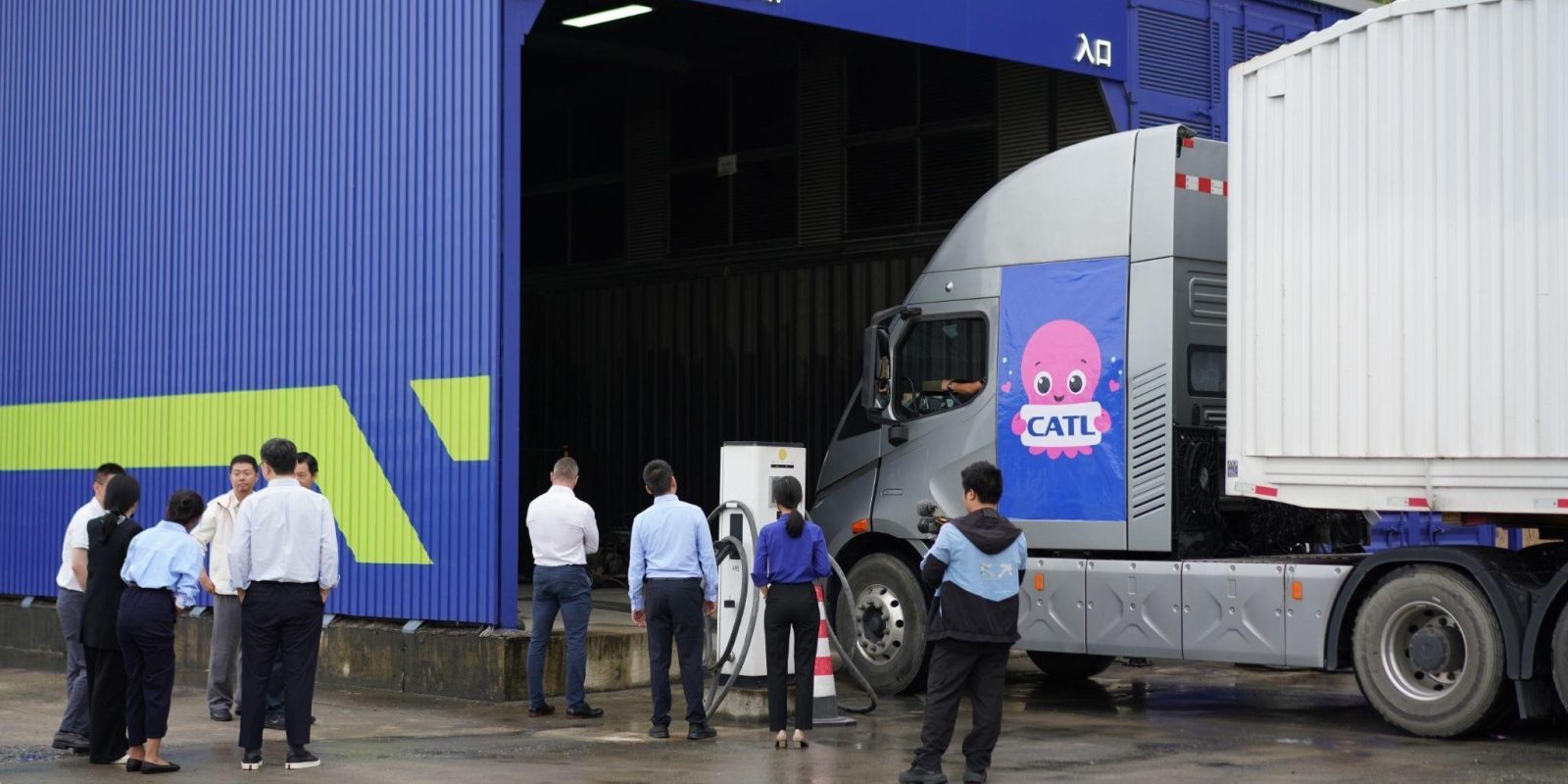
The electric vehicle landscape is about to undergo a seismic shift that could render traditional charging infrastructure obsolete. For years, skeptics have pointed to the long charging times of heavy-duty transport as the Achilles’ heel of the green transition. But a new, shocking partnership between energy disrupter Octopus Energy and Chinese battery titan CATL is set to unleash a technology that will change everything. They are bringing a revolutionary battery-swapping model, already proven at an unbelievable scale in China, directly to Europe’s rapidly growing electric truck market.
The Death of Charging: How CATL and Octopus Are Rewriting the Rules
Imagine a world where an enormous multi-ton electric rig doesn’t have to plug in for hours. Instead, it pulls into a robotic bay, its massive depleted battery is mechanically slid out, and a fully charged power pack is installed in under five minutes. This is no longer science fiction. It is the reality that CATL (Contemporary Amperex Technology Co. Limited) has perfected in Asia, and now, alongside Octopus Energy, they are bringing this grid-shattering tech to European highways. The implications are absolutely devastating for traditional EV charger manufacturers who have invested billions in slow, plug-in infrastructure.
According to industry insiders, this collaboration is targeting the most profitable and high-emission sector of transportation: heavy-duty logistics. European trucking fleets have been notoriously slow to adopt electric vehicles because every minute a truck sits idle at a charger is a minute it loses money. By eliminating charging downtime, Octopus and CATL are removing the final barrier to total electric dominance, sending shockwaves through the fossil fuel industry.
Why Europe’s Electric Truck Market Will Never Be the Same
Fleet operators across Germany, France, and the UK are watching this development with intense anticipation. The European Union has set aggressive carbon reduction targets for heavy transport, forcing companies to look for immediate solutions. Standard ultra-fast chargers can still take upwards of 45 minutes to charge a semi-truck to 80%, straining local power grids to their absolute breaking point.
The battery-swapping station bypasses this grid congestion entirely. These specialized hubs can charge batteries slowly and safely during off-peak hours when electricity is cheapest and cleanest, and then swap them into trucks during peak transit times. This not only saves immense amounts of capital but also stabilizes the electrical grid—a major selling point for Octopus Energy’s smart grid platform. According to reports covered by Electrek, this synergistic approach could reduce fleet operational costs by up to 40%.
Is This the End of Traditional EV Charging Stations?
As this technology rolls out across major European freight corridors, many are asking if plug-in charging stations are already relics of the past. While passenger cars may still rely on overnight home charging, commercial transport cannot afford the luxury of waiting. Battery swapping offers a seamless, subscription-based ‘battery-as-a-service’ (BaaS) model. This dramatically lowers the upfront purchase price of electric trucks because buyers do not actually have to purchase the expensive battery pack itself.
Critics argue that standardizing battery packs across different truck manufacturers will be a regulatory nightmare. However, CATL’s sheer market dominance means they practically set the industry standards themselves. If the world’s largest battery manufacturer says this is the standard, the market will inevitably follow. With Octopus Energy managing the green power supply and CATL delivering the hardware, this power couple is poised to monopolize the future of freight transport. The green revolution isn’t just coming; it is being swapped in real-time.