
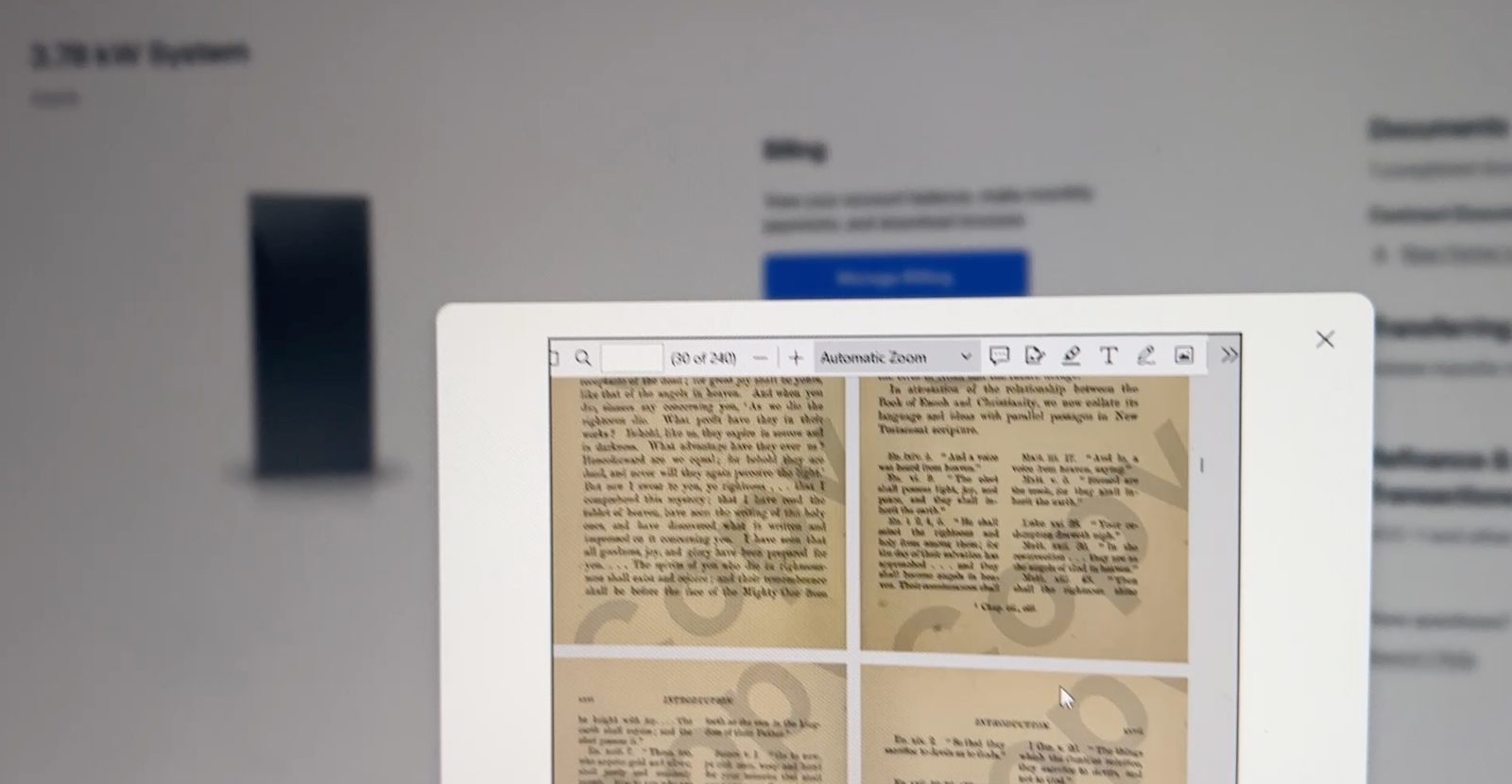
In what might be the single most bizarre tech story of the decade, an unsuspecting Tesla Solar customer logged into their online portal expecting to review a standard, boring lease contract. Instead, they were greeted by something straight out of a cosmic thriller: the complete text of the Book of Enoch, a 2,000-year-old ancient apocalyptic manuscript detailing the downfall of fallen angels and impending divine judgment.
This was not a broken link, nor was it a simple system error page. Occupying the exact digital space where a legally binding solar contract was supposed to reside sat a massive, fully formatted religious work. The shocking discovery, which was verified by tech outlet Electrek, has left the internet spiraling into madness, sparking hilarious conspiracy theories and raising alarming questions about cloud document security.
Unbelievable Tech Nightmare: Fallen Angels in the Solar Portal
Imagine logging into your personal dashboard to check your monthly solar panel savings, only to find yourself reading ancient prophecies about heavenly watchers who rebelled against the divine. For one homeowner, this mind-bending reality unfolded without warning. Where legally enforceable terms regarding energy outputs and billing cycles ought to have sat, thousands of words of ancient apocalyptic lore filled the screen.
The incident has sent shockwaves across social media platforms, with users questioning how a multi-billion-dollar clean energy giant could accidentally swap a customer contract with an apocryphal text. While corporate server migrations and database updates often lead to missing PDFs or corrupt files, replacing a contract with thousands of words of ancient scripture requires an impossibly specific string of errors. Is there a rogue developer operating within Tesla’s software team, or did a bizarre database corruption pull an obscure public domain file into the customer service infrastructure?
What Exactly Is the Ancient Book of Enoch?
For those unfamiliar with ancient theological texts, the Book of Enoch is far from typical reading material. Believed to have been written over two millennia ago, the text is attributed to Enoch, the great-grandfather of Noah. While it holds a fascinating place in early Jewish religious tradition, it was largely excluded from the canonical Bible used by most modern mainstream churches.
The text itself reads like an epic dark fantasy combined with apocalyptic prophecies. It details the story of the Watchers—a group of fallen angels who descended to Earth, intermarried with humans, and produced a monstrous race of giants known as the Nephilim. The manuscript goes on to describe visions of cosmic destruction, divine thrones, and heavenly secrets. Why on Earth this intense, mystical document was living on Tesla’s internal servers remains a complete mystery that the EV giant has yet to explain.
Rogue Employee, Easter Egg, or Apocalyptic Glitch?
The online community has wasted no time coming up with wild hypotheses. Some tech enthusiasts speculate that a bored software engineer might have slipped the ancient manuscript into the database as an elaborate internal joke or a hidden Easter Egg that went horribly wrong during a global code deployment. Others wonder if automated scrapers mistakenly grabbed public domain texts during a messy database migration.
However, the incident highlights a deeply serious issue regarding digital legal agreements and customer trust. If a corporation can accidentally overwrite a binding legal lease with a two-thousand-year-old text about fallen demons, what does that say about the security and reliability of modern cloud storage? Solar leases involve long-term financial commitments spanning decades, often tied directly to property deeds. Losing access to legitimate legal documentation creates massive logistical nightmares for homeowners trying to sell their property or audit their power bills.
Tesla, which famously disbanded its public relations division years ago, has offered no official explanation for how cosmic prophecies replaced green energy agreements. As customer accounts are audited across the nation, millions of users are left wondering if their legal files are truly safe—or if they too will find ancient holy texts where their contracts used to be.