The Great Tesla Bait-and-Switch? Model 3 Specs Plunge
Imagine ordering a lightning-fast electric vehicle, only to find out weeks later that it has been artificially crippled. This is the exact nightmare Canadian EV buyers are facing right now as Tesla quietly downgraded the acceleration specifications of its brand-new $39,490 CAD Model 3 Premium Rear-Wheel Drive (RWD) not once, but twice in less than a month. The rapid-fire changes have left the automotive community in absolute shock and raised serious questions about transparency.
From Sports Car Speeds to Snail Pace: What Happened?
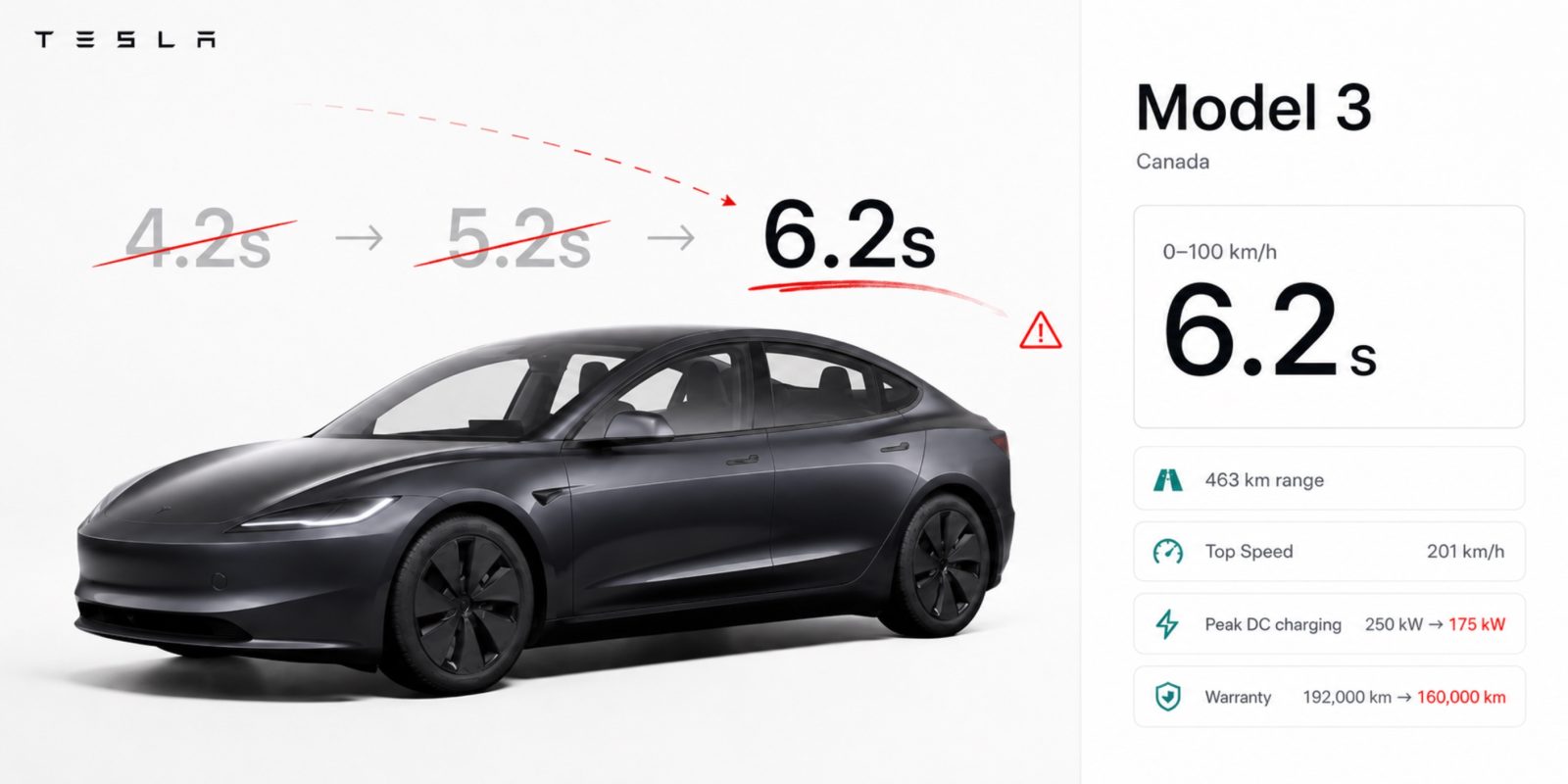
On May 1, Tesla proudly launched its new Model 3 Premium RWD in Canada with a mouth-watering 0-100 km/h sprint time of just 4.2 seconds. For a budget-friendly premium sedan, this was an absolute steal. Buyers rushed to place their deposits, expecting a thrilling, high-performance ride. However, the excitement was short-lived. In less than three weeks, Tesla silently updated its Canadian website. First, the advertised 0-100 km/h time was revised to 5.2 seconds. Then, in a shocking second blow, the spec plummeted to 6.2 seconds. That is a massive, two-second increase from what was originally promised.
How can an automaker change the fundamental performance characteristics of a vehicle post-launch? The cars are built in Giga Shanghai and imported to Canada, leading many to speculate about the battery chemistry and motor configurations being used. This controversial Tesla Model 3 acceleration change has left reservation holders demanding answers and questioning if they are the victims of a classic bait-and-switch tactic.
The Tech Mystery Behind the Missing Seconds
Speculation is running rampant in the EV community regarding why Tesla made these drastic downgrades. One highly likely culprit is the battery pack configuration. To meet the aggressive $39,490 CAD price point and qualify for local Canadian EV incentives, Tesla may have swapped the battery pack for a cheaper, less power-dense Lithium Iron Phosphate (LFP) chemistry, or software-locked the performance of the existing pack to preserve battery health and range. Giga Shanghai-built vehicles often use LFP batteries, which are incredibly durable but tend to struggle with high power discharge rates in freezing Canadian winters compared to nickel-based alternatives.
Alternatively, Tesla might be planning to lock the quicker 4.2-second acceleration behind a paid software wall, often referred to as the ‘Acceleration Boost.’ This would not be the first time Tesla has put hardware capability behind a digital paywall. If this is the case, buyers who thought they were getting a sports-car-rivaling EV at launch are now being told they must pay more to unlock what was originally promised. This has sparked intense debates on social media, with many calling for regulatory bodies like Canada’s Competition Bureau to step in and investigate Tesla’s advertising practices.
Ultimately, this situation highlights the volatile nature of purchasing a software-defined vehicle. When specs can be altered overnight with a simple website update, consumers lose the certainty of what they are actually purchasing. If you are a Canadian buyer who ordered on May 1, you might want to double-check your order agreement before taking delivery of a vehicle that is suddenly two seconds slower than promised.