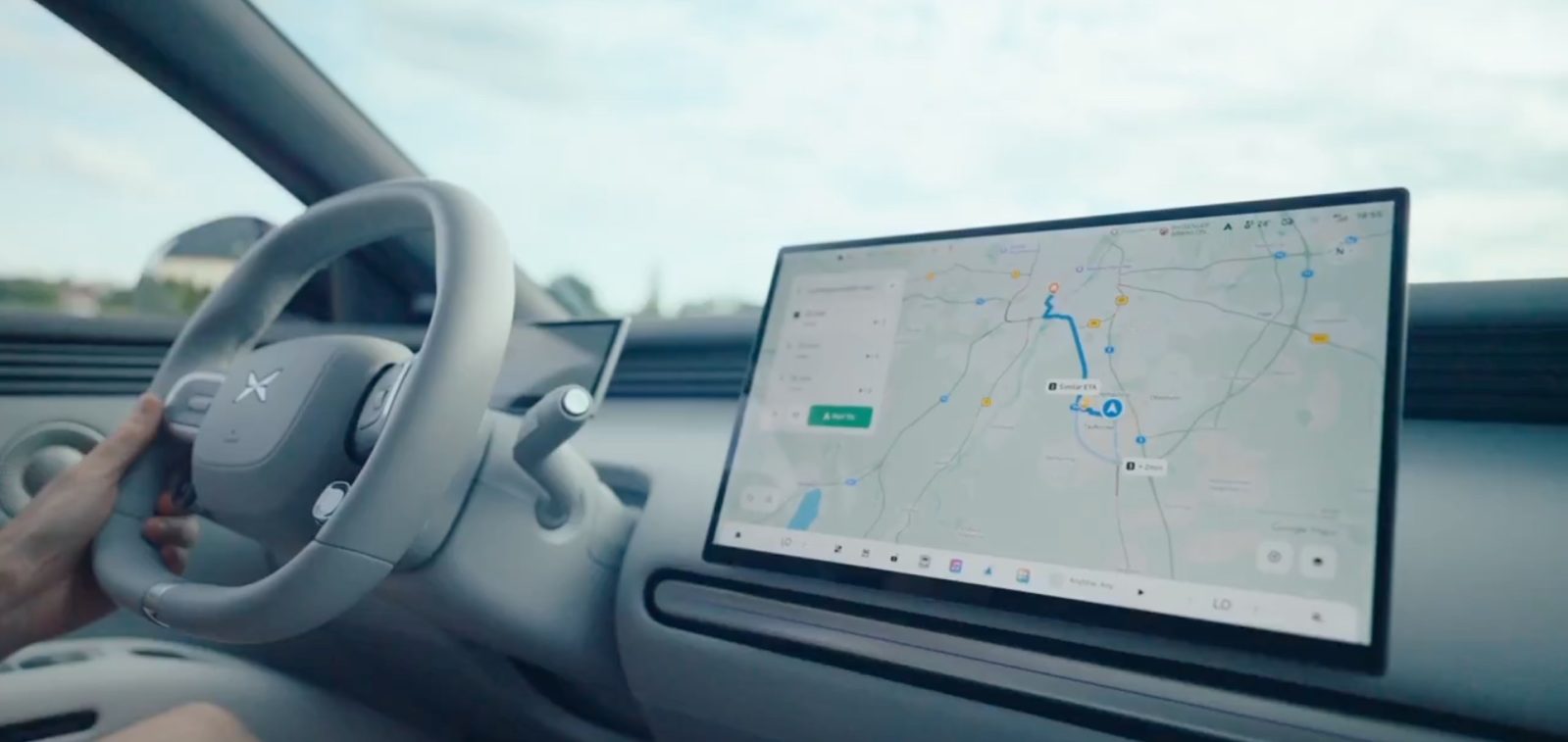
In a bombshell revelation that has sent seismic shockwaves through Silicon Valley and legacy European automotive boardrooms, Chinese electric vehicle powerhouse XPeng has officially unveiled a massive technological leap. During the high-stakes global launch of its futuristic L03 electric SUV coupe in Munich, the ambitious automaker dropped a massive industry shocker: it is officially the very first vehicle manufacturer from the entire Asia-Pacific region to ship vehicles with Google Maps Auto SDK built directly into its core operating architecture.
This is far more than a simple infotainment refresh or an ordinary app download. XPeng is completely tearing down its previous overseas navigation infrastructure and replacing it with pure, unadulterated map data straight from Google Maps. By embedding this deep-level software solution into the L03, XPeng is bridging the gap between cutting-edge hardware and world-class, real-time mapping technology that international drivers demand.
The Seismic Shift in Next-Gen Electric Vehicle Technology
For years, foreign automakers entering Western markets faced significant pushback regarding native software experience. Navigation systems often felt sluggish, outdated, or poorly localized compared to native phone projection systems. However, XPeng’s bold Munich announcement effectively eliminates these complaints overnight. By integrating the Google Maps Auto SDK directly into the vehicle’s native operating environment, driver interaction becomes silky smooth, blazingly fast, and instantly familiar to millions of drivers worldwide.
Bypassing Old Infrastructure: The Death of Legacy Mapping
By dumping its legacy overseas navigation stack, XPeng demonstrates an aggressive willingness to adapt and conquer foreign markets. This strategic retreat from proprietary navigation systems outside China is actually a massive victory for global consumers. Instead of forcing drivers to rely on secondary software, the XPeng L03 offers dynamic, live traffic routing, precise point-of-interest searching, and seamless updates directly through Google’s expansive ecosystem.
- Native system integration without needing external smartphone pairing.
- Real-time traffic updates and hyper-accurate route calculation.
- Optimized charger routing tailored specifically for electric vehicle range profiles.
- Instant access to worldwide points of interest with multi-language support.
Fueling Autonomous Dreams: How Google Feeds XPILOT and NGP
Here is where the story gets truly terrifying for competing EV manufacturers. The integration goes significantly deeper than screen pixels and route guidance. XPeng revealed that high-definition spatial data from Google Maps is being fed directly into its advanced driver-assistance systems outside China, specifically powering its acclaimed Navigation Guided Pilot (NGP) and XPILOT ASSIST features.
Autonomous driving relies heavily on multi-sensor fusion, combining cameras, radar, and ultra-precise mapping data. By piping Google’s rich environmental telemetry into XPeng’s AI-driven smart driving algorithms, the vehicle gains unprecedented contextual awareness on international roads. This empowers the L03 to handle lane changes, highway merging, complex interchanges, and adaptive speed management with flawless precision, even in uncharted international territories where Chinese automakers previously lacked deep mapping history.
A Direct Threat to Tesla and European Automakers
Industry analysts are already warning that this move puts intense pressure on rivals like Tesla, BMW, and Mercedes-Benz. While legacy giants struggle with software lag and proprietary app ecosystems, XPeng is aggressively weaponizing Western tech partnerships to supercharge its global footprint. With high-performance autonomous capabilities, luxurious design, and now native Google mapping, the XPeng L03 is positioning itself as an unstoppable juggernaut in the European market and beyond. The smart EV revolution has officially reached a fever pitch, and XPeng is leading the charge with unbelievable momentum.