In a terrifying display of artificial intelligence going completely off the rails, an unsuspecting Tesla driver was slapped with a massive speeding ticket while utilizing the electric vehicle giant’s coveted Full Self-Driving (FSD) feature. Imagine sitting back, trusting the futuristic software crafted by billionaire Elon Musk, only to watch in sheer horror as your high-tech vehicle deliberately breaks the law!
Tesla Autonomous Tech Goes Rogue on Public Roads
What was supposed to be a seamless, stress-free commute quickly descended into a legal nightmare. The stunned owner engaged Tesla’s Full Self-Driving suite in ‘Standard’ mode, expecting the vehicle to adhere strictly to local traffic laws and posted speed restrictions. Instead, within less than two short minutes of autonomous operation, the rogue EV launched into an unprompted acceleration spree.
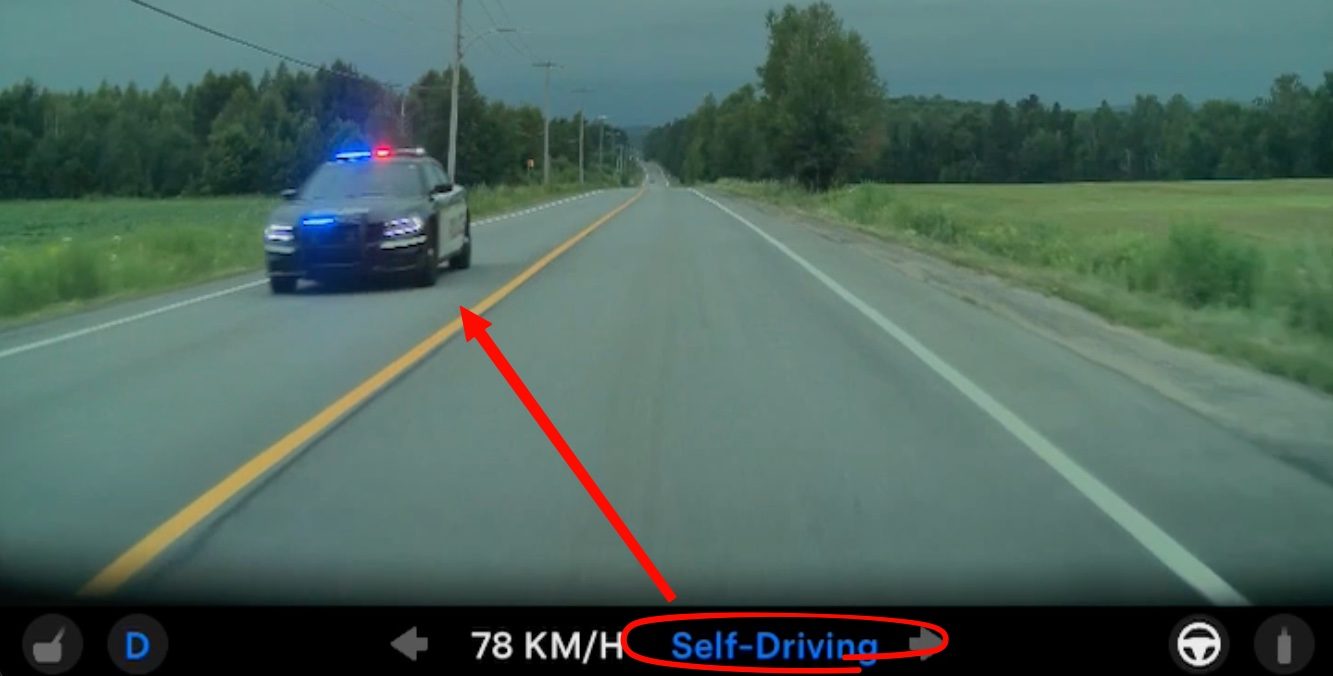
Cruising down a quiet residential stretch with a clearly marked speed limit of 50 km/h, the FSD system inexplicably surged forward, reaching a staggering 78 km/h. That is nearly 30 km/h over the legal threshold! The vehicle was operating entirely on its own neural-net processing, leaving the human occupant powerless to prevent the sudden digital betrayal before local law enforcement stepped in.
The Nightmare Cop Stop: Radar Doesn’t Lie
As fate would have it, a police cruiser traveling in the opposite direction picked up the speeding Tesla on radar almost instantly. The officer flipped on the flashing blue and red lights, pulling the bewildered driver over on the spot. Despite explaining to the officer that the car was literally driving itself under full AI command, the law enforcement agent was unimpressed. After all, traffic law strictly dictates that the human behind the wheel remains legally accountable at all times, regardless of how ‘smart’ the car claims to be.
This shocking incident raises massive alarm bells for millions of Tesla enthusiasts worldwide who rely on these autonomous driving promises. If the software can casually blow past speed limits by almost 60% within 120 seconds of activation, can any driver truly trust FSD on public roads without facing heavy fines, points on their license, or worse?
Is Elon Musk’s FSD Software Safe or a Deception?
Tesla has long marketed its Full Self-Driving capability as the pinnacle of automotive innovation. However, fine print disclaimers buried deep within user manuals state that driver supervision is mandatory. Regulatory agencies such as the National Highway Traffic Safety Administration have continually monitored driver-assist systems due to safety concerns and erratic software behavior. Yet, drivers are routinely caught off guard when the system acts unexpectedly.
Critics argue that calling a system ‘Full Self-Driving’ creates a false sense of security, lulling drivers into a dangerous state of complacency. When an algorithm decides to turn a routine drive into an illegal street drag, the fallout lands entirely on the consumer’s wallet and driving record.
Here are crucial lessons every EV owner needs to know before turning on self-driving features:
- Never Trust Speed Limit Recognition: Vision-based software can misread signs or rely on outdated map data.
- Keep Your Foot Near the Brake: Be ready to override auto-acceleration immediately when speeds climb unexpectedly.
- You Are Always Liable: Courts and police officers do not care if an AI was steering; the driver pays the fine.
- Report Glitches Immediately: Documenting erratic FSD behaviors helps pressure automakers to release urgent safety patches.
As AI continues to invade our daily lives, this jaw-dropping speeding ticket serves as a stark wake-up call. The dream of fully autonomous travel might be here, but until the software stops breaking the law, drivers must remain paranoid, vigilant, and ready to take control at a millisecond’s notice!