Tesla has done it again, and this time, it is causing an absolute uproar in the electric vehicle community. Without a single formal announcement, Elon Musk’s EV giant has quietly rolled out a massive change to its controversial ‘Full Self-Driving’ (FSD) beta software. If you are one of the thousands of drivers relying on Tesla’s autonomous tech to get you through your daily commute, prepare for your driving experience to get a whole lot more demanding. The company has officially stripped away your ability to ignore FSD intervention prompts, forcing drivers into an active feedback loop that critics are calling highly distracting and potentially dangerous.
Tesla’s Stealth FSD Update Traps Drivers Behind the Wheel
This sudden pivot in Tesla’s user interface design arrived under the cover of darkness with the FSD v14.3.2 release, bundled inside software update 2026.2.9.9. Rolled out in late April, the update was initially pushed to fleets without any mention of the major user experience shift. It was only after eagle-eyed beta testers noticed the persistent new screens that Tesla retroactively updated its official release notes to confirm the change.
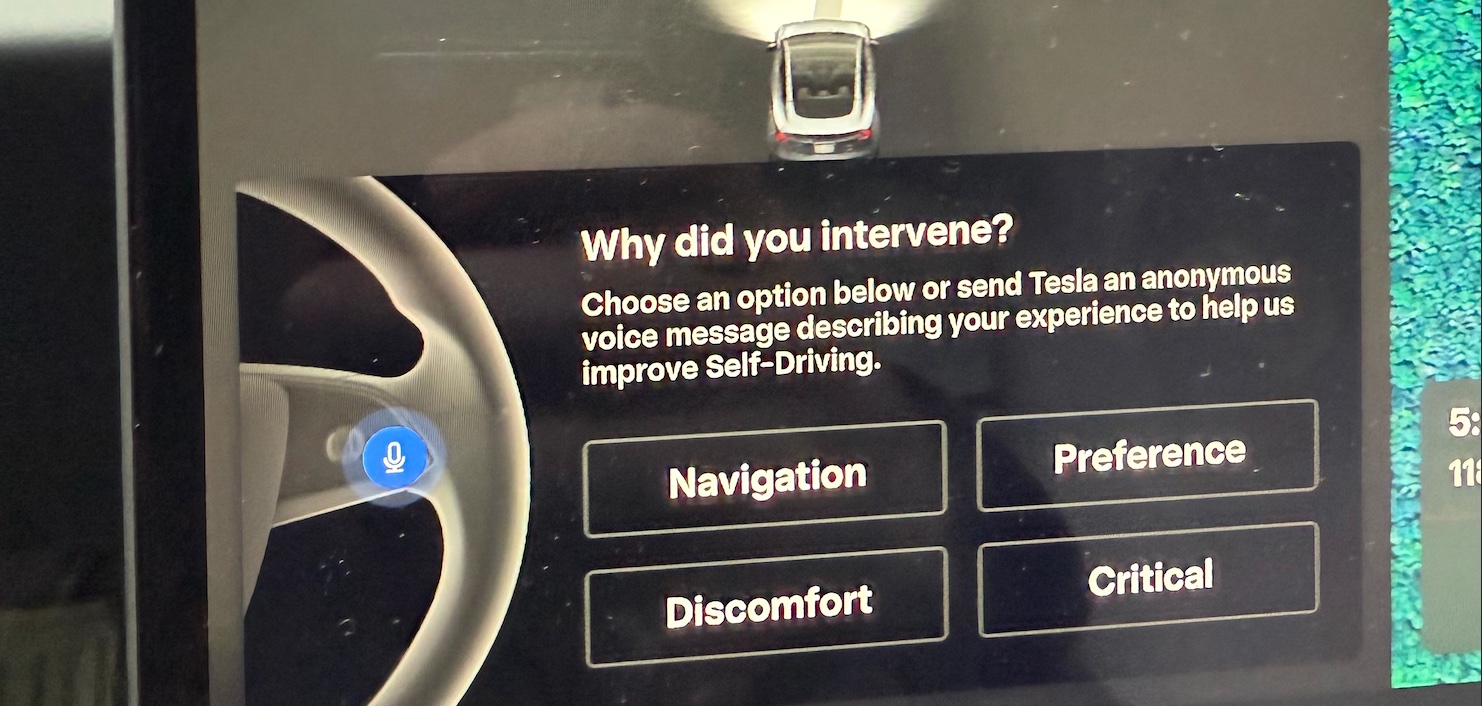
For years, drivers could easily disengage FSD by grabbing the wheel or tapping the brakes, and if a feedback prompt appeared, it would simply vanish after a few seconds of inactivity. That luxury is officially gone. Now, the moment you intervene to prevent your Tesla from making a bad decision, a persistent prompt locks onto your central display. It will sit there indefinitely, refusing to disappear until you actively select a canned reason for the intervention or submit a voice note detailing what went wrong.
The Death of the Self-Dismissing Prompt
The implications of this mandatory feedback system are massive. Previously, if Tesla FSD made an error, a driver would take over, focus on the road, and the car’s system would quietly log the disengagement. The prompt asking ‘What happened?’ was entirely optional. By making this prompt permanent until answered, Tesla is essentially forcing its customer base to act as unpaid quality assurance testers.
Imagine navigating a complex construction zone or a chaotic city intersection. You grab the steering wheel to override an erratic maneuver by the FSD software. Your adrenaline is pumping, you are focused on navigating safely, but now a giant dialogue box is frozen on your central touchscreen. It demands your attention. You cannot ignore it, as it remains on the screen, cluttering your map navigation and system interface until you interact with it. To clear it, you are forced to take your eyes off the road to tap a button or record a voice note, creating a bizarre irony where a safety override creates a brand-new safety hazard.
Safety Feature or Dangerous Distraction?
The internet has exploded with debate regarding this stealth update. Proponents of the change argue that high-quality, real-world data is the only way Tesla will ever achieve true Level 5 autonomy. By forcing drivers to explain precisely why they intervened, Tesla’s neural networks can categorize errors with surgical precision.
However, critics and safety advocates are highly skeptical. According to an in-depth analysis by Electrek, the fact that Tesla sneaked this feature into the fleet without an initial announcement speaks volumes about how they knew it would be received. Forcing a driver to interact with a touchscreen immediately after a stressful manual override event seems counterintuitive to basic road safety guidelines.
Here is a quick breakdown of what this update means for everyday drivers:
- No More Ignoring Prompts: The feedback dialogue will remain on your screen indefinitely until you provide input.
- Stealth Implementation: The feature was retroactively added to the release notes after owners started complaining.
- Increased Driver Cognitive Load: Drivers must now actively diagnose system failures while continuing to manually operate the vehicle.
- Voice and Touch Requirements: Clearing the screen requires you to either tap a pre-defined error category or record a live audio description.
Whether you view this as an essential step toward a driverless future or a dangerous step backward for user safety, one thing is certain: Tesla is no longer asking for your feedback—they are demanding it.