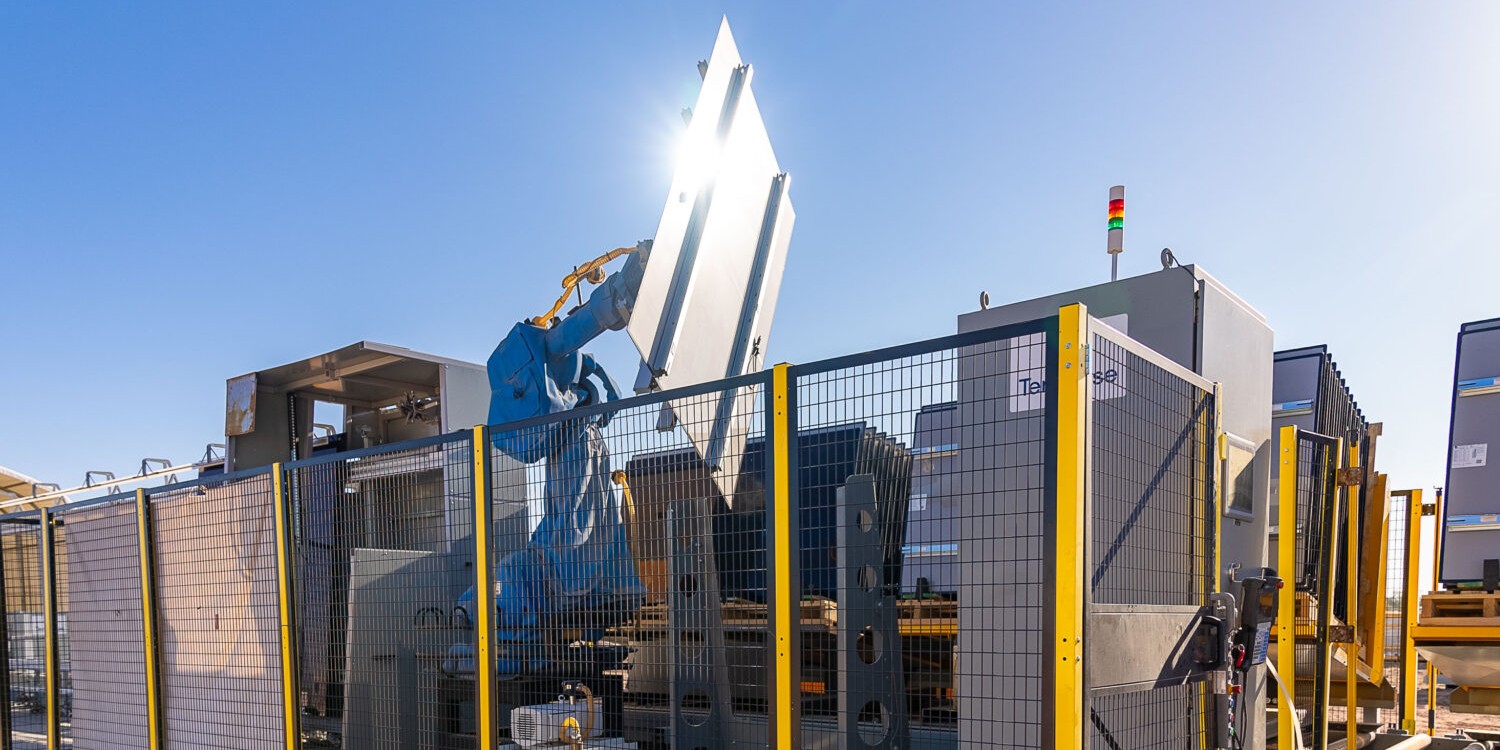
The era of human-led infrastructure is coming to a crashing halt. As the United States grapples with an insatiable hunger for electricity, driven by the explosive growth of AI data centers and the electric vehicle revolution, the traditional methods of building power plants are proving to be woefully inadequate. The grid is starving, and human hands simply cannot move fast enough to feed it. Enter Terabase Energy, a Berkeley-based titan that is effectively firing the starting pistol on a new age of machine-driven construction. Their weapon of choice? The Terafab V2—a sentient-adjacent robotic system designed to erect massive solar farms at a speed that would leave human crews in the dust.
The Rise of the Machine: How AI is Rescuing the Energy Grid
The problem facing the American energy sector is simple: we need power, and we need it yesterday. The solution, however, is complex. Building a utility-scale solar farm requires hundreds of thousands of man-hours, grueling labor in extreme desert temperatures, and a level of precision that is often compromised by human error and fatigue. Terabase Energy has solved this equation by removing the human factor from the most dangerous and repetitive parts of the process. After rigorous field testing across demanding environments, the Terafab V2 is no longer a mere prototype; it is a commercial reality ready to be deployed globally.
This isn’t just about minor efficiency gains; it’s about a total paradigm shift. In an industry where delays can cost millions and stall the transition to green energy, automation offers a level of predictability that was previously impossible. The Terafab V2 operates as a mobile assembly line that can be deployed directly to the site of a future solar farm. This system effectively turns a construction site into a high-tech manufacturing floor, sheltered from the elements and optimized for peak performance 24 hours a day, seven days a week.
Terafab V2: The Future of Autonomous Automation
What makes the Terafab V2 so revolutionary is its integration of advanced artificial intelligence with heavy-duty robotics. Imagine a mobile factory that crawls across the landscape, assembling solar modules with the precision of a Swiss watchmaker. Utilizing advanced AI computer vision, these robots can identify, lift, and secure solar panels with zero downtime. Unlike human laborers, these machines don’t need water breaks, they don’t suffer from heatstroke in the 110-degree Nevada sun, and they certainly don’t require overtime pay or insurance. They are built for one purpose: relentless productivity.
By integrating a ‘digital twin’ of the entire construction site, the Terafab system allows project managers to monitor progress in real-time from thousands of miles away. Every bolt tightened and every panel placed is tracked by the central AI, ensuring that the final product meets the highest possible engineering standards. This level of oversight and speed is unprecedented in the renewable energy sector, and it marks the beginning of a new standard for how we build the world around us.
Why Human Labor Can’t Keep Up with Climate Demands
The transition to green energy is currently bottlenecked by a massive labor shortage that most experts are too afraid to discuss. There simply aren’t enough skilled workers willing to relocate to remote deserts for months at a time to install millions of glass panels. Terabase Energy is bridging this gap by using technology developed in the heart of Silicon Valley to automate the difficult parts of the job. By deploying autonomous robotics, they are effectively decoupling the growth of solar energy from the constraints of the human labor market.
According to the latest reports from Terabase Energy, their system has now cleared all field hurdles and is officially ready for commercial shipping. This move could potentially slash the time required to build a solar farm by over 50%, a statistic that should have legacy energy providers shaking in their boots. As the US moves toward a carbon-neutral future, the reliance on automation will only grow. Those who fail to embrace this robotic uprising will find themselves left in the dark, while those who adopt the Terafab system will lead the charge into a new era of unlimited, clean energy. The machines are here, and they are building our future one panel at a time.
- Faster deployment of renewable energy assets.
- Significant reduction in on-site workplace injuries.
- 24/7 construction capabilities regardless of weather conditions.
- Precision engineering through AI-driven computer vision.