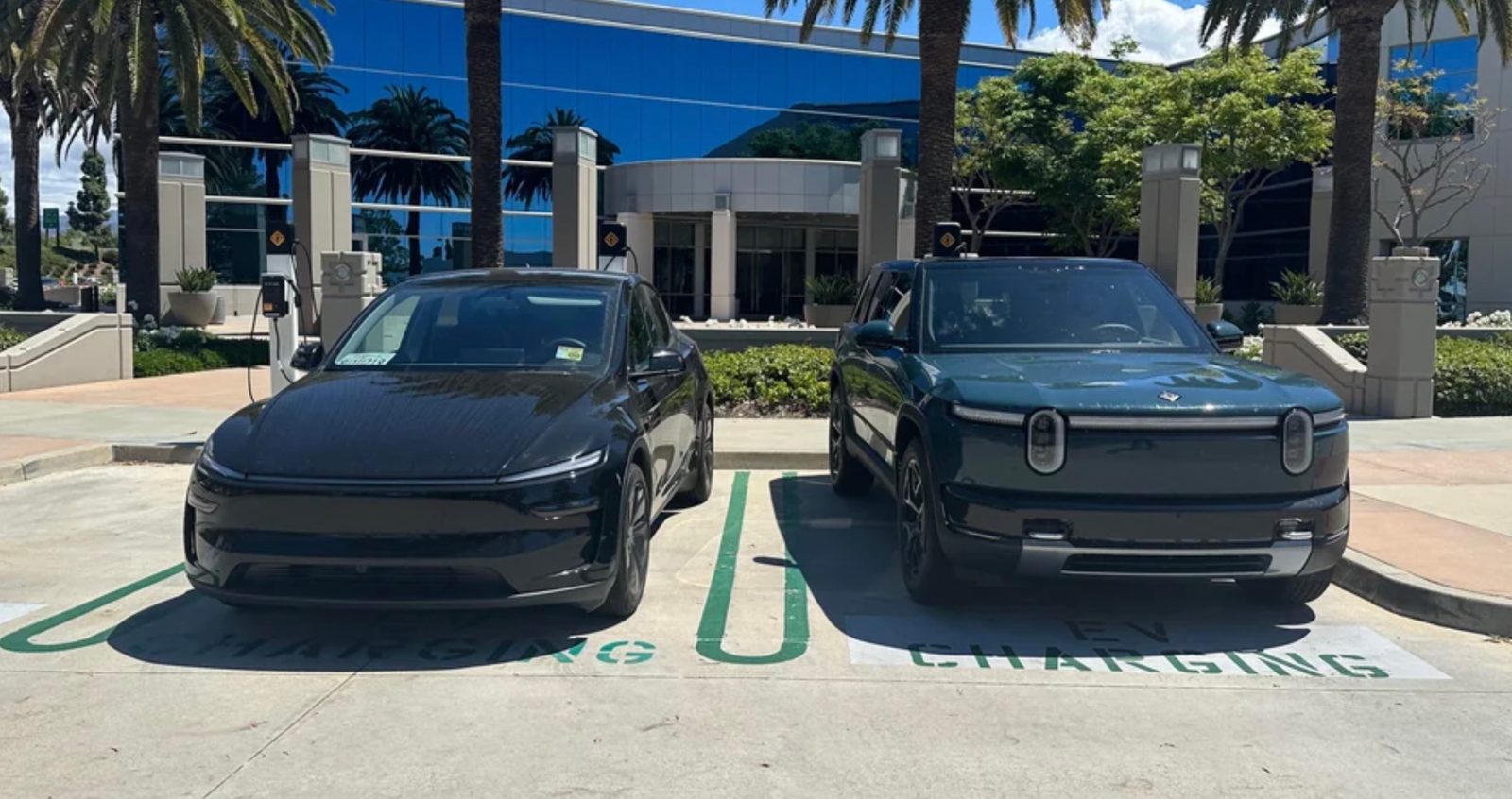
Electric vehicle enthusiasts were promised a battle of equals, but real-world testing has just shattered expectations. In a dramatic head-to-head matchup that is turning heads across the automotive industry, the highly anticipated Rivian R2 Performance fell surprisingly short when pitted directly against its chief rival, the market-dominating Tesla Model Y Performance. What was supposed to be a seamless show of modern engineering parity has instead ignited a fiery debate among buyers, investors, and industry analysts alike.
The test, conducted under meticulous conditions by the renowned automotive channel Out of Spec Reviews, took both high-performance electric SUVs on the exact same roads, during the exact same afternoon, effectively eliminating environmental variables like ambient temperature, wind speed, and traffic conditions. The result? The Rivian R2 consumed a jaw-dropping 18% to 26% more energy than the Tesla Model Y across every single cruising speed evaluated. For a vehicle touted as a revolutionary game-changer designed to dethrone Tesla, this massive discrepancy raises urgent questions about real-world range reliability and battery management efficiency.
Shocking Real-World Range Test Exposes Rivian R2 Efficiency Deficit
For months, prospective buyers have been eagerly watching the development and release details of the Rivian R2 platform. Marketed as the ultimate midsize challenger to Tesla’s ironclad dominance in the crossover segment, consumer expectations were sky-high. However, highway energy efficiency remains the ultimate litmus test of electric vehicle engineering, and this latest head-to-head confrontation reveals a stark reality that glossy brochure spec sheets failed to disclose.
During the comprehensive speed-matched evaluation, reviewers noted that as velocities increased, the energy consumption gap between the two vehicles widened dramatically. At standard highway cruising speeds—where range anxiety strikes hardest during long family road trips—the Rivian R2 suffered severe efficiency penalties. While the aerodynamic body of the Tesla Model Y slipped through the air with effortless grace, the R2 required considerably more kilowatts from its pack to maintain identical pace, forcing future drivers to confront shorter real-world driving ranges and significantly longer sessions at public fast-charging stations.
The EPA Rating Controversy Explained
The core of the consumer outrage stems from the stark contrast between public marketing claims and empirical highway data. Officially, both the Rivian R2 Performance and the Tesla Model Y Performance carry virtually identical EPA efficiency ratings. Adding fuel to the media fire, Rivian CEO RJ Scaringe has repeatedly assured journalists and investors that the R2 platform directly matches the efficiency and capability of the Model Y. According to reports from leading electric vehicle news outlets, these official laboratory numbers gave buyers absolute confidence that the two crossover SUVs would perform almost identically out on the open highway.
So why the massive discrepancy on real asphalt? Standardized EPA laboratory testing relies heavily on dynamometer routines that often fail to fully reflect high-speed aerodynamic drag, aggressive thermal management routines, or real-world mechanical friction. While laboratory settings provide a controlled baseline, actual highway driving demands unyielding efficiency. Tesla’s years of continuous software optimization, battery thermal integration, and aerodynamic engineering clearly gave the Model Y a massive upper hand when actual drag and road resistance entered the equation.
Why Energy Consumption Matters for EV Buyers
To the average consumer, an 18% to 26% difference in energy consumption might sound like a minor technical variance, but in the realm of daily EV ownership, it changes the economic landscape entirely. Higher energy usage translates directly into higher operating costs, whether charging at home overnight or paying premium rates at high-speed public charging plazas across the country.
Key implications of this performance gap include:
- Increased Charging Frequency: A vehicle consuming over a quarter more energy will inevitably require more frequent charging stops on extended journeys.
- Elevated Ownership Costs: Higher energy consumption increases the overall cost-per-mile, offsetting long-term savings often associated with switching to electric mobility.
- Thermal Management Stress: Pushing extra energy through a battery pack under high speed generates extra heat, which can lead to thermal throttling during demanding conditions.
As the EV sector evolves, consumers are looking far beyond clever styling and brand prestige. While the Rivian R2 boasts undeniably rugged aesthetics, clever interior packaging, and a passionate fan base, Tesla has proven once again that its core electric powertrain technology remains the gold standard in real-world efficiency.