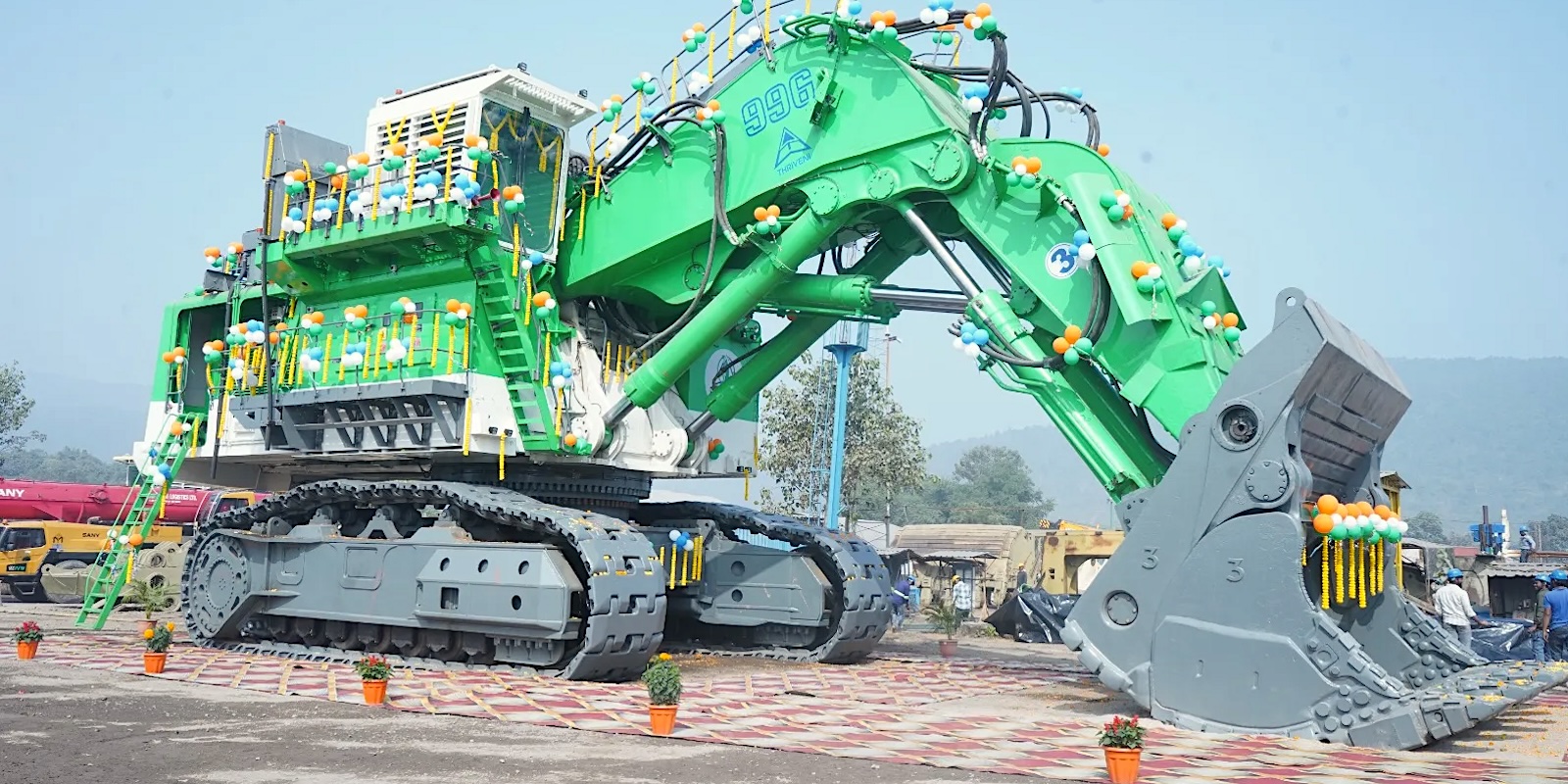
The mining world was rocked this week as Lloyds Metals and Energy announced a feat many thought impossible. In what is being hailed as a historic breakthrough initiative, they have successfully ripped the heart out of a 650-ton Liebherr R 996 excavator—traditionally a diesel-guzzling monster—and replaced it with a state-of-the-art electric powertrain. This isn’t just a minor tweak; it’s a fundamental shift in how heavy industry operates and a death knell for fossil fuels in the mining sector.
The Impossible Transformation: A 650-Ton Behemoth Swaps Diesel for Power Cables
Converting a machine of this scale is a Herculean task that challenges the very laws of mechanical engineering. The Liebherr R 996 is one of the largest excavators on the planet, a titan often found in the most grueling and remote mining environments. To move 650 tons of steel and rock without a single drop of diesel requires massive electrical infrastructure and a complete redesign of the machine’s internal systems. Lloyds Metals and Energy didn’t just want a prototype; they wanted a working beast that could outperform its fossil-fuel ancestors while operating with zero emissions.
Engineering a Green Revolution in the Deepest Mines
By ditching the internal combustion engine, the team has eliminated the massive carbon footprint associated with such machinery. But it’s not just about the environment; it’s about the bottom line and operational efficiency. Electric motors offer instant torque and significantly higher efficiency than diesel engines. This means this electric giant can potentially move more earth in less time while drastically reducing maintenance costs. Gone are the days of complex oil changes, fuel filtration systems, and the constant threat of engine failure in high-heat environments. This electric conversion represents a paradigm shift in how we view heavy-duty performance.
The Death of Diesel: Why This Changes Everything
The implications of this conversion are staggering. If a 650-ton class machine can run on electricity, what excuse is left for the rest of the industry? We are witnessing the beginning of the end for diesel in mining. The ‘breakthrough initiative’ mentioned by the company suggests this is the first of many units to undergo this radical surgery. As global pressure mounts to reach net-zero emissions, mining companies are scrambling for solutions that don’t compromise on power, and Lloyds Metals has just provided the blueprint.
Key benefits of this historic conversion include:
- Total elimination of tailpipe greenhouse gas emissions at the mining site.
- Lower operational costs due to the cheaper and more stable price of electricity versus diesel.
- Massive reduction in noise pollution, creating a safer and better working environment for site operators.
- Increased lifespan of the machinery through fewer moving parts and reduced mechanical vibration.
- Zero risk of soil contamination from diesel fuel leaks or spills during refueling.
Industry experts are already looking at Electrek to stay updated on the latest shifts in heavy machinery electrification. This move by Lloyds Metals and Energy proves that even the heaviest, most stubborn industries can pivot toward a sustainable future when driven by innovation. The technical specifics involve a complex array of transformers and high-capacity cabling that allows the excavator to remain tethered to the power grid or potentially powered through massive modular battery systems in future iterations.
While the initial investment for such a conversion is high, the long-term ROI is undeniable. Mining companies face fluctuating fuel prices that can cripple profitability; electricity provides a more stable alternative, especially when paired with on-site renewable energy like solar or wind farms. Furthermore, the heat signature of an electric excavator is significantly lower than that of its diesel counterpart. In deep underground mines or intense open-pit environments, heat management is a critical safety concern. By removing the heat-generating internal combustion engine, the R 996 becomes a safer, more reliable tool. The 650-ton class was once the domain of diesel dominance, but that era is officially over. The future is here, and it is high-voltage.