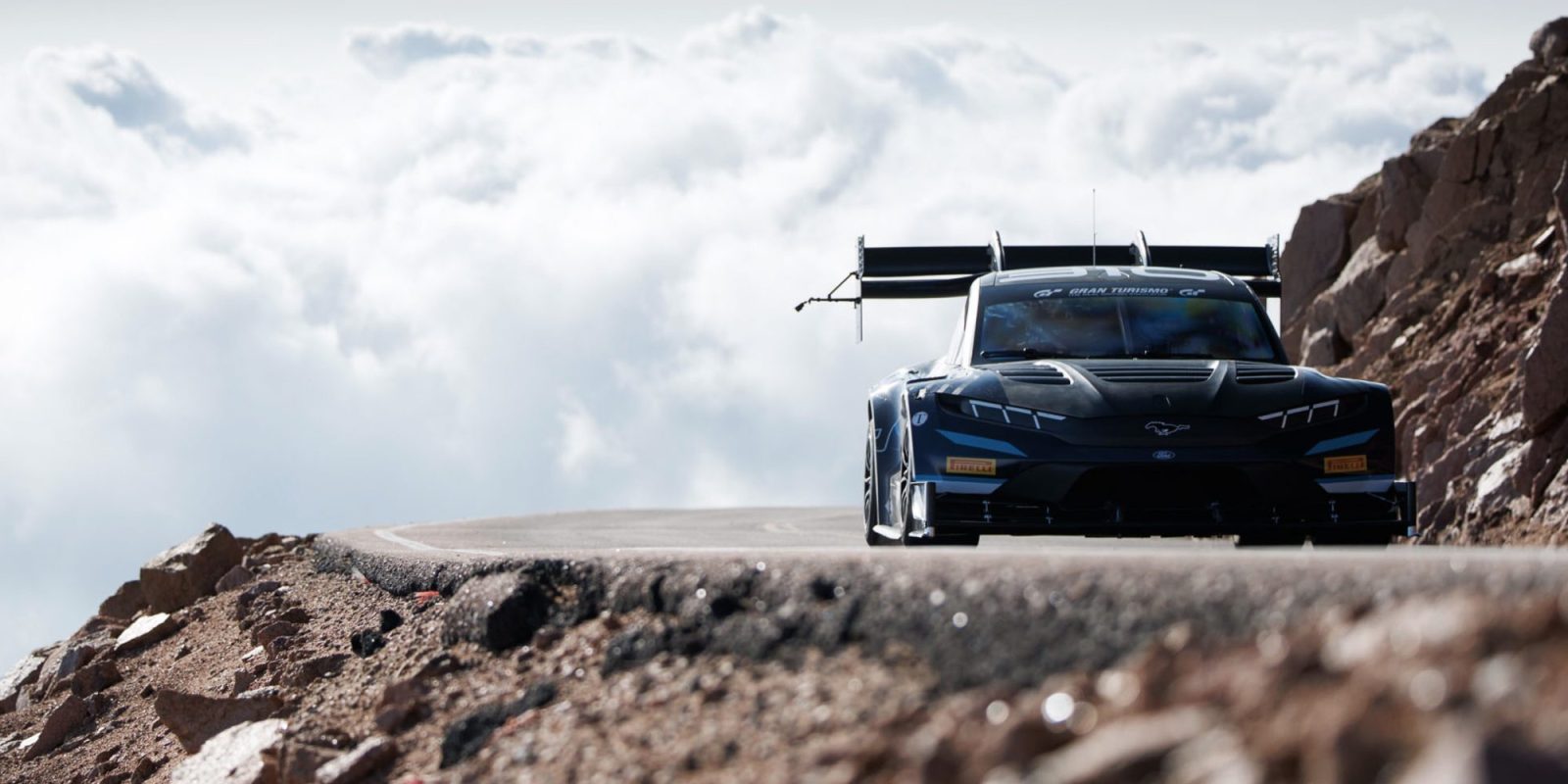
The mountain has spoken, and its voice is shockingly silent. In a historic display of raw electric power and relentless engineering, the Ford Super Mustang Mach-E has officially conquered the world’s most treacherous hill climb. This was not just a victory; it was a brutal statement of dominance that has left traditional gas-powered supercar manufacturers trembling in their boots.
The Ultimate Revenge: How Ford’s Electric Beast Silenced the Doubters
To understand the magnitude of this triumph, we must look back at the bitter disappointment of the 2025 race. The Ford team climbed the peak with high hopes, ultimately securing a class win. However, the overall victory eluded them, leaving them in a frustrating second-place finish behind a traditional internal combustion engine rival. It was a bitter pill to swallow for Ford Performance, but it ignited a fire that would burn all the way into the 2026 season.
Returning to the legendary Pikes Peak International Hill Climb with a redesigned, highly optimized Ford Super Mustang Mach-E, the American automotive giant had only one goal: absolute revenge. The team spent months analyzing telemetry, tweaking aerodynamic packages, and extracting every single kilowatt of power from the massive electric powertrain. They knew that to beat the mountain, they had to be flawless.
From Heartbreak to Absolute Domination
Pikes Peak is notorious for its brutal environment. Starting at over 9,000 feet and finishing at a dizzying 14,115 feet, the course presents a unique nightmare for traditional internal combustion engines. As the altitude increases, the air thins, depriving gas engines of the vital oxygen they need to generate horsepower. A standard combustion vehicle can lose up to 30% of its power by the time it reaches the summit.
This is where the Ford Super Mustang Mach-E held its deadly advantage. Electric motors do not breathe air. They deliver instantaneous torque and maximum power regardless of altitude. When the green flag dropped, the Mach-E launched off the line with a ferocious, silent intensity that stunned spectators. Negotiating the 156 hair-raising turns, the driver pushed the vehicle to the absolute limit, hugging the cliff edges with terrifying precision.
As the times rolled in, the tension at the paddock was palpable. But as the Ford crossed the finish line at the snowy peak, the scoreboard confirmed the incredible truth: they had not only won their class, but they had also obliterated the times of every single gas-powered competitor. It was a clean sweep, proving that the era of fossil-fuel dominance at the world’s toughest road race is officially over. Fans can read more about this historic achievement on Electrek, where EV enthusiasts are celebrating the historic milestone.
Why Gas Engines Had No Chance Against EV Power
The technical specifications of the Ford Super Mustang Mach-E are nothing short of a sci-fi fantasy. Featuring custom-built electric motors, a state-of-the-art liquid-cooled battery pack, and custom active aerodynamics, this machine was built for one purpose: to climb. The instant torque delivery allowed the driver to accelerate out of slow-speed corners with an intensity that gas cars simply cannot replicate.
Furthermore, the regenerative braking system played a crucial role in maintaining battery thermal efficiency during the grueling climb. While traditional brakes on gas cars overheat and fade under the intense pressure of Pikes Peak’s steep descents and tight corners, the Mach-E utilized its electric motors to slow the vehicle down, converting kinetic energy back into usable power and keeping the mechanical brakes cool for when they were needed most.
This historic victory marks a turning point in motorsport history. The debate is no longer about whether electric vehicles can compete with internal combustion engines; it is about how much longer gas cars can possibly hope to keep up. Ford has proven that the future of racing is electric, and the Super Mustang Mach-E is leading the charge.