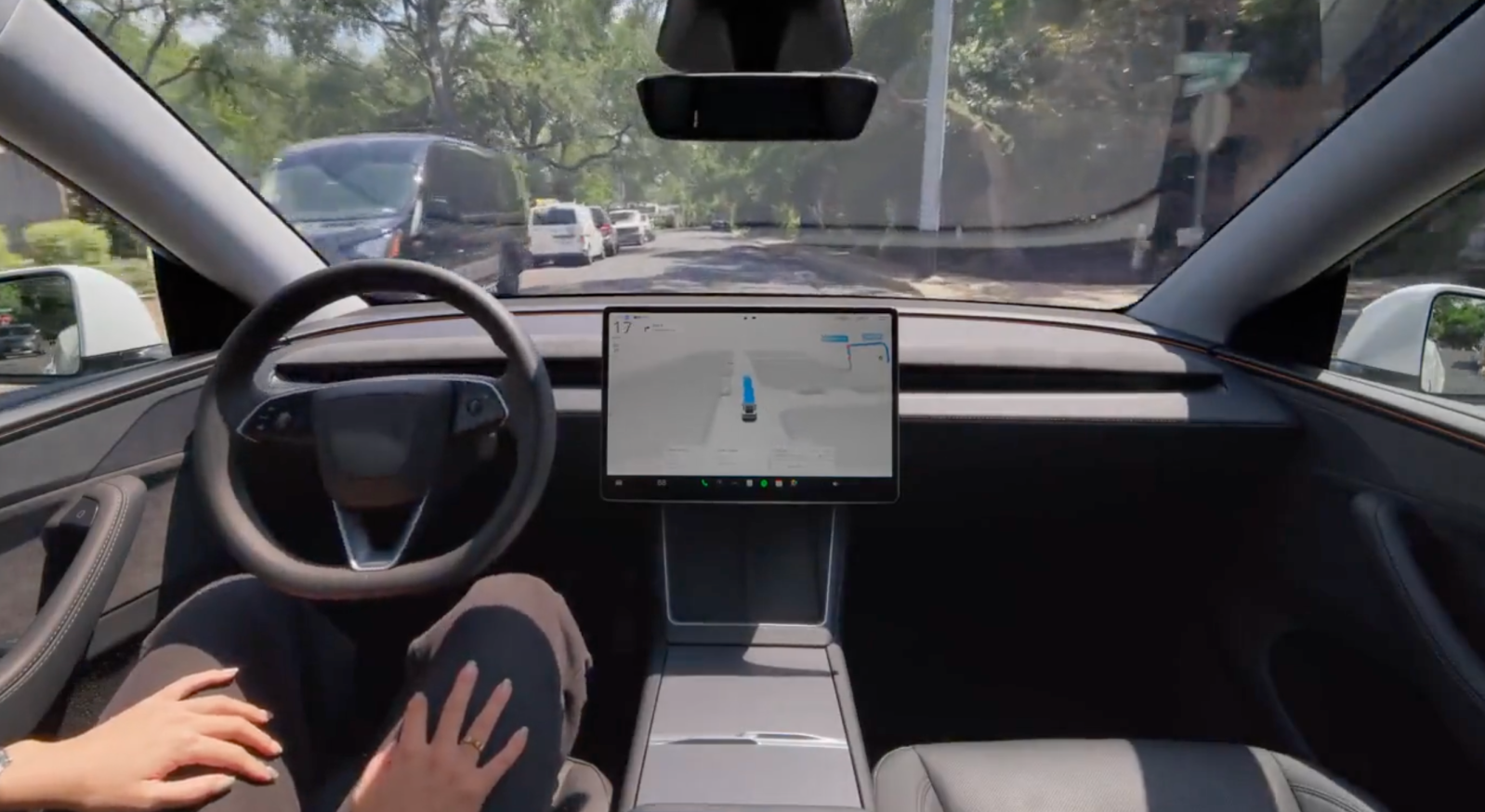
In a terrifying display of technology gone wrong, Raffi Krikorian—the current CTO of Mozilla and the former architect behind Uber’s pioneering self-driving car division—recently experienced every parent’s worst nightmare. While cruising down a quiet residential street in his Tesla Model X, Krikorian’s vehicle was under the control of Tesla’s controversial Full Self-Driving (FSD) software. In an instant, the system failed, resulting in a total loss of the high-end electric SUV. Most chillingly, his children were strapped into the back seat during the impact, highlighting the visceral danger of unproven AI in real-world environments.
The Moment of Impact: A Nightmare on Main Street
The crash wasn’t just another statistic in the growing list of Tesla FSD incidents; it was a wake-up call from one of the industry’s most respected minds. Krikorian, who spent years developing autonomous systems, knows the limits of artificial intelligence better than most. Yet, even his expertise could not prevent the sudden and violent failure of the ‘supervised’ software that Elon Musk has long touted as the future of transportation. According to reports, the vehicle misjudged a standard residential obstacle, leading to a collision that left the Model X beyond repair. The sheer speed of the failure left the veteran engineer with zero time to intervene effectively.
The incident raises harrowing questions about the safety of releasing ‘beta’ software to the general public. While Tesla insists that drivers must remain attentive at all times, Krikorian’s experience suggests that the ‘supervision’ model is fundamentally flawed. When a machine handles 99% of the driving, the human brain naturally drifts into a state of passivity, making it nearly impossible to react in the split-second required to avoid a catastrophe. This ‘vigilance decrement’ is a well-documented psychological phenomenon, yet it remains the cornerstone of Tesla’s autonomous strategy. By treating human drivers as a safety net, Tesla is essentially asking people to perform a task that the human brain is not wired to do: stay hyper-focused on a task they are not actively performing.
The Expert Verdict: Why Supervision Fails
In a scathing and deeply analytical essay published in The Atlantic, Krikorian breaks down the mechanics of the failure. He argues that Tesla’s reliance on pure vision—omitting LiDAR and other redundant sensors—creates a ‘single point of failure’ that is unacceptable in life-critical systems. At Uber, Krikorian’s team utilized a suite of sensors to create a 360-degree fail-safe environment. Tesla’s decision to strip away these layers in favor of cheaper camera-based AI is, in his professional opinion, a gamble with human lives. He notes that cameras can be blinded by glare or confused by textures, whereas LiDAR provides an immutable map of physical space.
- The lack of LiDAR prevents the car from ‘seeing’ depth in challenging lighting conditions.
- Neural networks can suffer from ‘hallucinations’ where they misidentify common objects or interpret shadows as obstacles.
- The hand-off process between AI and human is often too slow to prevent high-speed collisions.
- Supervised autonomy creates a false sense of security that leads to slower reaction times.
Krikorian points out that the marketing of ‘Full Self-Driving’ is inherently deceptive. By naming the product as such, Tesla encourages a level of trust that the current hardware and software simply cannot justify. For a regular consumer, the name implies a level of capability that doesn’t exist. For a tech expert like Krikorian, it represents a dangerous shortcut in the race for market dominance. He argues that the industry needs to move away from these ‘half-way’ measures and either commit to full automation with proper hardware or stick to traditional driver assistance features that don’t promise more than they can deliver.
The Moral and Technical Failure of Beta Software
The debate surrounding Tesla’s FSD isn’t just about code; it’s about ethics. Krikorian’s children being in the car underscores the real-world stakes of these corporate experiments. Should a multi-billion dollar corporation be allowed to use public roads and private families as ‘test data’ for unproven algorithms? The former Uber head doesn’t think so. He highlights that while autonomous technology has the potential to save millions of lives in the long run, the current ‘move fast and break things’ approach is literally breaking cars—and potentially lives. The psychological toll on a driver who sees their car accelerate toward danger while their children are inside is immeasurable.
Industry analysts are now looking at this crash as a potential turning point. If the man who built Uber’s self-driving division can’t safely navigate a residential street with Tesla’s software, what hope does the average driver have? This high-profile crash puts immense pressure on regulators like the NHTSA to reconsider the legality of FSD on public streets without stricter oversight. We are currently in a ‘Wild West’ of automotive safety where the rules are being written by the companies that benefit most from breaking them. Krikorian’s essay serves as a clarion call for a total reset in how we approach vehicular AI.
As the debris is cleared and the insurance claims are filed, the tech world is left with a stark warning. The ‘Full Self-Driving’ dream is currently a marketing mirage that demands a level of human vigilance that humans are biologically incapable of providing. Until the industry addresses these core cognitive and technical gaps, more families will find themselves in the same position as Krikorian—wondering how a ‘smart’ car could make such a stupid, and potentially fatal, mistake. The path to autonomy must be paved with transparency and redundancy, not just sleek marketing and risky software updates.