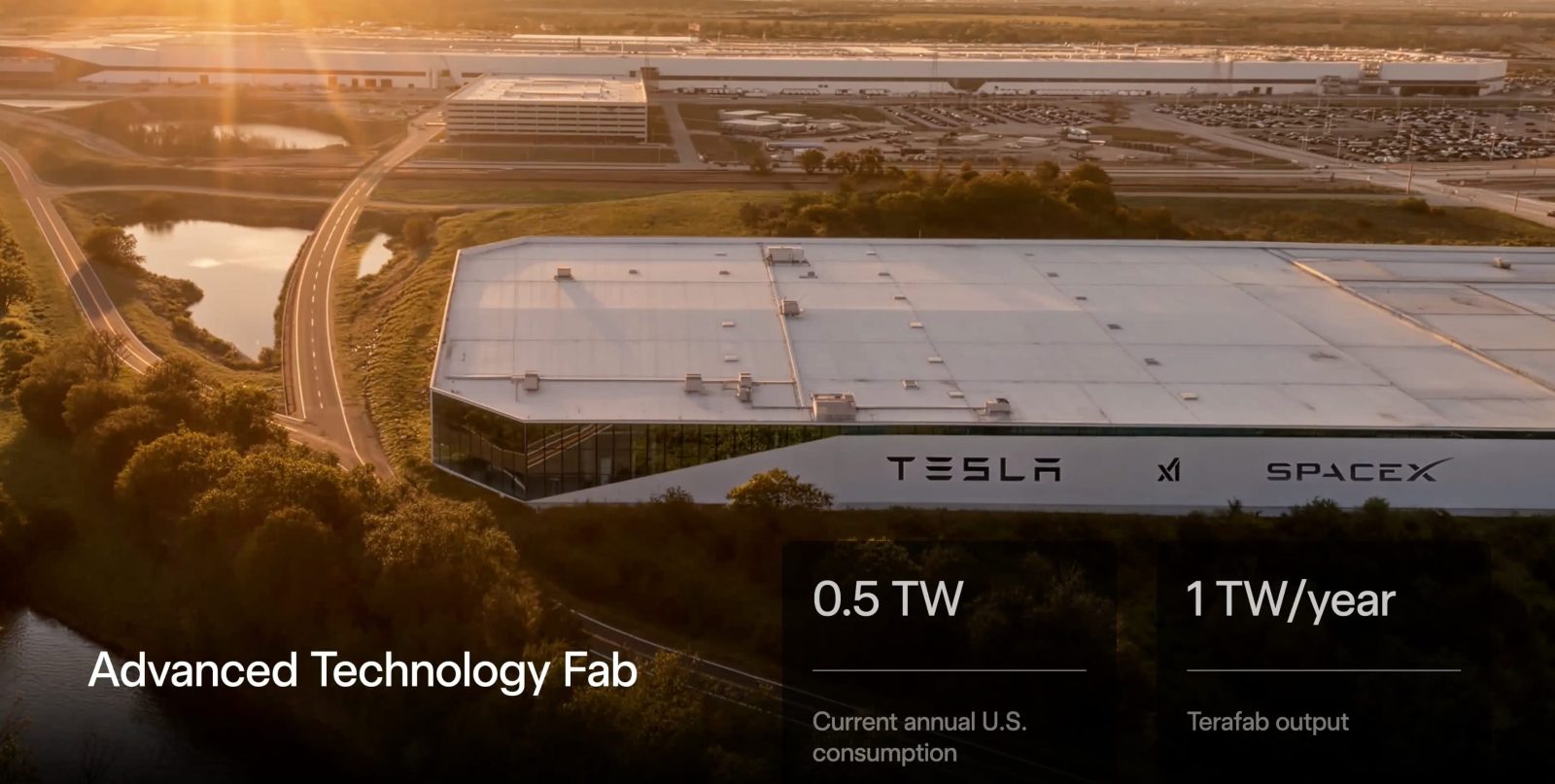
The technology world was shaken to its core this week as Elon Musk stood atop a stage at the historic, defunct Seaholm Power Plant in Austin, Texas. This wasn’t just another product launch or a minor software update; it was the birth of what Musk calls the ‘most epic chip building exercise in history by far.’ In a bold joint venture, Tesla and SpaceX have officially unveiled ‘Terafab,’ a staggering $25 billion semiconductor fabrication facility designed to rewrite the rules of global computing power. The scale of this project is not just large; it is, by all accounts, completely unprecedented in the history of human manufacturing.
Inside Terafab: The $25 Billion Silicon Fortress
The sheer ambition of the Terafab project is enough to make even the most seasoned silicon valley veterans do a double-take. According to Musk, the facility is being engineered to produce a mind-bending 1 terawatt of computing power annually. To put that into perspective, this level of output would make it the largest semiconductor fab ever built by an ‘absurd margin.’ The facility aims to solve the crippling chip shortages that have plagued both the automotive and aerospace industries over the last decade. By bringing production in-house through a joint effort between Tesla’s AI experts and SpaceX’s hardware engineers, Musk is effectively insulating his empire from the volatility of the global supply chain.
The investment of $25 billion signifies one of the largest private infrastructure projects in American history. Located in the heart of Austin, the Terafab will serve as a monolithic hub for the next generation of artificial intelligence. It is no secret that Tesla’s Full Self-Driving (FSD) goals and the Optimus humanoid robot project require immense amounts of data processing. Similarly, SpaceX’s ambitious Starship missions to Mars require radiation-hardened, high-performance silicon that the current market simply cannot provide at scale. Terafab is the answer to these multi-planetary problems, representing a vertical integration strategy that rivals the industrial giants of the early 20th century.
The Most Epic Chip Building Exercise in History
During the launch event, Musk emphasized that the Terafab is not merely a factory, but a machine that builds the machine. The architectural design of the plant incorporates advanced robotics and automated assembly lines that are expected to operate with near-zero human intervention. This level of automation is essential to reach the 1-terawatt goal. Experts suggest that the ‘Terafab’ will utilize cutting-edge lithography techniques that push the boundaries of physics, allowing for denser transistor counts and higher energy efficiency than anything currently produced by industry leaders like TSMC or Intel. The ‘absurd margin’ Musk referred to isn’t just about the physical size of the building, but the density of the innovation occurring within its walls.
Furthermore, the environmental impact of such a massive facility has been a topic of intense discussion. Musk promised that the Terafab would be powered by a massive array of Tesla Megapacks and solar integrated roofing, making it a carbon-neutral titan of industry. This move aligns with Tesla’s official mission to accelerate the world’s transition to sustainable energy, even while building the world’s most power-hungry computing devices. The integration of SpaceX technology also means the chips produced here will be capable of surviving the vacuum of space, making them the most versatile semiconductors ever conceived.
Why Nvidia and Intel Should Be Terrified
The geopolitical and economic implications of the Terafab cannot be overstated. For years, the world has relied on a handful of specialized firms for high-end AI chips. By creating a $25 billion alternative that produces 1 terawatt of compute, Musk is essentially declaring independence from the traditional silicon gatekeepers. If Tesla and SpaceX can successfully mass-produce their own silicon at this scale, the demand for third-party AI chips could plummet, sending shockwaves through the stock market and the tech sector at large. The ‘AI desperation’ seen in recent years might soon be replaced by a ‘Musk monopoly’ on high-performance hardware.
In conclusion, the Terafab represents a pivot point for humanity. As the facility begins its ramp-up in Austin, the eyes of the world will be watching to see if Musk can deliver on his ‘most epic’ promise. If successful, the Terafab will not only power the cars of tomorrow and the rockets of next year but could very well provide the digital brainpower for the first colony on Mars. The silicon wars have officially entered a new, more aggressive chapter, and the stakes have never been higher.