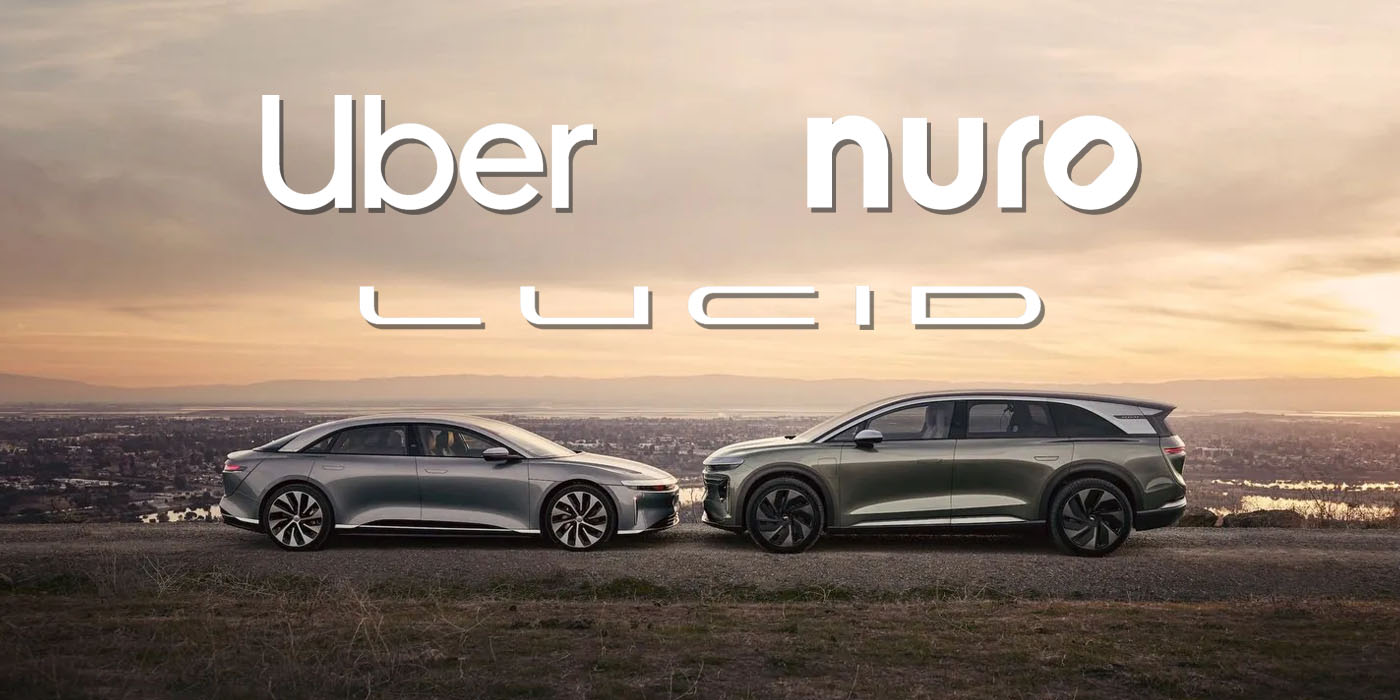
In a move that has sent shockwaves through both the tech and automotive sectors, Uber Technologies has officially pivoted from being a mere partner to a dominant owner of Lucid Group. A recent SEC filing has revealed that the ride-hailing giant now holds a staggering 37.7 million shares of Class A common stock. This represents an 11.5% ownership stake, catapulting Uber into the position of one of Lucid’s largest investors, second only to the Saudi Public Investment Fund (PIF).
The $500 Million Power Play: Uber’s Massive Bet on Lucid
The financial details are nothing short of breathtaking. Uber has poured over $500 million into the luxury electric vehicle manufacturer, a move seen by many analysts as a desperate yet brilliant attempt to secure its future in the autonomous driving space. This investment comes at a critical time for Lucid, which has faced significant headwinds in a cooling EV market. By crossing the 10% ownership threshold, Uber is no longer just a spectator; it is now a major player in the boardroom of one of the world’s most advanced EV companies.
The partnership, which was formally cemented in mid-April according to the Form 3 submitted to the SEC, marks a turning point for the industry. While Lucid has struggled with production scale and profitability, its powertrain technology remains the gold standard for efficiency and range. Uber, on the other hand, is under immense pressure to transition its entire fleet to zero-emission vehicles by 2030. This synergy could be the magic bullet both companies have been searching for to survive the decade.
Why Lucid? The Tech Behind the Merger
Lucid Motors is renowned for its proprietary battery technology and compact motors that offer industry-leading mileage per kilowatt-hour. For Uber, this efficiency translates directly into profit. If Uber can integrate Lucid’s high-performance hardware into its growing robotaxi network, the cost-per-mile for autonomous rides could drop significantly. This is not just about owning shares; it is about owning the infrastructure of the next generation of transportation.
Furthermore, the collaboration likely extends beyond mere equity. Industry insiders suggest that Lucid’s software stack is being optimized for Uber’s ride-hailing algorithms. Imagine a fleet of Lucid Air sedans roaming urban centers, operating 24/7 with minimal charging downtime. This vision is what drove Uber to bypass other manufacturers and double down on Lucid. You can track these shifts in the official SEC filings that detail the transaction timelines and stock allocations.
The Robotaxi Revolution: A New Era for Ride-Hailing
The ultimate goal for Uber is clear: the robotaxi. With this $500 million investment, Uber is positioning itself to lead the autonomous revolution. The integration of Nuro’s delivery tech with Lucid’s luxury chassis and Uber’s massive user base creates a trifecta that Tesla might find hard to beat. While Elon Musk has promised a dedicated Cybercab for years, Uber is moving fast by leveraging existing world-class engineering from its partners.
Critics argue that Lucid’s high price point makes it an unlikely candidate for a mass-market taxi fleet. However, Uber’s strategy seems to focus on the ‘Black’ and ‘Premier’ tiers first, where luxury and tech-savviness are highly valued. As production costs for Lucid decrease, the technology will trickle down to more affordable models, potentially revolutionizing how every Uber passenger experiences the road. The stakes could not be higher, and with 11.5% of the company now in its pocket, Uber is firmly in the driver’s seat of the electric future.
- Uber now owns 11.5% of Lucid Group after a $500M investment.
- The deal involves 37.7 million shares of Class A common stock.
- Uber is now the second-largest shareholder behind the Saudi PIF.
- The partnership focuses on the expansion of robotaxi technology.
This massive shift highlights a trend of consolidation in the EV industry. As smaller players struggle for capital, tech giants like Uber are swooping in to pick up pieces of the future at a discount. Whether this bet pays off or becomes a costly footnote in Uber’s history remains to be seen, but for now, the market is watching with bated breath as the ride-hailing king transforms into an automotive powerhouse.