The Desert Trap: How a Dream Journey Turned Into a Solar Nightmare
The vast, sun-scorched expanse of Chile’s Atacama Desert is known for many things: its breathtaking landscapes, its role as a testing ground for Mars rovers, and its status as the driest place on Earth. However, for one YouTuber attempting a legendary trek across the Americas, it nearly became the graveyard of a high-tech dream. Driving a Tesla Model X from the top of North America to the tip of South America is a feat of endurance, but the reality of charging infrastructure in remote regions remains a terrifying obstacle for even the most prepared electric vehicle enthusiasts.
While the Pan-American Highway offers a path through some of the most beautiful terrain on the planet, it also presents ‘dead zones’ where traditional EV chargers are non-existent. In the heart of the Atacama, the battery percentage of the Model X began its inevitable crawl toward zero. With no towns in sight and the mercury rising, the driver was forced to make a life-altering decision: stop before the car became a multi-ton brick in the middle of the highway.
The Great Chilean Dead Zone and the Reality of Range Anxiety
Range anxiety is a term often tossed around by casual EV owners worried about making it to the next grocery store, but in the Chilean wilderness, it takes on a literal, life-threatening meaning. The YouTuber, whose journey has been followed by thousands online, found themselves in a position where the navigation system’s optimistic estimates finally clashed with the brutal headwind and elevation changes of the Andes foothills. The Tesla Model X, despite its sophisticated energy management systems, simply could not overcome the lack of physical electrons available in the desert air.
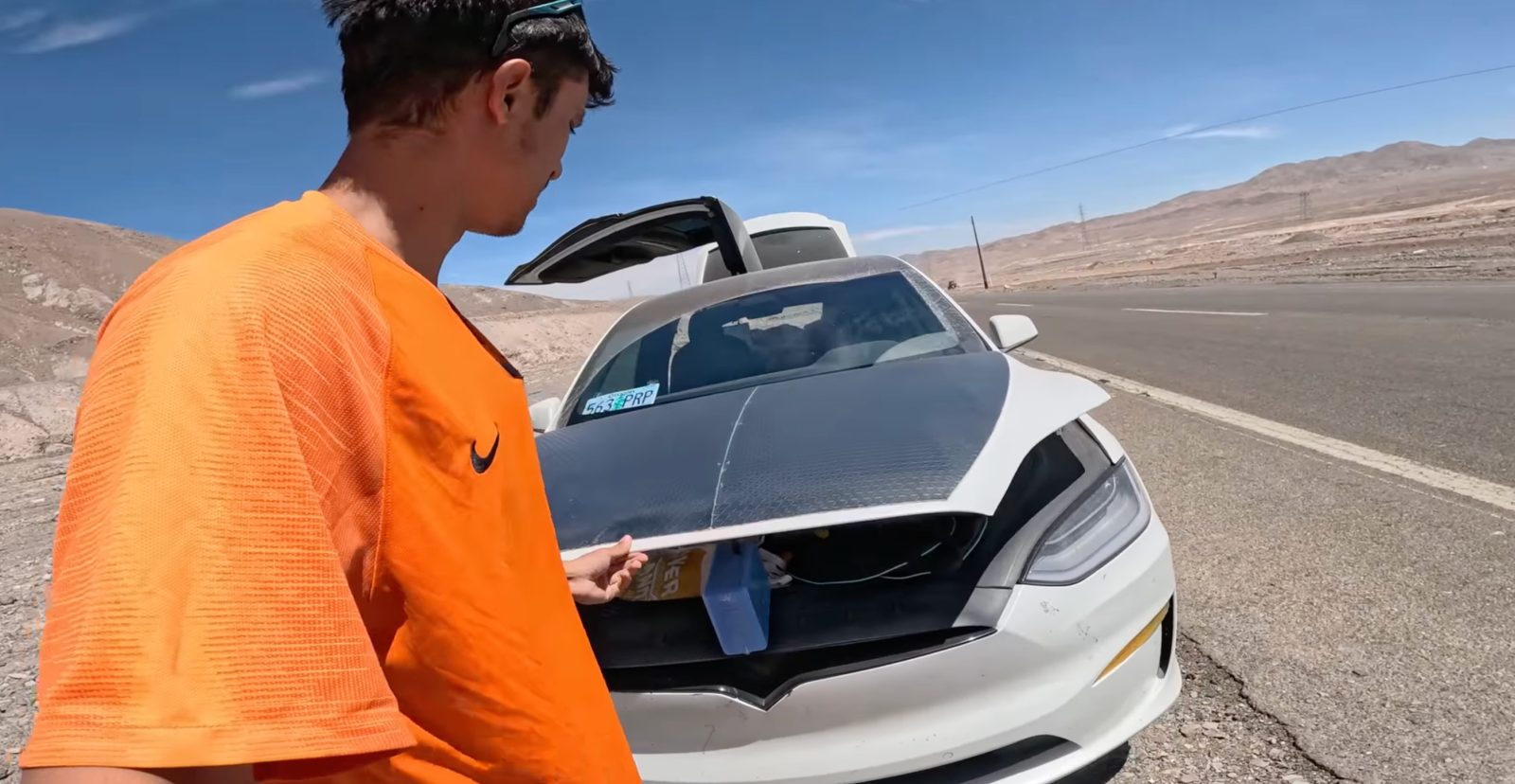
This incident highlights a massive gap in the global transition to sustainable transport. While urban centers in the United States and Europe are seeing a surge in Supercharger availability, the Global South remains a frontier where the ‘electrified highway’ is more myth than reality. To survive the ordeal, the driver had to rely on a piece of equipment that many considered a gimmick: a suite of portable, high-efficiency emergency solar panels designed specifically for this type of catastrophic failure.
- The Atacama Desert receives some of the highest solar radiation on the planet, making it the perfect—if only—place for a solar rescue.
- Deploying the panels took hours of painstaking work under the blistering sun.
- The charging rate was agonizingly slow, providing just enough mileage to reach the next viable outlet.
Solar Salvation: Portable Panels to the Rescue
The footage captured of the event is nothing short of cinematic. Seeing a sleek, futuristic Tesla Model X sprawled out on the side of a dusty Chilean road, covered in makeshift solar arrays, looks like a scene from a sci-fi survival film. These panels, which fold down into compact cases, were wired directly into the vehicle’s charging system. While a standard Tesla Supercharger can add hundreds of miles of range in minutes, this solar setup was delivering a trickle—roughly 2 to 3 miles of range for every hour of peak exposure.
It is a humbling reminder of the energy density we take for granted. To get enough juice to reach a small mining town 50 miles away, the team had to wait for days in the desert heat. They rationed water and food, documenting the process of ‘harvesting the sun’ to save their journey. This wasn’t just a technical challenge; it was a psychological battle against the isolation of the desert. The success of the mission relied entirely on the weather staying clear, a gamble that fortunately paid off in the driest place on the globe.
This viral event has sparked a massive debate in the automotive community. Is the world truly ready for long-distance EV travel, or are we putting the cart before the horse? For those interested in the evolving landscape of sustainable transport, keeping up with electric vehicle technology news is essential to understand how these technologies are being refined for the real world. While the YouTuber eventually made it out of the desert, the lesson remains clear: when you’re off the grid, the sun is your only ally.
Ultimately, the Atacama incident serves as both a warning and a beacon of hope. It proves that with the right emergency gear, even the most desolate environments can be conquered by electric power. However, it also underscores the desperate need for more robust infrastructure if we ever hope to see EVs truly replace the internal combustion engine on a global scale.