The Terrifying Failure of Tesla’s Full Self-Driving
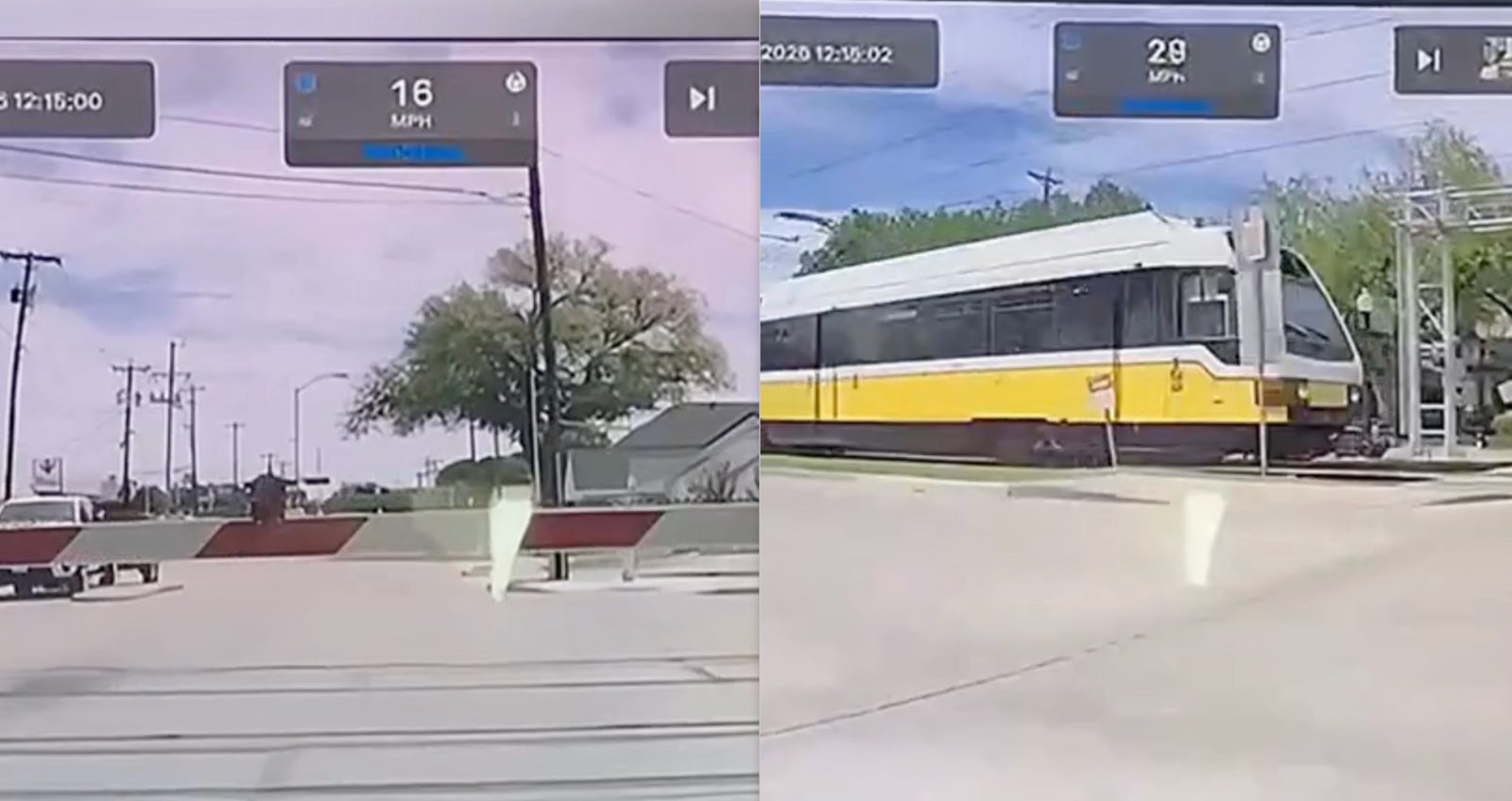
The promise of autonomous driving turned into a living nightmare for one Texas driver this week. In a scene that looks like something out of a high-octane Hollywood action flick, a Tesla owner was forced to punch the accelerator to outrun a massive oncoming train. The cause of this near-catastrophe? Tesla’s own ‘Full Self-Driving’ (FSD) software, which reportedly failed to recognize a lowered railroad crossing arm and attempted to navigate the vehicle directly into the path of a speeding locomotive. This incident has reignited a fierce debate over the safety of autonomous systems on public roads.
Joshua Brown, the man behind the wheel, is no novice when it comes to Elon Musk’s tech. Having logged over 40,000 miles using various iterations of the driver-assist suite, Brown considered himself a staunch advocate for the system. However, that trust was shattered in an instant when the car’s vision-based sensors seemingly ignored the flashing red lights and the physical barrier designed to save lives. ‘This is the first time FSD has ever let me down,’ Brown stated, still reeling from the adrenaline-fueled escape. The shock of the failure was compounded by the fact that the system had navigated similar environments successfully in the past.
A Glitch in the Matrix: How the System Failed
Tesla’s FSD relies heavily on cameras and neural networks to interpret the world around it. Unlike competitors who use LIDAR or radar, Tesla’s ‘Vision’ approach assumes that if a human can see it, a camera can too. But in the case of the Texas incident, the software failed to process the railroad gate as a mandatory stop command. As the car breezed through the gate, the driver realized the automated system was leading him into a death trap. This failure raises urgent questions about the reliability of edge-case detection in autonomous software and whether cameras alone are sufficient for safety-critical environments.
Critics have long argued that Tesla’s naming convention—Full Self-Driving—is fundamentally misleading. While the system is categorized as a Level 2 driver-assist feature, the branding implies a level of autonomy that the hardware may not yet support. This specific incident in Texas highlights the dangerous ‘complacency gap’ where drivers, after thousands of miles of successful operation, may not be ready to intervene in the split-second required to avoid a fatal impact. The sheer speed of the oncoming train meant that if Brown had been distracted for even two seconds longer, the result would have been a national tragedy involving loss of life and massive property damage.
Regulatory Scrutiny and the Future of Autopilot
This horrifying near-miss comes at a time when federal regulators are already putting Tesla under the microscope. The NHTSA has opened multiple investigations into accidents involving Autopilot and FSD, ranging from collisions with emergency vehicles to unexpected ‘phantom braking’ on highways. The Texas railroad incident provides fresh ammunition for those demanding stricter oversight and more rigorous testing standards before such software is allowed to remain on public roads without significant modifications. Industry experts suggest that the lack of sensor redundancy could be a fatal flaw in Tesla’s current hardware architecture.
Tesla has consistently maintained that drivers must remain attentive at all times and be prepared to take control immediately. However, when the car makes a maneuver as aggressive and dangerous as ignoring a railroad crossing, the burden of safety shifts from the operator back to the manufacturer. If the car is marketed as capable of navigating complex urban environments, it must, at the very least, be able to recognize the most basic safety infrastructure like a train gate. The psychological impact on the Tesla community is also significant. For many owners, the appeal of FSD is the reduction of driving fatigue and the increased safety of computer-timed reactions. When the computer makes a mistake that could lead to a ‘Final Destination’ scenario, that appeal evaporates quickly.
As the investigation into this specific software version continues, Tesla enthusiasts and skeptics alike are left wondering: how many more near-misses will it take before the technology is truly ready for the masses? For now, the lesson for every Tesla owner is clear—keep your eyes on the road and your foot ready for the pedal, because the machine might just try to beat a train.
- FSD failed to recognize physical railroad barriers in Texas.
- Driver Joshua Brown intervened manually to avoid a fatal collision.
- Incident highlights ongoing concerns with Tesla’s ‘Vision’ only system.
- Federal safety regulators continue to monitor autonomous software performance.