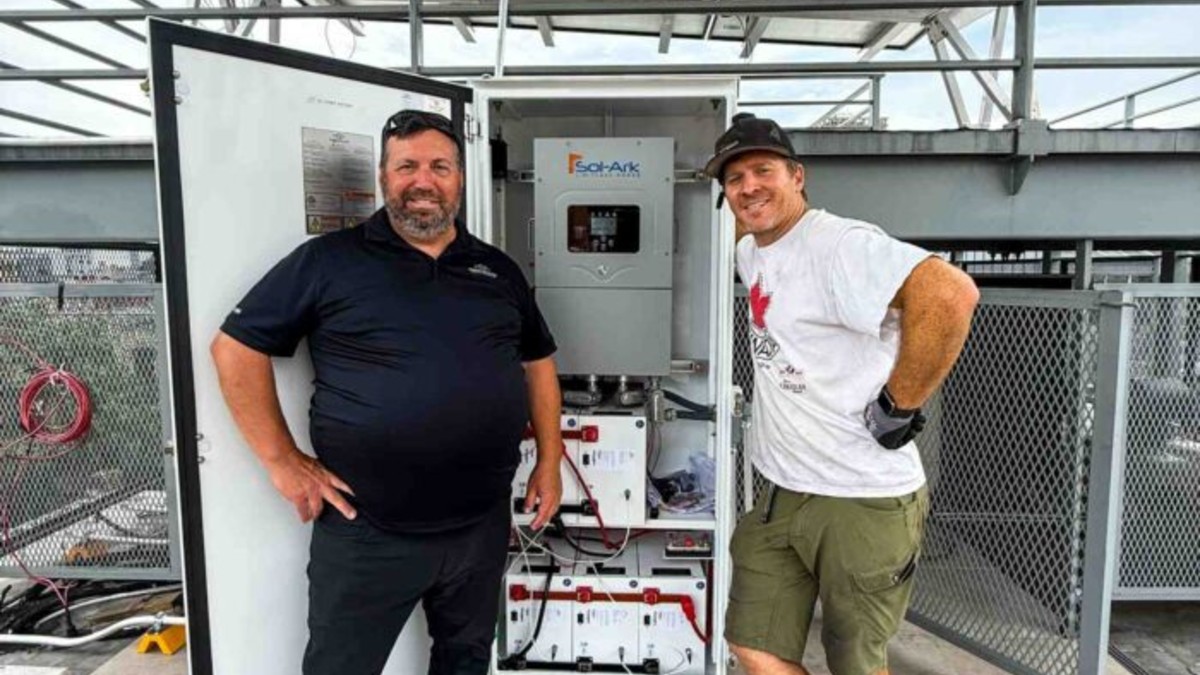
The concrete jungle is finally going green in a way that was once thought impossible. For decades, the rigorous fire codes and dense architecture of New York City acted as a fortress against residential energy storage. While suburban homeowners across the country were installing advanced power systems, New Yorkers were left in the dark—literally—during grid failures. But that era of energy exclusion has officially come to a crashing halt. The first-ever home battery storage system has been successfully installed on a residential rooftop in Brooklyn, marking a historic turning point for the five boroughs.
The Dawn of Urban Energy Independence
This isn’t just a minor technical achievement; it is a regulatory revolution. The installation, spearheaded by the pioneers at Brooklyn SolarWorks, represents years of negotiation with city officials and safety inspectors. Historically, the New York City Fire Department (FDNY) maintained strict prohibitions on lithium-ion battery installations in residential settings due to concerns over thermal runaway and fire safety in high-density areas. This tension between innovation and safety has kept NYC behind other major metros for nearly a decade.
However, with advancements in Battery Energy Storage System (BESS) technology and more rigorous safety standards, the floodgates are finally opening. This first installation serves as a proof-of-concept that will likely lead to thousands of similar setups across Manhattan, Queens, the Bronx, and Staten Island. For the first time, a New Yorker can generate power from the sun and store it right on their roof, bypassing the vulnerabilities of an aging centralized grid.
Technical Marvels on the Rooftop
The technology utilized in this historic Brooklyn installation is a testament to modern engineering. These aren’t your average batteries. They are designed to withstand the extreme temperature fluctuations of New York weather, from the freezing winds of January to the sweltering heat of August. By placing the unit on the rooftop alongside solar panels, the system optimizes space in a city where every square inch is at a premium.
These BESS units are integrated with smart inverters that can switch between grid power and stored energy in milliseconds. This means that when a transformer blows in the middle of a July heatwave, the lights in this Brooklyn home won’t even flicker. The hardware used meets the latest UL standards, ensuring that even in a city as dense as New York, the risk of fire is mitigated through advanced cooling systems and emergency shutdown protocols.
Why This Changes Everything for Homeowners
For the average New Yorker, the benefits are multi-faceted. First and foremost is the concept of ‘peak shaving.’ Con Edison, the city’s primary utility provider, often charges higher rates during periods of high demand. With a rooftop battery, homeowners can store energy when it is cheap or free from their solar panels and use it when grid prices skyrocket. This results in massive monthly savings that were previously unavailable to city dwellers.
Furthermore, this move aligns with New York’s ambitious Climate Leadership and Community Protection Act, which aims for a zero-emission electricity sector by 2040. As more residents adopt this technology, the city moves closer to a decentralized ‘Virtual Power Plant’ model, where individual homes contribute to the stability of the entire city’s grid. For more insights into the evolving landscape of green technology, you can visit Electrek to stay informed on the latest energy breakthroughs and legislative changes.
The psychological impact is just as significant as the economic one. New Yorkers have long felt at the mercy of an aging infrastructure and the whims of utility giants. This breakthrough signals a shift toward true self-reliance. As the ‘City That Never Sleeps’ looks toward a more sustainable future, the rooftop battery is more than just a piece of hardware—it is a symbol of resilience. The barrier has been broken, and the sky is quite literally the limit for what comes next in urban energy storage. Expect to see more of these sleek, high-tech units appearing on brownstones and apartment complexes as the city embraces its new electric identity.