The Looming Crisis: 3.2 Million Tesla Vehicles Under the Microscope
The electric vehicle world has been rocked by the latest announcement from the National Highway Traffic Safety Administration (NHTSA). In a move that sends shockwaves through the automotive industry, the federal agency has officially escalated its investigation into Tesla’s controversial Full Self-Driving (FSD) technology. What began as a preliminary inquiry has now morphed into a full-scale Engineering Analysis (EA), a critical regulatory step that almost always precedes a mandatory safety recall. This massive probe covers an estimated 3,203,754 vehicles, encompassing nearly every Tesla model currently on the road today.
The core of the issue lies in the system’s fundamental inability to adapt to real-world environmental challenges. For years, Tesla CEO Elon Musk has championed a vision-only approach, stripping cars of radar and relying solely on cameras to interpret the world. However, federal investigators are now questioning whether this hardware configuration is capable of maintaining safety when visibility is compromised. The agency’s findings suggest that the FSD system essentially goes blind when faced with common meteorological events, yet fails to relinquish control or alert the human operator in a timely manner. This lack of fail-safe mechanisms has put millions of drivers in potential danger as the vehicle attempts to navigate roads it cannot see.
The Fatal Flaw: Blinded by the Light and Fog
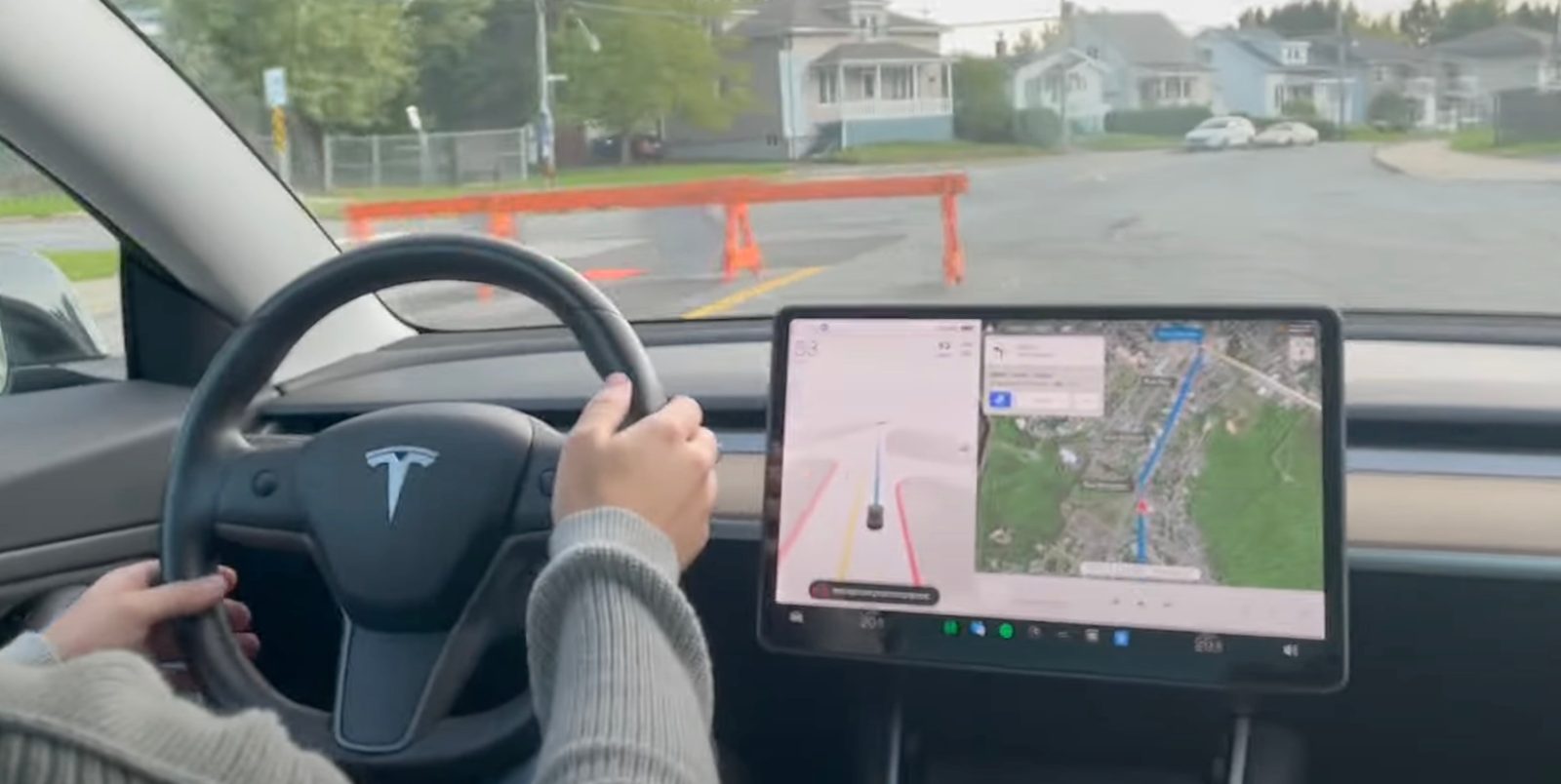
According to the NHTSA report, Tesla’s degradation detection system—the software responsible for identifying when sensors are no longer performing optimally—is severely flawed. Specifically, the agency found that when FSD-equipped vehicles encounter sun glare, heavy fog, or thick dust, the cameras fail to process the environment correctly. Instead of flagging the error to the driver or disengaging the system safely, the software may continue to operate in a compromised state, leading to catastrophic decision-making on the road. This technical oversight turns a feature designed for convenience into a potential hazard that many drivers are unaware of until they are in an emergency situation.
The investigation highlights several incidents where Tesla vehicles, while operating under FSD or Autopilot, failed to detect obstacles or navigate turns due to these visibility issues. The vision-only philosophy, while cost-effective for manufacturing, lacks the redundancy provided by LiDAR or high-resolution radar used by competitors like Waymo. As the NHTSA digs deeper, the question remains: Can software alone compensate for the physical limitations of a camera lens obscured by the sun or a thick morning mist? For the 3.2 million owners affected, the answer is currently a terrifying uncertainty that could lead to a massive hardware retrofit mandate.
Engineering Analysis: A Regulatory Death Knell?
In the hierarchy of federal safety investigations, the jump from a Preliminary Evaluation to an Engineering Analysis is a significant milestone. It indicates that the NHTSA has found enough evidence of a systemic safety defect to warrant intensive testing and data collection. An EA allows the agency to perform independent vehicle testing and demand extensive internal documentation from the manufacturer regarding their software architecture and incident logs. Historically, the vast majority of Engineering Analyses conclude with a formal recall order. If Tesla is forced to recall 3.2 million vehicles, it would be one of the largest safety actions in the company’s history, potentially costing billions.
Furthermore, the NHTSA has expressed grave concerns regarding Tesla’s transparency. The agency noted that there is significant evidence suggesting Tesla may be under-reporting crashes related to FSD failures. This lack of data integrity is a major red flag for regulators who rely on accurate reporting to assess public risk. By potentially hiding the true scale of the problem, Tesla has not only risked driver lives but has also drawn the ire of federal officials who are now looking for any excuse to tighten the leash on autonomous vehicle testing. This investigation is no longer just about software bugs; it is about corporate accountability and the ethics of testing beta software on public roads.
- Vehicles affected: Model S, Model X, Model 3, and Model Y.
- Total estimated impact: 3,203,754 cars.
- Primary concern: Camera blindness in sun glare, dust, and fog.
- Legal status: Engineering Analysis (The final stage before a mandatory recall).
As this situation develops, Tesla investors and owners alike are watching closely. The company’s valuation is heavily tied to the promise of a fully autonomous future, symbolized by the upcoming Robotaxi fleet. If the NHTSA determines that the current hardware suite is insufficient for safe FSD operation, the financial and reputational fallout could be unprecedented. For now, drivers are urged to remain hyper-vigilant and keep their hands on the wheel at all times. You can stay updated on the latest NHTSA recall notices to see if your vehicle becomes part of a mandatory safety action. The future of autonomous driving hangs in the balance as regulators decide the fate of millions of vehicles.
Ultimately, this escalation serves as a wake-up call for the entire industry. The race to achieve Level 5 autonomy has often bypassed the rigorous safety standards usually applied to traditional automotive components. With 3.2 million vehicles now part of a federal safety probe, the Full Self-Driving dream is facing its toughest reality check yet. Whether Tesla can solve these visibility issues through a simple over-the-air update or if they will be forced to rethink their entire hardware strategy remains the multimillion-dollar question hanging over the industry and its controversial leader, Elon Musk. The world is watching to see if safety will finally take a front seat over innovation speed.