In a bombshell reveal that has sent shockwaves through Wall Street and the EV market, Tesla’s highly touted Robotaxi service appears to have hit an embarrassing brick wall. During the official Q2 2026 update to shareholders, corporate executives painted a rosy picture of endless technological expansion and seamless autonomous driving dominance. However, hawk-eyed analysts looking closely at the company’s own official earnings presentation uncovered a terrifying reality: Tesla’s flagship Robotaxi program isn’t scaling up at all.
For months, chief executive Elon Musk has assured investors that autonomous cyber-taxis were on the verge of taking over major metropolitan roadways. Yet, the mathematical truth behind their self-reported figures paints a drastically different scenario. Behind the sleek graphics and high-flying PR statements lies a sobering reality—Tesla’s autonomous ride-hailing momentum has officially hit zero growth quarter-over-quarter.
The Devastating Truth Behind Tesla’s Robotaxi Metrics
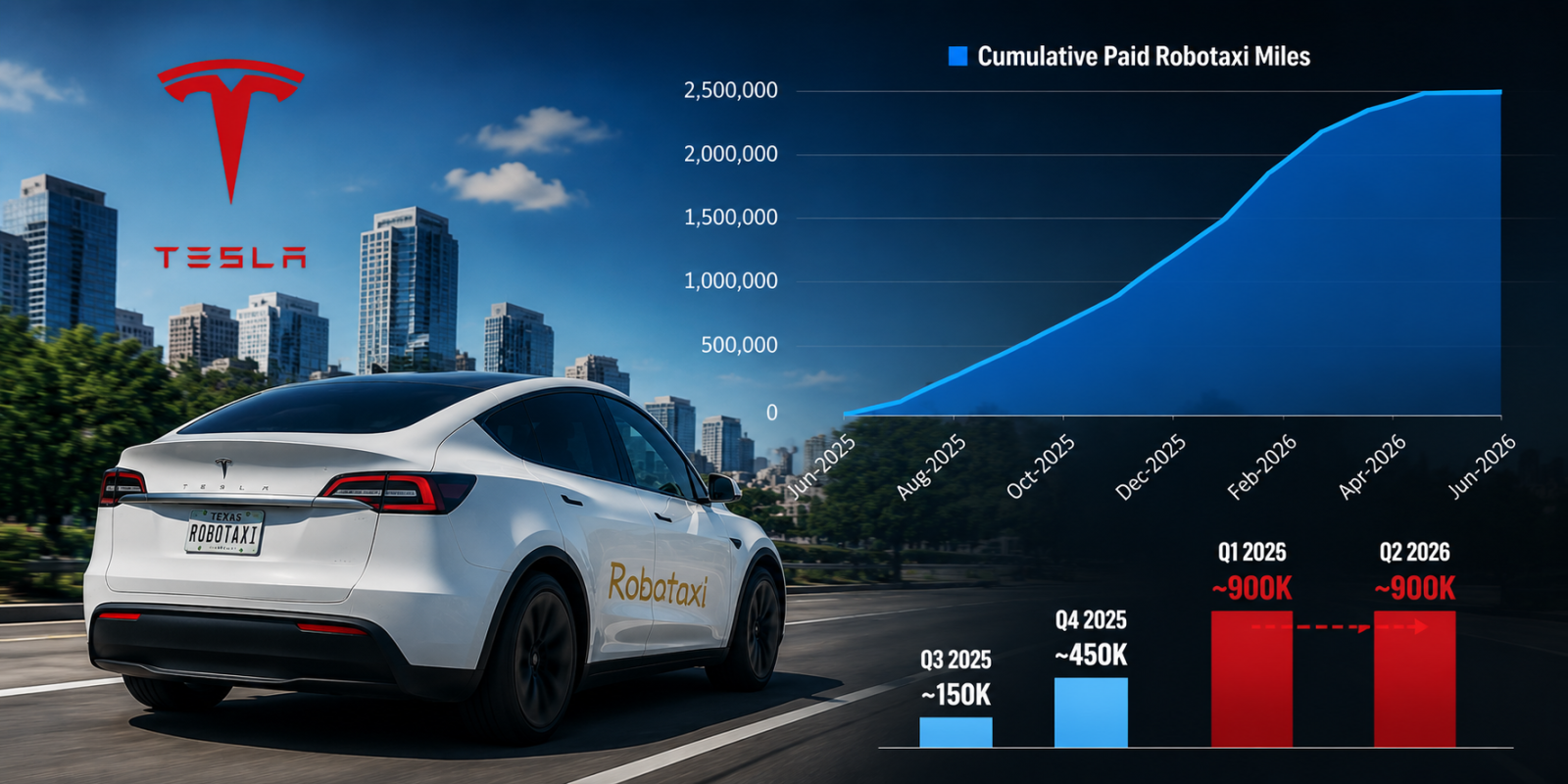
In its recent quarterly earnings report, Tesla eagerly highlighted a cumulative milestone: its autonomous fleet had surpassed an impressive 2.4 million total paid Robotaxi miles. To the casual retail investor, a skyrocketing chart with cumulative figures gives the illusion of unstoppable, exponential growth. It suggests that thousands of driverless vehicles are flooding the streets, generating massive recurring revenue day after day.
However, basic statistical analysis quickly dismantles this corporate sleight of hand. When you break down the cumulative curve into individual quarters, the illusion vanishes entirely. According to investigative analysis of the data by Electrek, Tesla added approximately 900,000 paid miles in Q1 2026. Fast forward to Q2 2026, and the number of newly added paid miles was once again roughly 900,000. That is a total quarter-over-quarter expansion rate of zero percent. In the fast-moving tech sector, flatlining growth is effectively regression.
The Mathematical Mirage: Breaking Down the Q2 Numbers
Why is flat growth in paid autonomous miles such a massive red flag for Tesla investors? In the tech and mobility-as-a-service industries, early-stage operations rely heavily on aggressive scaling. Investors tolerate immense expenditures under the promise that operational volume will double or triple quarter after quarter as safety algorithms improve and geographic footprints expand.
Instead, Tesla’s Robotaxi operations have remained completely stagnant for half a year:
- Cumulative Total: Over 2.4 million paid miles reported by Q2 2026.
- Q1 2026 Performance: Added ~900,000 paid autonomous miles.
- Q2 2026 Performance: Added ~900,000 paid autonomous miles (0% quarterly growth).
- Market Implication: No fleet expansion, no new major city rollouts, and stagnant passenger uptake.
Why Wall Street and Autonomous Driving Experts Are Alarmed
This dramatic pause in growth arrives at a perilous time for Tesla. Rivals like Waymo and Cruise have been rapidly expanding their commercial operations across major metropolitan hubs, logging millions of truly driverless commercial miles with clear upward trajectories. Meanwhile, Tesla continues to battle intense regulatory scrutiny, safety investigations, and deep technical hurdles regarding its vision-only autonomous architecture.
If Tesla cannot scale its paid Robotaxi service beyond a fixed mileage plateau, the company risks losing its first-mover hype in the multi-trillion-dollar autonomous mobility market. Furthermore, stagnant real-world testing miles mean less diverse edge-case data is being gathered by the neural networks, directly impeding software improvement cycles.
As investors begin demanding real operational receipts rather than vague future promises, Tesla faces mounting pressure to deliver actual, verifiable fleet expansion in the upcoming quarters. Until then, the company’s Robotaxi narrative remains on shaky, unconvincing ground.