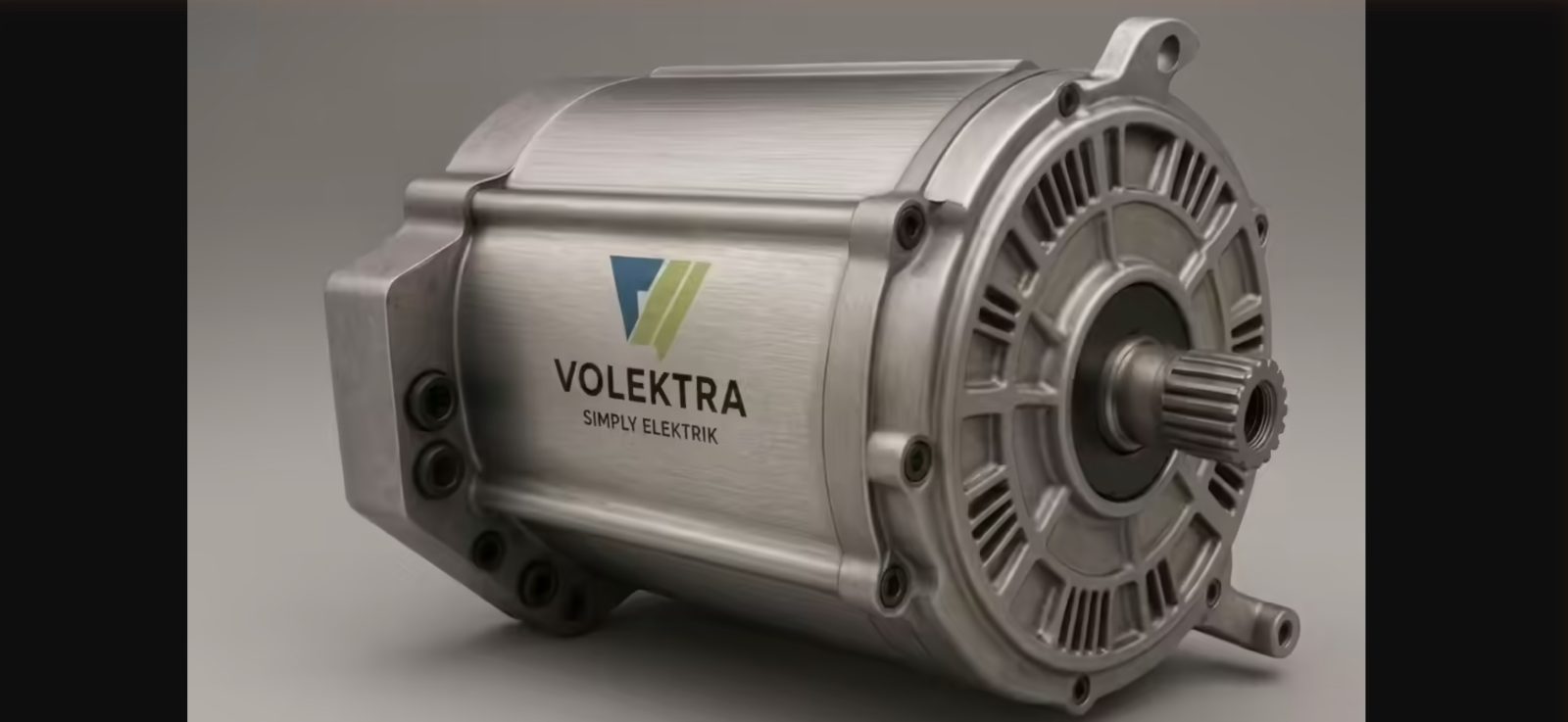
The global electric vehicle landscape has just been hit by a massive, unexpected earthquake, and the epicenter is not in Silicon Valley or Detroit. A tiny, virtually unknown Indian startup based in Bengaluru has just accomplished what Elon Musk and the world’s largest automotive giants have spent billions trying to solve. Vimag Labs, a humble firm valued at just $5 million, has officially secured its fifth Indian patent for a revolutionary rare-earth free EV motor. This jaw-dropping breakthrough could instantly shatter China’s stranglehold on the global EV supply chain and leave legacy automakers scrambling to catch up.
For years, the Achilles’ heel of the electric vehicle transition has been its heavy reliance on rare-earth magnets. These highly coveted minerals are crucial for generating the magnetic fields that power high-performance EV drivetrains. However, mining and processing these materials is a highly toxic process monopolized almost entirely by China. Every major manufacturer, from Tesla to General Motors, has lived in constant fear of supply chain embargoes. Now, Vimag Labs has single-handedly rewritten the rules of the game with a design that uses zero permanent magnets.
China’s Worst Nightmare: The Rare-Earth Free EV Motor
The implications of this breakthrough are nothing short of revolutionary. By leveraging advanced software and cutting-edge power electronics instead of physical magnets, Vimag Labs has developed a highly efficient rare-earth free EV motor that generates its magnetic field entirely through digital algorithms. This is the holy grail of automotive engineering. Instead of relying on volatile mining markets and geopolitical chess games, manufacturers can now look forward to a future powered by pure silicon and clever coding.
This shocking innovation hits right where it hurts. China currently controls over 70% of the world’s extraction of rare-earth elements and a staggering 90% of magnet magnetizing capacity. By designing a motor that completely bypasses this bottleneck, Vimag Labs has effectively neutralized a multi-billion-dollar geopolitical leverage point. According to reports from Electrek, this David-versus-Goliath story is already turning heads in boardrooms from Detroit to Tokyo.
How This Tiny David is Slashing Goliath’s Monopoly
To put this achievement into perspective, one must understand the sheer scale of the competitors Vimag Labs has outmaneuvered. Tesla has openly discussed its desire to eliminate rare-earth minerals from its next-generation drive units for years, yet has struggled to bring a high-performance, magnet-free motor to mass market without compromising on weight and efficiency. Meanwhile, General Motors has invested heavily in alternative sourcing, yet remains bound to complex global supply webs.
How did a startup with just a $5-million budget solve a problem that has baffled the brightest minds in engineering? The answer lies in their highly agile development process and a radical rethink of electric motor architecture. Rather than trying to optimize existing permanent magnet synchronous motor (PMSM) designs, Vimag Labs went back to the drawing board to refine synchronous reluctance and induction motor technologies using high-frequency software controls. The results are nothing short of spectacular:
- Complete independence from Chinese mineral supply chains.
- Drastically reduced manufacturing costs due to the absence of expensive raw materials.
- A highly sustainable production cycle with a near-zero carbon footprint during manufacturing.
- Dynamic performance tuning that can be updated over-the-air (OTA).
The Tech Inside the Revolution: Software Over Minerals
At the heart of the Vimag Labs patent is a sophisticated control system that acts as the ‘brain’ of the motor. Traditional motors rely on the physical placement of magnets to create a magnetic field. Vimag’s system, however, uses highly precise, real-time power electronics to inject current into the stator windings in a way that perfectly mimics the magnetic field of a permanent magnet. This software-driven magnetic field can adapt on the fly, optimizing efficiency whether the car is cruising on a highway or crawling through stop-and-go city traffic.
Industry experts are already predicting that this technology will trigger a massive wave of mergers and acquisitions. It is highly unlikely that a $5-million startup will be allowed to remain independent for long; the intellectual property alone is worth billions to any automaker looking to secure an immediate competitive advantage. The era of the geopolitical magnet monopoly is officially coming to an end, and a new age of software-defined propulsion has begun.