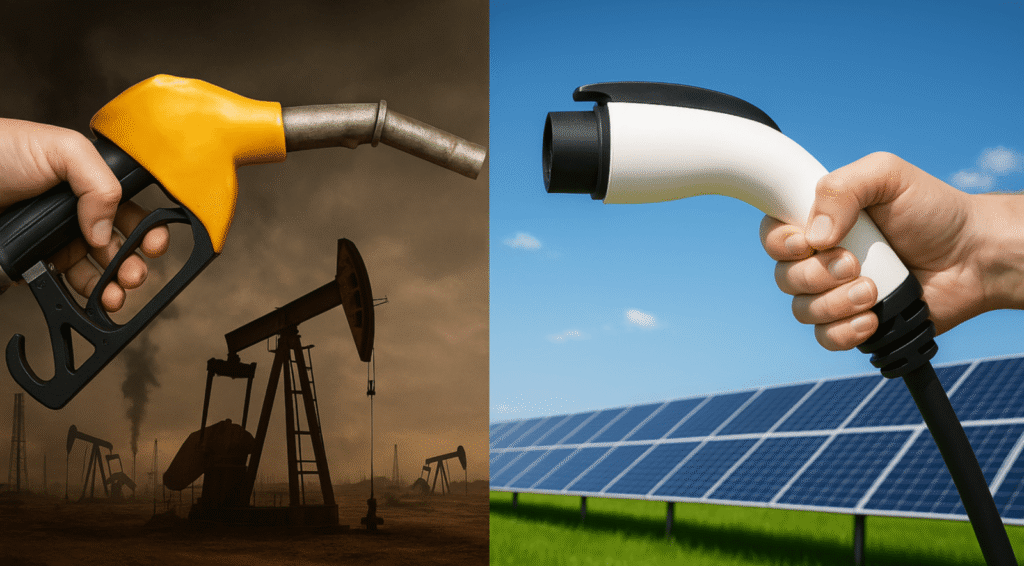

The Bold Green Revolution Taking Over East Africa
In a move that has left global energy markets and automotive giants utterly stunned, the East African nation of Uganda has officially declared war on fossil fuels. Under a newly unveiled National E-Mobility Strategy, the country is planning an absolute, uncompromising transition of its entire public transit sector away from internal combustion engines by the year 2030. This is not just a gentle push toward green energy; it is a full-throttle sprint that could completely redefine the geopolitical and economic landscape of sub-Saharan Africa. Analysts are calling it one of the most audacious environmental gambits of the decade, as Uganda aims to leapfrog traditional industrial steps and establish itself as a dominant powerhouse in electric vehicle manufacturing.
For decades, critics have argued that developing nations must rely on cheap, dirty fossil fuels to build their economies. Uganda is shattering that paradigm with a sledgehammer. The newly minted National E-Mobility Strategy is designed not just to clean up the air in bustling urban centers like Kampala, but to supercharge the domestic manufacturing sector. By forcing public transit—including buses, minibuses, and motorcycle taxis—to go 100% electric, the Ugandan government is creating a massive, guaranteed domestic market for electric vehicles. This brilliant but risky strategy has sparked intense debate among economic experts worldwide.
Goodbye Gas: The 2030 Ultimatum Sending Shockwaves
The timeline is breathtakingly short. With less than a decade to completely overhaul an infrastructure deeply reliant on imported petroleum, Uganda is racing against the clock. The environmental benefits are obvious: reduced greenhouse gas emissions, cleaner urban air, and a massive reduction in respiratory illnesses. However, the logistical nightmare of charging millions of vehicles in a region still developing its grid infrastructure cannot be ignored. Yet, government officials remain defiant and highly optimistic. They believe that by setting an aggressive, non-negotiable deadline of 2030, they will force rapid private sector investment and innovation. This bold move is already drawing comparisons to other visionary green transitions across the globe.
Can Uganda’s Manufacturing Sector Survive the Electric Shock?
At the heart of this eco-revolution is Uganda’s ambition to become a manufacturing hub. Instead of importing expensive foreign electric buses and cars, the nation intends to build them right at home. Local pioneering companies like Kiira Motors are already positioned to lead this charge, proving that African engineering can compete on the global stage. This strategy is expected to create thousands of high-tech jobs for Ugandan youth, sparking a massive economic boom. The transition is also a clever geopolitical play to reduce dependence on volatile foreign oil markets, keeping billions of dollars within the local economy.
Here are the key pillars of Uganda’s electrifying roadmap:
- Complete Public Transit Overhaul: Every single public bus and taxi must be emission-free by 2030.
- Boosting Domestic Production: Providing massive tax incentives and subsidies for local EV manufacturers.
- Grid Infrastructure Upgrade: Rapidly deploying solar-powered charging stations across major transit corridors.
- Skill Development Programs: Launching specialized engineering curriculums to train the next generation of EV technicians.
While skeptics wonder if the country can pull off such a monumental feat in such a short timeframe, the momentum is undeniably real. As reported by Electrek, this decision positions Uganda at the absolute forefront of the global e-mobility race. If successful, Uganda will not only clean up its streets but will also write the ultimate blueprint for how developing nations can bypass the fossil fuel era entirely.