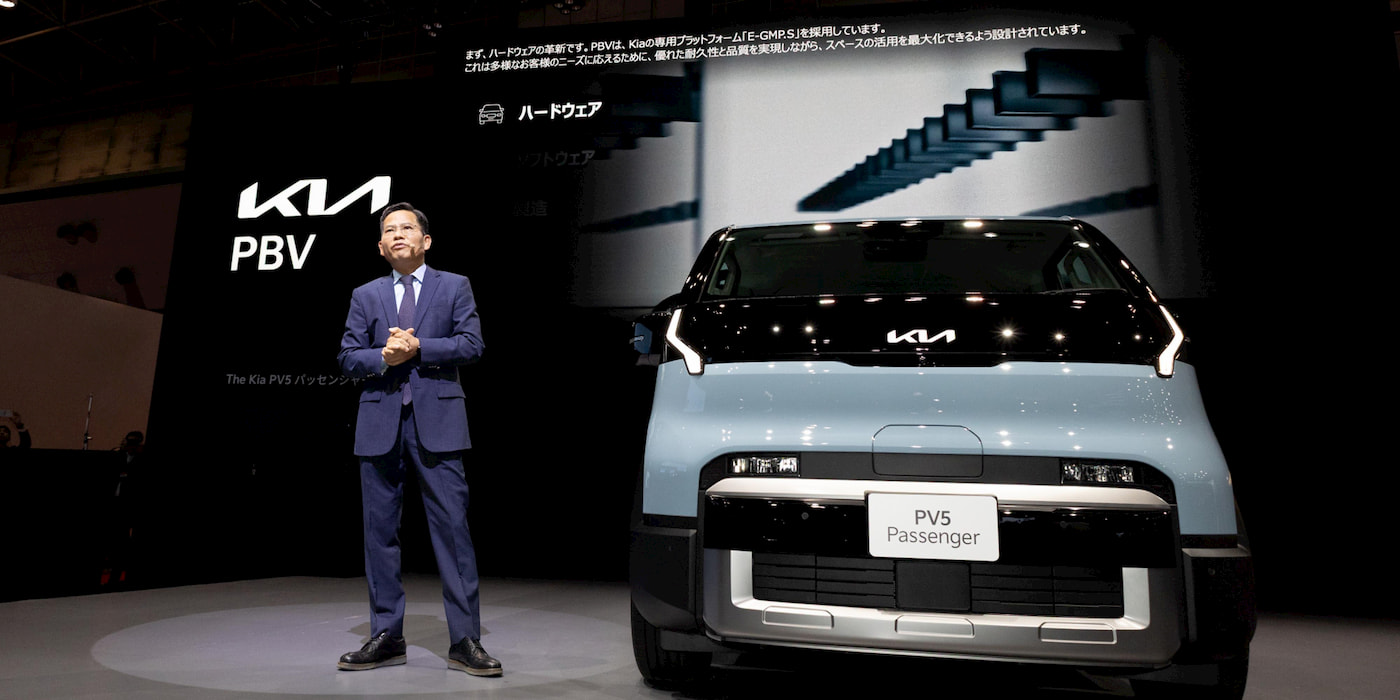
The global automotive landscape just witnessed a historic shift that has sent shockwaves through Tokyo’s boardrooms. In a move that industry insiders are calling an unprecedented declaration of war, South Korean automotive giant Kia has officially crossed the border to launch its first-ever electric vehicle in Japan. This isn’t just a standard product launch; it is a direct, calculated assault on what has long been considered the ‘forbidden land’ of the automotive industry. For decades, domestic giants like Toyota, Honda, and Nissan have enjoyed an almost impenetrable home-court advantage. But with the introduction of the radical Kia PV5, the rules of the game have officially changed forever.
Toyota’s Worst Nightmare: The PV5 Threat
For years, Japanese car manufacturers have prioritized hybrid technology over pure battery electric vehicles (BEVs). This hesitation has left a massive, gaping vulnerability in their domestic market—one that Kia is more than ready to exploit. The spearhead of this ‘full-scale attack’ is the PV5, a vehicle that defies traditional categorization. As a highly versatile, purpose-built vehicle (PBV), the PV5 is designed to cater to both commercial enterprises and lifestyle-focused consumers. By targeting a market segment that Japanese automakers have largely ignored, Kia is positioning itself to capture a highly lucrative demographic before local brands can even mount a defense.
The sheer audacity of this strategy cannot be overstated. Entering the Japanese market is notoriously difficult for foreign brands, let alone a Korean manufacturer with a history of fierce regional rivalry. Yet, Kia is not entering with a whimper, but with a roar. Industry analysts suggest that this launch could trigger a massive consumer shift, especially among younger, tech-savvy Japanese buyers who are eager to embrace the future of sustainable mobility.
Why Japan is the Ultimate EV Battleground
Historically, Japan has been a graveyard for foreign automotive brands. Strict regulatory hurdles, highly loyal consumer bases, and an unmatched network of domestic dealerships have kept outsiders at bay. However, the global push toward electrification has created a crack in the armor. While Toyota and its domestic peers have slowly rolled out their electric offerings, global competitors have recognized an opportunity to strike.
Kia’s decision to launch the PV5 in Japan is a calculated chess move. The South Korean brand has spent years refining its electric vehicle technology, earning global acclaim for models like the EV6 and EV9. By bringing this proven expertise to Japan, Kia is offering consumers a level of EV sophistication that local manufacturers are currently struggling to match. To learn more about this aggressive strategy, check out Kia’s evolutionary EV plans and how they intend to dominate global markets.
The Secret Specs of the PV5
What makes the PV5 such a dangerous competitor to Japanese auto giants? It all comes down to its revolutionary modular design and advanced electric architecture. Here is a breakdown of what makes this vehicle a game-changer:
- Modular Architecture: The PV5 features a flexible chassis that can be easily adapted for multiple uses, from a spacious passenger van to a high-capacity delivery vehicle.
- State-of-the-Art Charging: Equipped with ultra-fast charging capabilities, the PV5 can charge from 10% to 80% in under twenty minutes, resolving the range anxiety that plagues many Japanese drivers.
- Advanced AI Integration: The cockpit is a tech-lover’s dream, featuring seamless software integration, real-time fleet management tools, and next-generation driver assistance systems.
As the PV5 rolls onto Japanese streets, the pressure on Toyota, Nissan, and Honda is reaching an all-time high. Will the domestic giants rise to the challenge, or will Kia’s bold gamble permanently alter the power dynamics of the Asian automotive industry? One thing is certain: the war for the future of transportation has officially arrived on Japan’s doorstep, and Kia is leading the charge.