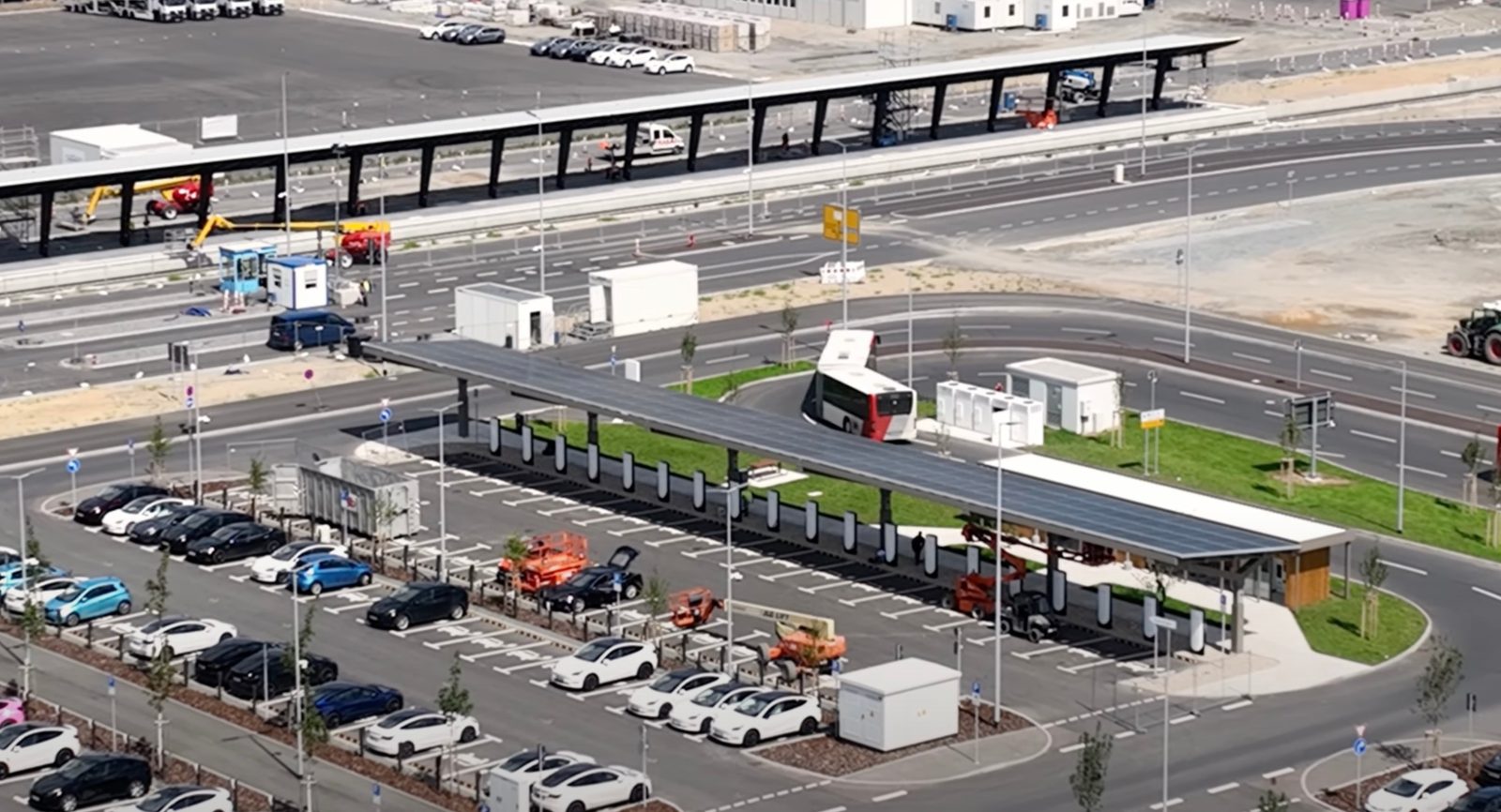
In a move that has shocked both the tech world and European labor unions, billionaire Elon Musk has just dropped a massive $250 million bombshell on Germany. Just weeks after locked-in combat with local unions, Tesla has officially announced a jaw-dropping investment to supercharge its Grünheide factory outside Berlin. This isn’t just a simple upgrade; it is a full-scale industrial revolution that will more than double the factory’s planned battery cell capacity to an astonishing 18 gigawatt hours per year, while birthing over 1,500 new high-paying jobs.
The High-Stakes Ultimatums Behind Tesla Giga Berlin expansion
To truly understand the scale of this dramatic development, one has to look back at the ruthless corporate chess game Elon Musk played just two months ago. The controversial CEO didn’t just win a victory; he executed a masterclass in hardball corporate negotiation that left labor organizers reeling. For months, the powerful IG Metall union had been gaining momentum inside Giga Berlin, threatening to establish a stronghold that could dictate Tesla’s European operations. But Musk had a devastating counter-strategy ready to deploy.
In a move that many called a bluff, Musk explicitly threatened to freeze all future expansion plans for the German gigafactory if the union gained control of the works council. It was a terrifying ultimatum for the thousands of workers whose livelihoods depended on Tesla’s growth. In the end, Musk’s shock tactics worked perfectly. Workers, terrified of losing their jobs and seeing their factory mothballed, voted overwhelmingly against IG Metall in a highly contentious works council election. The message was clear: fear and progress had won, paving the way for the massive Tesla Giga Berlin expansion we are seeing today.
Inside the Mind-Blowing $250 Million Battery Shockwave
Now that the union threat has been neutralized, Tesla is wasting no time in flooding the Grünheide site with cash. The newly announced $250 million investment is set to transform Giga Berlin into an absolute powerhouse of battery production. By boosting output to 18 GWh annually, Tesla is positioning itself to completely dominate the European electric vehicle market, leaving legacy automakers like Volkswagen and BMW scrambling to keep up.
This massive expansion is not just about raw numbers; it is about securing Tesla’s supply chain dominance. With 18 GWh of battery cells manufactured right in the heart of Germany, Tesla can bypass volatile global supply chains and avoid costly import tariffs. It also means 1,500 new jobs are being created overnight, a fact that local politicians are celebrating, even if it comes on the heels of union-busting controversy. The sheer speed at which this investment was unlocked proves that Musk’s threats were not idle gossip—they were the opening salvos of a calculated corporate expansion.
Will Elon Musk’s Union-Busting Gamble Backfire in Europe?
While Tesla’s stock price and expansion plans are flying high, industry analysts are quietly asking a dangerous question: is this victory sustainable? Europe has a deeply rooted culture of labor organization, and while Musk may have won this battle in Berlin, the war is far from over. By openly threatening to halt investments over union votes, Tesla has painted a massive target on its back for labor regulators across the continent.
For now, though, the momentum is undeniably on Tesla’s side. The Grünheide factory is poised to become one of the most advanced battery manufacturing facilities on the planet, driving down the cost of electric vehicles and solidifying Tesla’s lead in the green transition. As the first state-of-the-art battery cells begin rolling off the newly funded production lines, the world will be watching to see if Musk’s high-stakes gamble pays off, or if the ghost of unionization will return to haunt Giga Berlin.