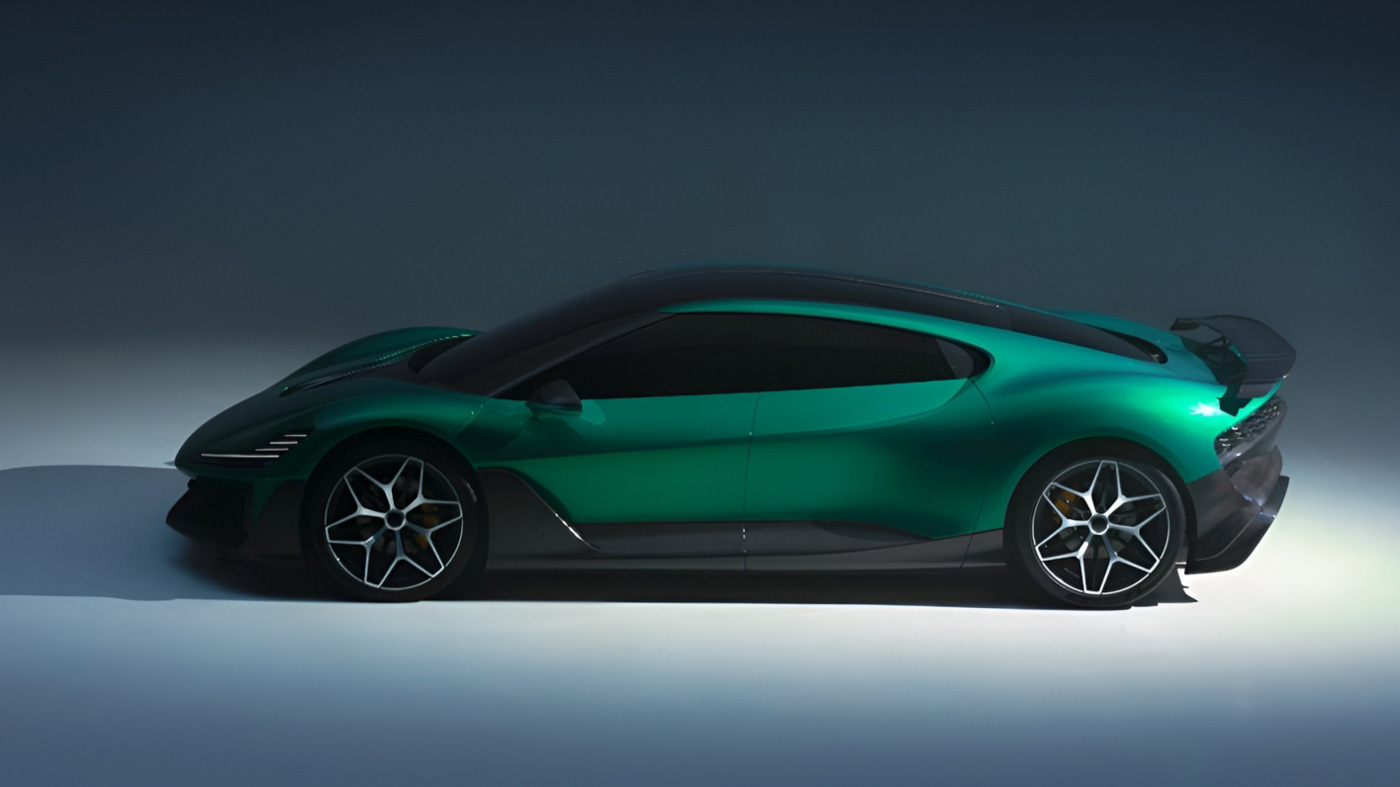
The automotive world just stood still. In a move that feels ripped straight from a science fiction blockbuster, Dreame—a brand most of us associate with keeping our hardwood floors spotless—has unveiled a vehicle that defies the very laws of physics. The announcement of their latest electric supercar concept has sent shockwaves through the industry, leaving giants like Ferrari and Tesla scrambling for answers. The headline-grabbing statistic? A mind-blowing 0 to 62 mph (100 km/h) sprint in a heart-stopping 0.9 seconds. This is not just a car; it is a declaration of war against the status quo of performance engineering.
The Vacuum Giant Defying Physics: Dreame’s Rocket Car
For years, Dreame has dominated the smart home appliance sector. Their high-torque motors in vacuum cleaners are legendary, but nobody expected those engineers to pivot toward high-performance automotive drivetrains. This isn’t just a step forward; it’s a leap across a chasm. The transition from suction power to propulsion power is a bold play that suggests the core technology behind their household motors might have applications far more extreme than anyone realized. The industry is currently buzzing with theories on how a company known for cleaning rugs is now preparing to tear them up on the track.
Critics have often dismissed tech-to-car pivots as vaporware, but Dreame is coming out of the gate with numbers that make the Tesla Roadster’s projected 1.9-second launch look like a leisurely stroll. To achieve a sub-one-second acceleration, a vehicle must overcome the traditional limits of tire-to-asphalt friction. This has led many to speculate whether Dreame is utilizing specialized cold-gas thrusters or some proprietary magnetic levitation-inspired torque delivery system that allows for instantaneous power without the usual mechanical lag.
Breaking the Sub-One Second Barrier
The biological impact of such speed cannot be overstated. Accelerating from a standstill to 60 mph in 0.9 seconds subjects the driver to nearly 3Gs of force. This is the realm of fighter pilots and astronauts, not Sunday drivers. How Dreame plans to make this accessible—or even safe—for a civilian driver is the question on every enthusiast’s lips. The engineering required to prevent the tires from simply disintegrating or spinning into a cloud of smoke is unprecedented. We are witnessing a moment where the hardware is finally catching up to our wildest imaginations.
We are looking at a potential revolution in battery discharge technology. To dump that much energy into the motors instantly requires a battery chemistry that prioritizes power density over everything else. If Dreame has solved the thermal management issues associated with such a high-energy event, they may have more than just a fast car; they may have the blueprint for the next generation of energy storage. The implications for the wider EV market are staggering, potentially leading to faster charging and more resilient power grids across the globe.
Is This Real Life or Just Fantasy?
While the teaser images look stunning, with aerodynamic lines that suggest the car is sculpted by the wind itself, the ‘concept’ tag remains a vital caveat. Historically, many Chinese EV startups have showcased ‘impossible’ numbers only to face the harsh reality of manufacturing constraints, supply chain issues, and road safety regulations. However, Dreame isn’t a startup; they are a manufacturing powerhouse with massive R&D budgets and a proven track record of bringing complex electronics to the mass market at scale.
The global EV market is currently at a crossroads. As consumers look for more than just range and efficiency, ‘super-performance’ is becoming the new battleground for brand prestige. If Dreame can bring even a fraction of this performance to a production-ready model, the traditional automotive hierarchy will be dismantled. Industry experts at Electrek have noted that the line between consumer electronics and automotive engineering is blurring faster than ever. This ‘rocket car’ concept proves that the future of transportation might not come from Detroit or Stuttgart, but from the same companies that design your smart home devices.
In conclusion, whether this rocket car ever hits the public roads or remains a digital dream, it serves as a terrifying wake-up call to the industry. The barrier to entry in the EV space is no longer just about building a car; it’s about mastering the physics of motion. Dreame has thrown down the gauntlet, and the world is watching with bated breath to see if they can actually deliver on the impossible and change the way we think about speed forever.