
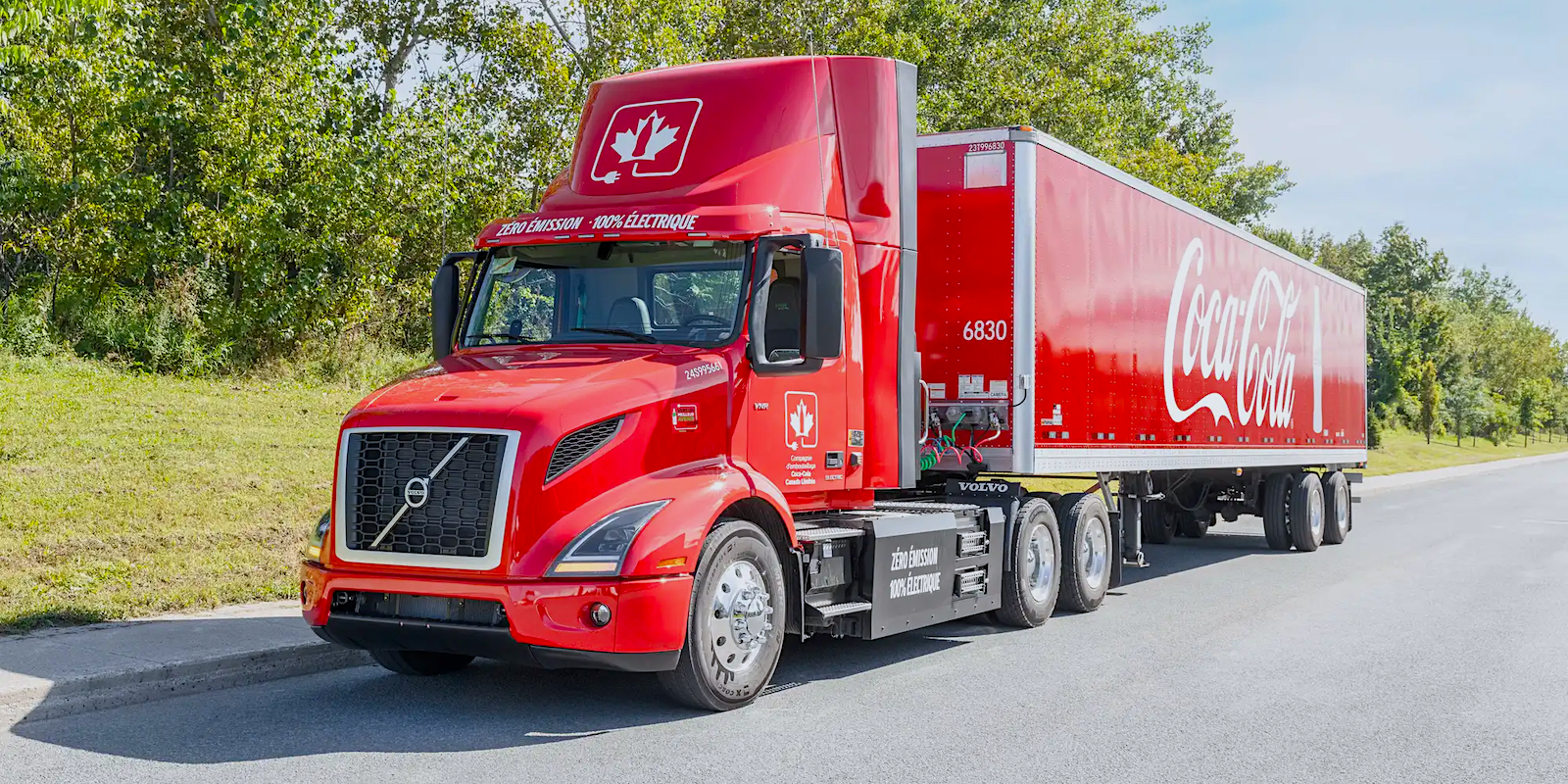
The Silent Revolution: How Coca-Cola is Outpacing Tesla in the Electric Truck War
The beverage industry has always been a theater for intense competition, but the battlefield is shifting from the supermarket shelves to the highways. For months, the media has been obsessed with PepsiCo’s adoption of the Tesla Semi, fueled by Elon Musk’s high-profile marketing machine. However, beneath the surface of viral tweets and press releases, Coca-Cola is executing a masterful logistics pivot that might just leave Tesla in the rearview mirror. Recent reports confirm that Coca-Cola’s Canadian fleet of bright red Volvo VNR Electric semis has swelled to over forty vehicles, marking a significant milestone in the company’s journey toward total decarbonization.
It is easy to get distracted by the flashiness of the Tesla Semi, but in the world of heavy-duty transport, reliability and established service networks are king. While Tesla struggles to scale production and deliver on its long-standing promises, Volvo Trucks has been quietly delivering high-performance electric vehicles to major global players. Coca-Cola’s investment in the Volvo VNR Electric model demonstrates a pragmatic approach to green energy. Unlike startups that promise the world and deliver prototypes, Volvo offers a proven chassis and a global maintenance infrastructure that ensures these red giants stay on the road. The shift is not just environmental; it is a calculated business move to ensure operational continuity in an era of fluctuating fuel prices and increasingly strict carbon regulations.
Why Volvo is Winning the Real-World Heavy-Duty Race
The Volvo VNR Electric is not just a showpiece; it is a workhorse designed for the rigors of distribution. With a battery capacity that supports daily regional hauls, these trucks are perfectly suited for Coca-Cola’s intensive bottling routes across Canada. Each truck features advanced regenerative braking and a drivetrain that offers a smoother, quieter ride for drivers, which is a major factor in driver retention and workplace satisfaction. Furthermore, the integration of these trucks into existing routes has been seamless, proving that the transition to electric does not have to be a logistical nightmare. The Canadian landscape, with its varying temperatures and demanding terrain, serves as the ultimate testing ground for this technology.
Industry experts at Volvo Trucks emphasize that the success of these deployments hinges on more than just the vehicle itself. It requires a robust ecosystem of charging infrastructure and software management. Coca-Cola has invested heavily in charging stations at its distribution centers, ensuring that the fleet is always ready for the next shift. This behind-the-scenes infrastructure is what separates the winners from the losers in the EV revolution. While Tesla owners often wait for proprietary charging solutions, Volvo leverages industry-standard CCS charging, allowing for greater flexibility and faster deployment across diverse geographic regions and multi-use facility hubs.
The Future of Zero-Emission Logistics and Global Branding
The optics of a fleet of forty electric semis are incredibly powerful for a global brand. Every time a consumer sees a zero-emission Volvo truck delivering their favorite beverage, it reinforces Coca-Cola’s commitment to sustainability. This isn’t just about saving fuel costs; it’s about future-proofing the brand against tightening emissions regulations and shifting consumer expectations. As more cities introduce green zones where diesel engines are banned, having an established electric fleet becomes a massive competitive advantage. The marketing value of a green fleet is nearly impossible to quantify, but in a world increasingly conscious of corporate footprints, it is essential for long-term survival.
In conclusion, while the rivalry between Pepsi and Coke continues to fascinate the public, the electric truck segment has provided a new arena for dominance. By choosing a partner like Volvo, Coca-Cola is prioritizing scalability and consistency over hype. As the fleet continues to grow beyond the forty-unit mark, the pressure is on for other manufacturers to prove they can compete with the established legends of the trucking industry. The era of the electric semi is no longer a distant dream—it is happening right now on the streets of Canada, and Coca-Cola is firmly in the driver’s seat. The logistics world is watching closely as these red semis redefine what is possible in the heavy-duty sector.
- Increased battery efficiency tailored for regional distribution needs.
- Reduced noise pollution in sensitive urban environments and residential areas.
- Significant reduction in maintenance costs compared to traditional diesel units.
- Enhanced driver safety and comfort features to reduce operator fatigue.
- A massive step toward Coca-Cola’s ambitious global Net Zero 2040 goal.
- Superior cold-weather performance verified in real-world Canadian trials.