The Morning the World Changed: Car vs. Home
In a world where energy independence feels like a distant dream, a single data point from a California driveway has sent shockwaves through the automotive and energy industries. Steve Fambro, the visionary co-CEO of Aptera, revealed a startling truth this morning: his car is officially outperforming his house. For over a decade, Aptera has been chasing the ‘Never Charge’ dream, and this latest milestone suggests that the finish line isn’t just in sight—it’s being crossed at high speed. Imagine a vehicle that doesn’t just consume energy but actively harvests it with more efficiency than a stationary residential rooftop. This is the reality of the Aptera solar electric vehicle.
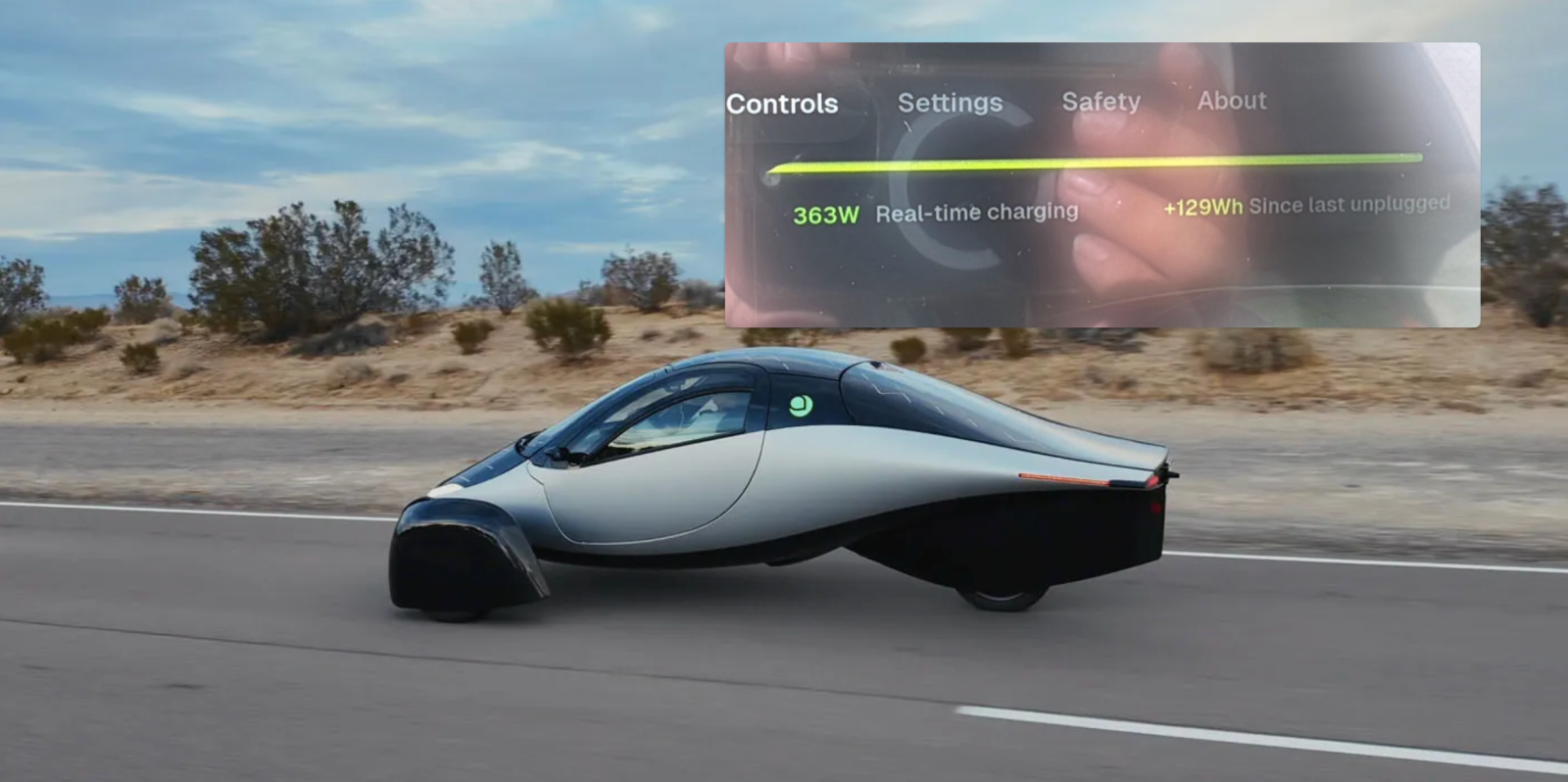
Just after 8 a.m., while the world was brewing its first pot of coffee, Fambro observed a fascinating discrepancy in power generation. His home rooftop, covered in traditional solar panels, was producing a respectable 136 watts. However, the Aptera parked outside was generating over 300 watts of solar power. That is more than double the output of a fixed home system. While critics might point out the variables of sun angle and panel optimization, the symbolic victory is undeniable. We are witnessing the birth of a new era where our machines are more than just tools; they are mobile power plants capable of sustaining themselves and perhaps, eventually, the grid itself.
Why Efficiency is the Ultimate Weapon
The secret to Aptera’s success isn’t just the solar panels—it is the radical efficiency of the vehicle’s design. Most electric vehicles are heavy, bulky, and require massive batteries to overcome wind resistance. The Aptera is different. Its teardrop shape is designed to slice through the air with the lowest drag coefficient of any production vehicle. This hyper-efficiency means that every watt harvested from the sun goes significantly further than it would in a traditional EV. According to industry experts at Electrek, this focus on lightweight composites and aerodynamics is what allows the solar integrated surface to provide up to 40 miles of ‘free’ driving per day.
The integration of solar cells into the bodywork of the car is a feat of engineering that many said was impossible. By utilizing the curved surfaces of the roof and hood, Aptera maximizes the surface area available for energy collection. Unlike a flat roof on a house, which may only be optimized for high-noon sun, the varying angles of the car’s body allow it to catch rays as the sun moves across the horizon. This early-morning victory where the car doubled the house’s output is a testament to how specialized solar integration can outperform general-purpose installations. This is not just a car; it is a masterclass in physics and optimization.
The End of Charging Stations?
For the average consumer, the biggest hurdle to EV adoption has always been ‘range anxiety’ and the inconvenience of charging infrastructure. If Aptera can prove that a vehicle can generate more power than it needs for daily commuting just by sitting in the sun, the entire paradigm shifts. We are no longer looking at a future of waiting in line at charging hubs; we are looking at a future where your car is always ‘filling up’ while you work, shop, or sleep. The implications for urban dwellers who lack access to home charging are revolutionary. If your car is more efficient than your house, why wouldn’t you choose the mobile option?
- Unprecedented 0.13 drag coefficient for maximum range
- Up to 700 watts of continuous solar charging capacity
- Carbon fiber construction for maximum weight reduction
- A range that could potentially reach 1,000 miles on a full charge
As we look toward the 2026 production rollout, the data provided by Fambro serves as a powerful marketing tool and a proof of concept. The decade-long journey of Aptera has been fraught with financial hurdles and skeptical onlookers, but this morning’s data point proves that the technology is not just viable—it is superior. The solar revolution isn’t coming; it is already parked in the driveway, and it is outshining everything else in its path. With the energy crisis looming, the ability to generate more power than a home using just the surface area of a vehicle is a game-changer that cannot be ignored by the big auto giants.