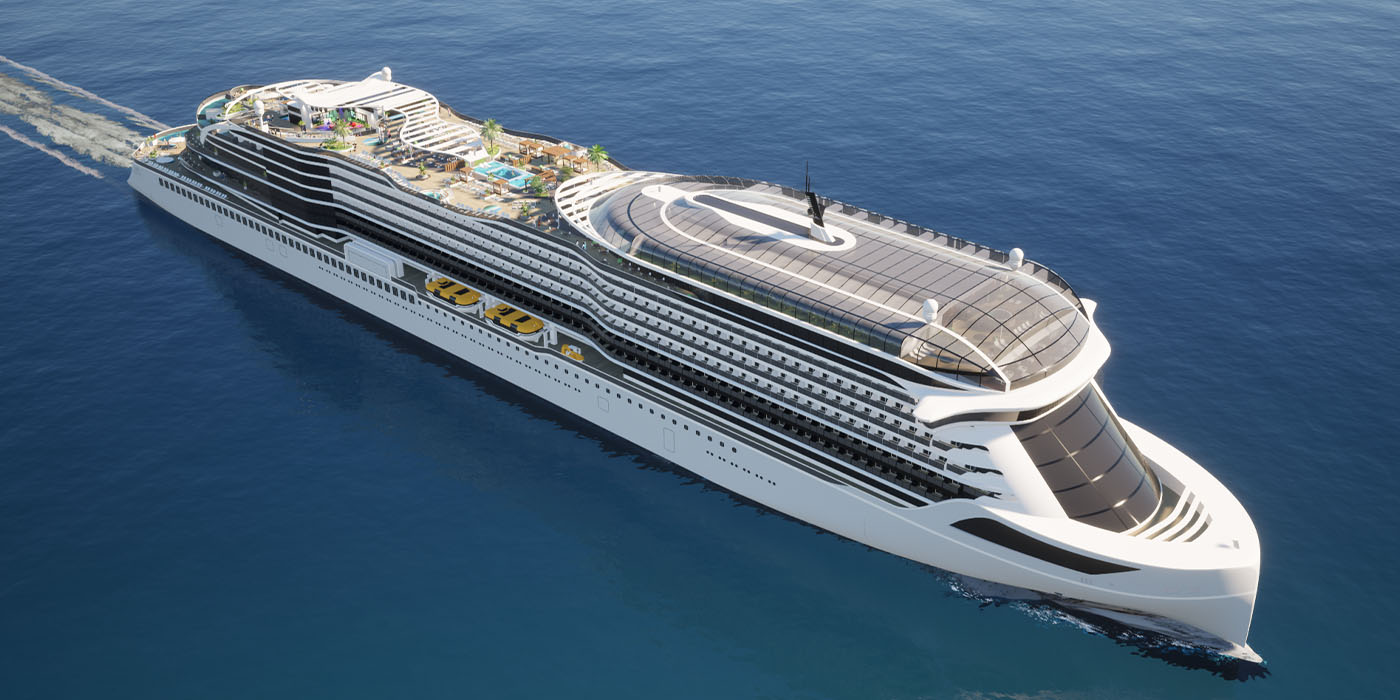
The maritime industry is standing on the precipice of a seismic shift that few saw coming so quickly. MEYER WERFT, a name synonymous with legendary shipbuilding since 1795, has officially pulled back the curtain on its most ambitious project to date: the ‘Vision’ concept. This isn’t just another luxury liner; it is a massive, battery-electric cruise ship designed to dominate the oceans without leaving a trace of carbon behind. While skeptics have long argued that an all-electric vessel of this magnitude was decades away, Meyer Werft is proving that the future of zero-emissions travel is arriving much sooner than anyone dared to imagine.
The End of an Era: Meyer Werft’s Radical Departure from Diesel
For over a century, the cruise industry has been defined by the roar of massive diesel engines and the sight of dark smoke trailing behind majestic ships. However, as global pressure to reduce carbon footprints intensifies, the old ways are no longer sustainable. Meyer Werft’s ‘Vision’ represents a radical departure from this tradition. By integrating cutting-edge battery technology, the shipyard is signaling the death knell for traditional fuel-chugging ocean liners. This move is not merely a marketing stunt; it is a strategic evolution for a company that has survived for over two centuries by staying ahead of the curve.
The environmental impact of such a shift cannot be overstated. Traditional cruise ships are often criticized for their heavy emissions, including sulphur oxides and nitrogen oxides, which damage marine ecosystems and coastal air quality. By transitioning to a all-electric leisure boat architecture on a massive scale, the ‘Vision’ concept promises to eliminate these pollutants entirely during operation. This is a game-changer for sensitive ecological regions like the Arctic and the Norwegian fjords, where regulations on emissions are becoming increasingly stringent and the demand for clean travel is skyrocketing.
Harnessing Unprecedented Battery Power for Global Travel
To power a floating city, the technical requirements are staggering. The ‘Vision’ project isn’t just about sticking a few batteries in a hull; it requires a complete reimagining of marine engineering. The ship will utilize a high-density battery storage system capable of handling the immense energy loads required for propulsion, climate control, and luxury amenities. But how do we maintain such a system? Meyer Werft is exploring a multi-faceted approach to energy management that includes:
- Advanced energy recovery systems that capture heat and kinetic energy from every moving part.
- Integrated solar arrays across the ship’s upper decks to supplement battery charging during peak daylight.
- Optimized hull hydrodynamics to reduce drag and maximize every kilowatt of power.
- Shore-power connectivity for rapid charging at every port of call to ensure minimal downtime.
The silence of an electric motor will also revolutionize the passenger experience. Imagine gliding through the Caribbean with nothing but the sound of the waves, free from the constant vibration and drone of traditional engines. This level of luxury and tranquility is expected to be a major selling point for the next generation of eco-conscious travelers who refuse to compromise on comfort while demanding absolute environmental responsibility.
The Timeline for a Greener Horizon
Perhaps the most shocking part of Meyer Werft’s announcement is the timeline. While many industry experts predicted that large-scale electric cruise ships wouldn’t be viable until the 2050s, the ‘Vision’ project suggests a much more aggressive schedule. We are not looking at a half-century wait. Instead, technological breakthroughs in solid-state batteries and modular energy storage mean that we could see a version of this battery-electric cruise ship on the water within just a few years. The shipyard’s commitment to innovation suggests that the transition is already well underway in their engineering labs, moving from blueprint to reality at breakneck speed.
The shift to electric is also driven by economic necessity. As carbon taxes increase and fuel costs remain volatile, the operational efficiency of an electric fleet becomes undeniable. Meyer Werft is positioning itself to lead this new market, ensuring that the next 200 years of their history are just as impactful as the last. The ‘Vision’ is clear: the future of the sea is electric, it is silent, and it is happening now. As we look toward the horizon, the smoke is clearing, and a new era of clean, majestic seafaring is finally beginning to take shape for travelers around the world.