The automotive landscape is undergoing its most radical transformation since the Ford Model T rolled off the assembly line. For over a century, the definition of a ‘classic’ was tied to mechanical soul—the scent of gasoline, the vibration of a gear shift, and the visceral scream of an exhaust. But today, a new generation of enthusiasts is looking at silent motors and lithium-ion cells with the same reverence. The question is no longer ‘if’ an electric vehicle will become a classic, but which one will lead the pack into the elite auction houses of the future.
The Race to Become the First Electric Legend
As we approach the third decade of modern electric transportation, the nostalgia machine is starting to crank up. Collectors are beginning to look back at the early 2000s and 2010s not just as a period of experimentation, but as a golden age of innovation. What makes a car a classic? It is usually a combination of rarity, historical significance, and a design that captures the zeitgeist of its era. For the first time, we are seeing these traits coalesce in vehicles that plug into a wall rather than a pump.
The transition is not without its skeptics. Purists argue that without the ‘heartbeat’ of an engine, a car is just an appliance. However, the same was once said about fuel injection and automatic transmissions. History proves that as technology ages, the pioneers of that tech become highly sought after. We are currently witnessing the birth of the EV collector market, and the stakes have never been higher for those looking to invest in the next big thing. High-net-worth individuals are already scouting for low-mileage examples of early pioneers, hoping to catch the next rocket ship in automotive valuation.
The GM EV1: The Tragic Hero of Automotive History
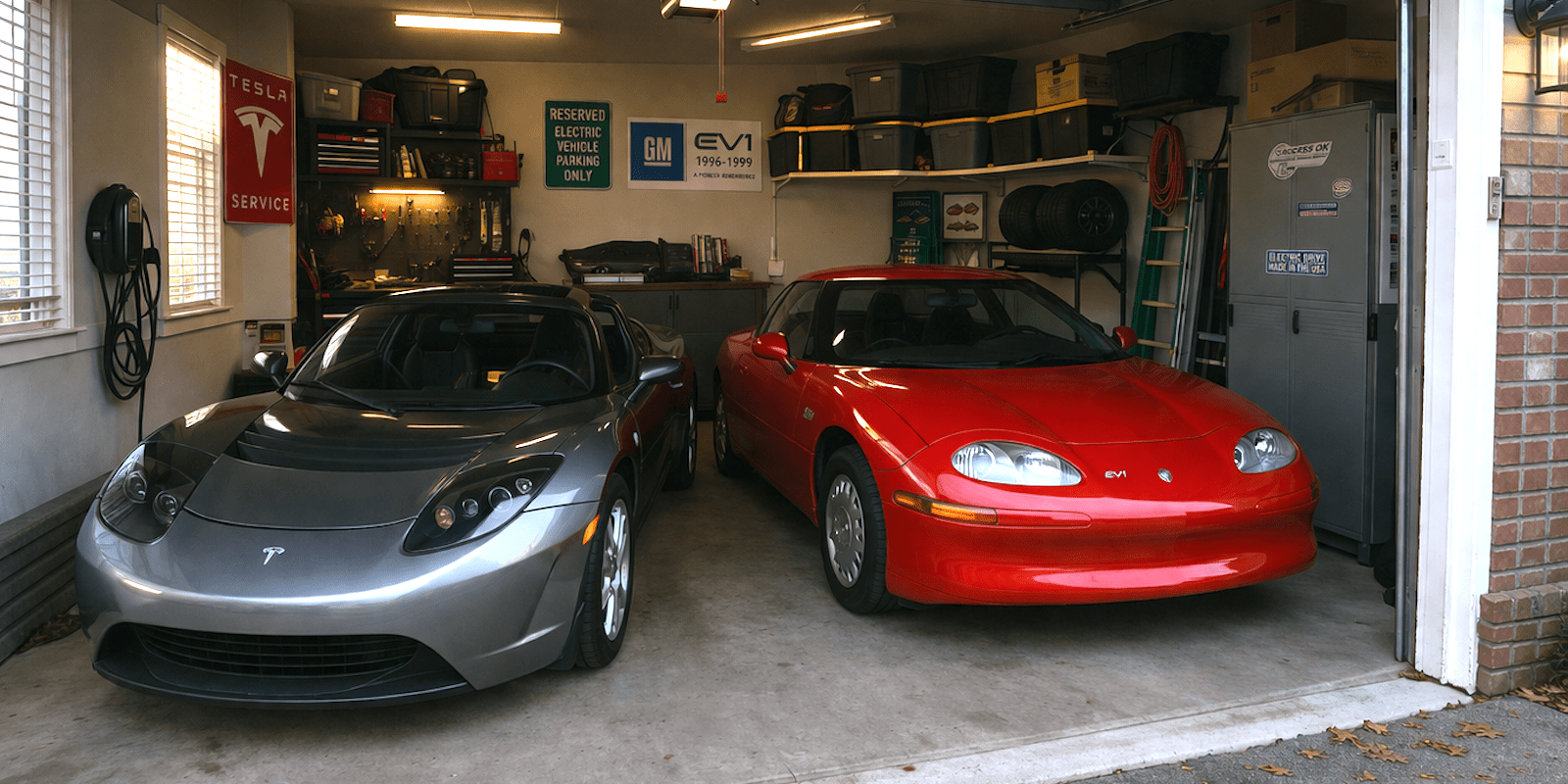
If you are looking for the ultimate story of ‘what could have been,’ look no further than the GM EV1. This wasn’t just a car; it was a glimpse into a future that was prematurely cancelled. In the late 1990s, General Motors proved that electric propulsion was viable, only to infamously reclaim and crush almost every unit produced. This corporate tragedy has elevated the EV1 to mythical status, making it the ‘forbidden fruit’ of the electric age.
Today, the few remaining EV1s are largely relegated to museums, with their drive systems deactivated. If a functional, privately-owned EV1 were to ever hit the open market, the bidding war would likely break records. It is the ‘Holy Grail’ of electric vehicles, representing the spark that was snuffed out too soon. Its teardrop shape and experimental tech make it the definitive starting point for any serious EV history collection. For many, it represents a lost utopia of zero-emission transit that was buried by oil interests and corporate fear.
The Original Tesla Roadster: The Car That Changed Everything
While the EV1 was the martyr, the Tesla Roadster was the conqueror. When Elon Musk and the original Tesla team decided to shove a massive battery pack into a Lotus Elise chassis, they weren’t just making a sports car; they were rewriting the narrative of what an electric car could be. Before the Roadster, EVs were seen as glorified golf carts—slow, ugly, and boring. The Roadster was the first to prove they could be fast, sexy, and desirable.
The Roadster 1.5, 2.0, and 2.5 models are already seeing a massive surge in value. Collectors are beginning to realize that this car is the foundation of the modern EV empire. It is the car that forced the German giants and the American ‘Big Three’ to take notice. As Tesla continues to dominate the global market, the value of the ‘car that started it all’ is only going in one direction: up. It is arguably the most important car produced in the 21st century so far. Enthusiasts are already tracking these vehicles through specialized registries like those found at Hagerty, which specializes in tracking the valuation of emerging classics.
Will the BMW i3 or Nissan Leaf Join the Hall of Fame?
Beyond the high-priced pioneers, there are the unsung heroes of the electric revolution. The BMW i3, for instance, is a masterpiece of sustainable engineering. With its carbon-fiber reinforced plastic (CFRP) monocoque and coach doors, it offered a vision of the future that even BMW seems to have stepped back from in its later, more conventional designs. It is a design icon that remains strikingly unique on the road today. Collectors are already snapping up the final ‘s’ models and unique Launch Edition colors, banking on the fact that its weirdness will only become more charming with age.
Then there is the Nissan Leaf. While it may lack the ‘cool factor’ of a Tesla, its historical importance is undeniable. As the first truly mass-produced EV for the global market, it brought electrification to the driveway of the average family. Early models with low mileage and healthy batteries could eventually become the ‘Volkswagen Beetle’ of the electric age—a nostalgic reminder of when the world first started to change. In the future, a first-generation Leaf in pristine condition may be just as rare as a mint Condition Datsun 240Z is today.
Ultimately, the first classic of the electric era will be the car that evokes the strongest emotional response. Whether it is the sleek lines of the Roadster or the radical sustainability of the i3, these machines are more than just transport; they are the artifacts of a revolution.