
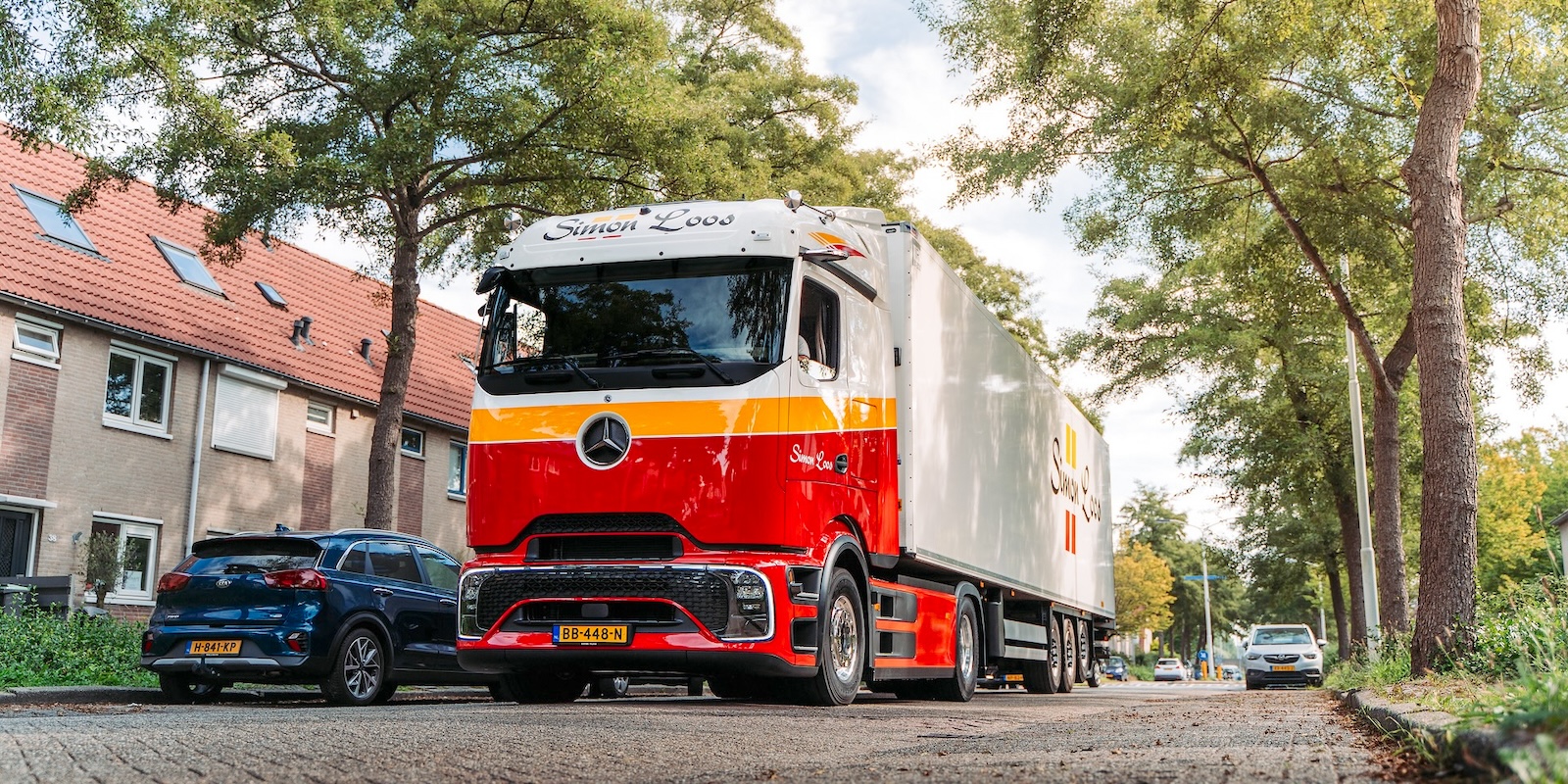
In a move that has sent shockwaves through the European logistics sector, Dutch heavyweight Simon Loos has just solidified its position as a pioneer of sustainable transport. The company recently announced a massive acquisition of 75 Mercedes-Benz eActros 600 electric semi trucks, a decision that signifies a tectonic shift in how freight is moved across the continent. This is not just a standard vehicle purchase; it is a declaration of war against carbon emissions and a bold step into the future of heavy-duty hauling.
The Dawn of the Electric Trucking Era
For decades, the heavy-duty trucking industry has been synonymous with thick diesel fumes and high environmental costs. However, the partnership between Simon Loos and Daimler Trucks’ Mercedes-Benz brand is proving that the future is silent, clean, and incredibly powerful. By adding 75 new eActros 600 units, Simon Loos is not just dipping its toes into the water; it is diving headfirst into the electric revolution. This latest order brings their total Battery Electric Vehicle (BEV) fleet to over 200 units, a milestone that few competitors in the world can match.
The eActros 600 is not your average delivery vehicle. It is designed to handle the rigors of long-haul transport, providing the reliability that logistics specialists demand while maintaining a zero-emission profile at the tailpipe. For Simon Loos, this investment represents a strategic alignment with European climate goals and the increasing demand from blue-chip clients for fully green supply chains. The commitment to such a large fleet expansion suggests that the age of experimentation is over, and the age of electric implementation has arrived in full force.
Why the Mercedes eActros 600 is a Game Changer
The Mercedes eActros 600 is widely considered the ‘gold standard’ of modern electric logistics. It features a massive battery capacity that allows for a significant range, often exceeding 500 kilometers on a single charge without intermediate charging. This capability is critical for companies like Simon Loos that operate on tight schedules and across vast geographic areas where charging infrastructure may still be in development. The truck’s drivetrain is optimized for maximum efficiency, ensuring that every kilowatt of energy is used to maximize payload capacity and distance.
- High-capacity LFP (Lithium Iron Phosphate) battery technology for longevity.
- CCS2 fast-charging capabilities that minimize downtime at busy logistics hubs.
- Advanced driver assistance systems for enhanced safety on crowded highways.
- Innovative regenerative braking systems that recover energy during mountain descents.
Furthermore, the ergonomic design of the eActros 600 ensures that drivers are comfortable during long shifts. In an industry facing a chronic global driver shortage, providing high-tech, quiet, and comfortable machinery like the Mercedes eActros is a significant recruitment advantage. Drivers are reportedly thrilled with the instant torque and smooth acceleration offered by the electric motors compared to traditional, vibrating internal combustion engines. This shift improves driver health and reduces fatigue, making the profession more attractive to the next generation.
Simon Loos: Leading the Green Logistics Charge
Based in the Netherlands, Simon Loos has long been at the forefront of logistical innovation and sustainable practices. Their commitment to CO2 reduction is not a recent marketing trend but a core component of their business philosophy. By integrating over 200 electric units into their active fleet, they are demonstrating that large-scale electrification is not only possible but commercially viable for large-scale operations. You can learn more about these engineering innovations directly from Mercedes-Benz Trucks as they continue to refine their electric offerings for a global market.
The transition to a BEV fleet of this size requires more than just buying the trucks; it necessitates a complete overhaul of charging infrastructure and complex route planning. Simon Loos has invested heavily in private charging depots, ensuring that their fleet is always powered up and ready for the next haul. This proactive approach sets a blueprint for other logistics firms across the globe. As urban centers implement stricter zero-emission zones, Simon Loos is already positioned to navigate these changes without any operational disruption.
The impact of this 75-unit order extends far beyond the company itself. It signals to the global market that heavy-duty electric trucks are ready for prime time performance. As production scales and costs eventually decrease, we can expect to see an explosion of similar orders from other European and American carriers. The era of the ‘Clean Semi’ has officially arrived, and Mercedes-Benz is leading the charge with Simon Loos as its primary vanguard. In conclusion, the partnership between these two giants is a testament to what is possible when engineering excellence meets environmental stewardship.